
Wheelbases / Comparison
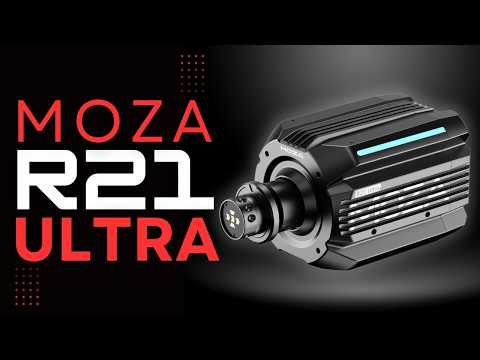
MOZA R21 Ultra vs Simagic Alpha EVO Pro
Two wheelbases I enjoyed, with different characters. Here’s why I slightly preferred the Simagic—and why that would not make every MOZA owner switch.
Review disclosure: MOZA supplied the R21 Ultra and Simagic supplied the Alpha EVO Pro for review; I retained the wheelbases. Simagic also supplied the FX wheel used in its review. The MOZA buying link is an affiliate link and may earn me a commission at no extra cost to you. The Simagic product link is a tracked manufacturer link.
My verdict
A slight edge to Simagic for my steering preferences.
The EVO Pro felt smoother and more fluid to me. The R21 Ultra brought texture and smaller effects forward with a livelier character that I also enjoyed. I would weigh that small preference against the wheels I already owned and the complete cost of changing systems.
Check buying options and available offers →
At a glance
| In my testing | MOZA R21 Ultra | Simagic Alpha EVO Pro |
|---|---|---|
| Steering character | Sharp, textured and energetic | Smooth, progressive and fluid |
| Rated torque of the versions reviewed | 21 Nm | 18 Nm |
| Software experience | Pit House offered control; I wanted a clearer interface | SimPro Manager was easier for me to navigate |
| Main tuning caution | Very low damping made oscillation more noticeable | Too much filtering removed detail |
| A practical reason to choose it | An appealing upgrade within my MOZA setup | My small preference on feel and a successful QR-A USB-wheel test |
Table summarises my original review findings and the configurations tested. Source reviews and manufacturer references are linked below.
What actually separated them on track?
I tested the Alpha EVO Pro immediately before the R21 Ultra, so this pairing has more behind it than two specification sheets. The difference I kept coming back to was the way they presented steering detail. Simagic felt a little more polished and natural in my hands; MOZA felt more raw and textured.
The R21’s character was not a fault. It made road texture and smaller effects easy to notice, and I had a great time driving it. I could imagine another driver preferring that energy to the smoother presentation I liked from Simagic.
These are impressions of the settings I used. They are not measured latency results, and I would not expect a change of wheel, car or filter settings to leave the comparison completely unchanged.
The settings are part of the comparison
On the Simagic, reducing the filter in the iRacing Esport profile from 2 to 1 gave me a better balance between smoothness and detail. That is context for my test, not a setting every owner should copy.
Firmware also mattered. An update during my EVO Pro review made the steering less enjoyable to me, and a later update improved it again. My positive verdict refers to the improved version I used at the end of that test.
Pit House gave me plenty of control over the R21 Ultra, but I was less enthusiastic about its layout. I liked an iRacing preset and then adjusted from there. Taking damping and filters towards zero made the base especially lively and brought more oscillation than I expected. Lower numbers were not automatically better settings.
Why I would not buy on torque alone
The versions in these reviews were rated at 21 Nm for the R21 Ultra and 18 Nm for the EVO Pro. Both gave me plenty of force for my normal driving. My slight preference went to the lower-rated base, which tells you how little that number alone explained my decision.
The ratings here identify the hardware and configuration I reviewed. This is not a new test of subsequent firmware, torque-unlock options or other EVO models. Check the current manufacturer information for the precise version you are buying.
My reviews discussed a US$699 starting price for each base at their respective 2025 release periods. Those historical figures do not establish that the delivered prices are equal today.
Your existing wheels may decide this
I liked the R21 Ultra’s compact enclosure beneath my monitors. My ASR Pro installation required MOZA’s front mount, which I had difficulty finding at the time. That was my original stock experience; the useful lesson is to include the correct mount in your current quote.
The EVO Pro’s low profile also helped me place the display close to the wheel, although the enclosure was relatively long. I liked the ecosystem flexibility, and my Ascher Artura Pro worked with the optional QR-A USB adapter. That test establishes compatibility for that combination, not for every USB wheel.
If you already own MOZA wheels you enjoy, I would be reluctant to replace them solely for my small steering-feel preference. Compare the wheelbase, compatible rims, quick releases and mounting parts together.
Which would I choose?
I would lean towards Simagic if starting fresh and prioritising the fluid steering feel and software experience I preferred. I would still pay attention to firmware and filtering.
I would lean towards MOZA if its more energetic feedback appealed to me, or if keeping my existing MOZA equipment made the complete setup more sensible. The R21 Ultra did not leave me wishing I had installed a much more expensive base.
For me, this was a close choice between two enjoyable systems. I would buy around the driving experience and setup I wanted, rather than treat the larger torque number as a verdict.
Before you buy
Choose the right setup.
Check the current regional price, the exact EVO Pro version, compatible wheels and all mounting parts. No MOZA discount code is listed in my current offer; an affiliate link does not itself promise a saving.
Product and offer references checked September 13, 2026. Confirm the selected product, region, accessories and final price at checkout. Browse other discounts →
Read the full reviews
Watch the original videos

Sources and current product information
The opinions above are adapted from my linked reviews and their original testing. Manufacturer references provide product context; they do not represent a new driving test.