
Review disclosure: Simagic supplied the Alpha EVO Pro for review, and I retained the wheelbase. Simagic also supplied the FX wheel used during testing. These are my own impressions. The Simagic product links in this article are direct manufacturer links, not affiliate links.
I have used wheelbases ranging from entry-level direct drive to much more expensive high-torque systems. The Simagic Alpha EVO Pro caught my attention because it combined strength with a fluid, natural steering feel at a much more approachable price than my daily-driver Simucube 2 Ultimate. After several months, it had left a strong impression—but the experience also showed how much software can change the way a wheelbase feels.
My verdict at a glance
Best suited to: Drivers looking for a powerful direct-drive base with refined steering feel and an established range of compatible wheels and accessories.
What stood out: Smooth, progressive feedback, a low-profile enclosure, approachable software and a successful test with a third-party USB wheel.
What to consider: Firmware changes during my review, detail lost with excessive filtering, some plastic exterior panels and lighting that can sit hidden behind the wheel.
Where the EVO Pro fits
The original EVO range gave buyers three torque options: EVO Sport at 9 Nm, EVO at 12 Nm and EVO Pro at 18 Nm. This review is about the 18 Nm Pro. My impressions should not be read as separate hands-on reviews of all three versions.
In my September 2025 review, I discussed a base price of $699 before tax for the EVO Pro. That historical price was a big part of its appeal. Check the current regional price and include the wheel, mounting accessories, shipping and any taxes when comparing complete setups.
For my preferences, roughly 16–18 Nm sits in a very useful range, particularly when I want some strength in reserve for heavier wheels. That is a personal preference, rather than a minimum requirement for enjoying direct drive.
Build quality and fitting it to the rig
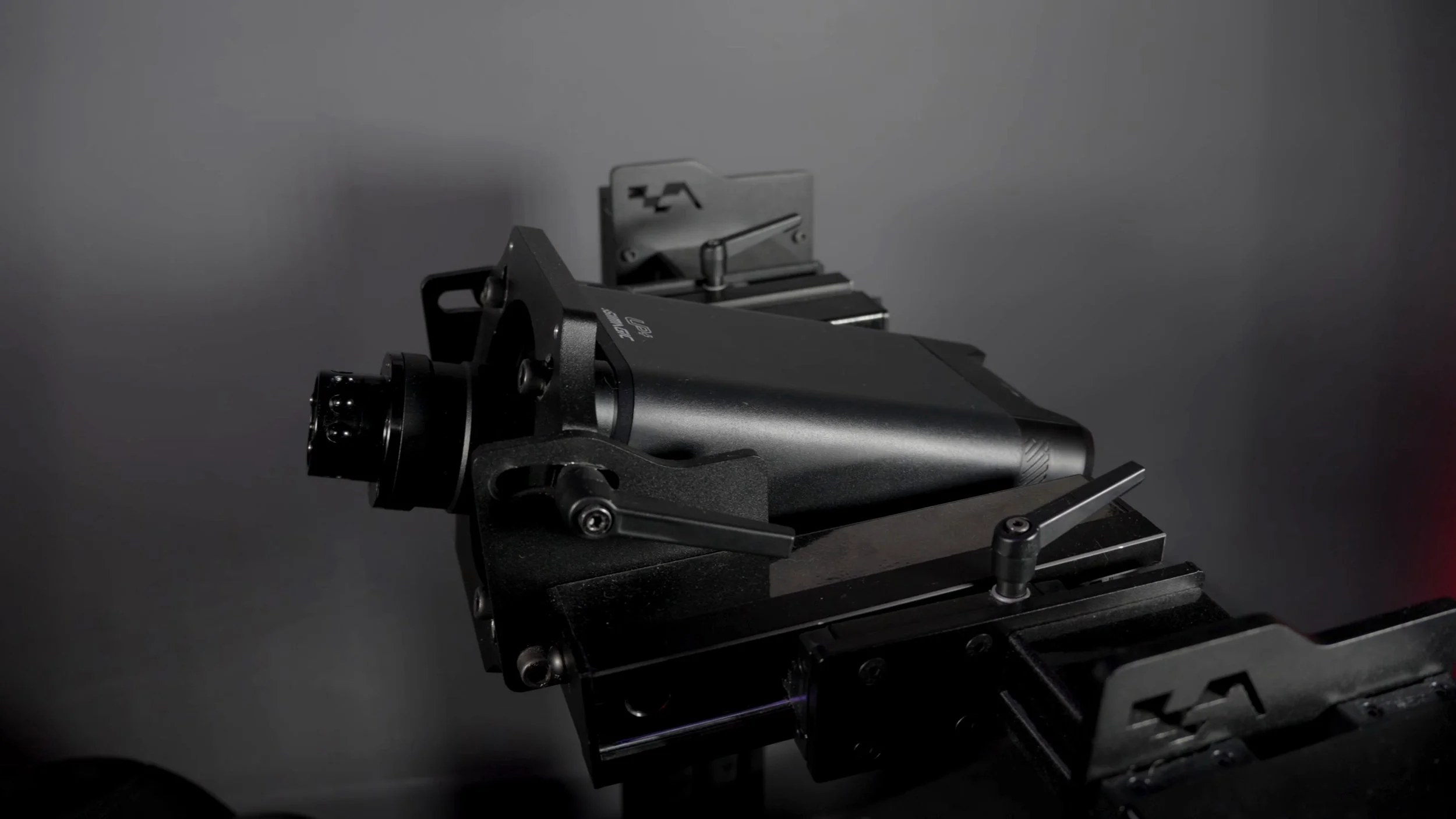
The slim vertical profile was one of the first practical things I liked. Compared with some chunkier wheelbases, it gave me more freedom to position the display low and close to the steering. The enclosure is relatively long, so its shape is worth checking against the space in your own cockpit.
The aluminium body and clean design gave it a premium feel. The plastic front and rear panels were less convincing up close. The rear was largely out of sight in my setup, but I would have liked the frontage to match the quality of the main housing more closely.
Installation on my cockpit was straightforward. Simagic retained the original Alpha mounting footprint, with bottom and side mounting options. That helps existing owners, although I would still check the exact bracket, dimensions and hardware for a particular rig before assuming it is a direct swap.
The RGB ring and accessory connections
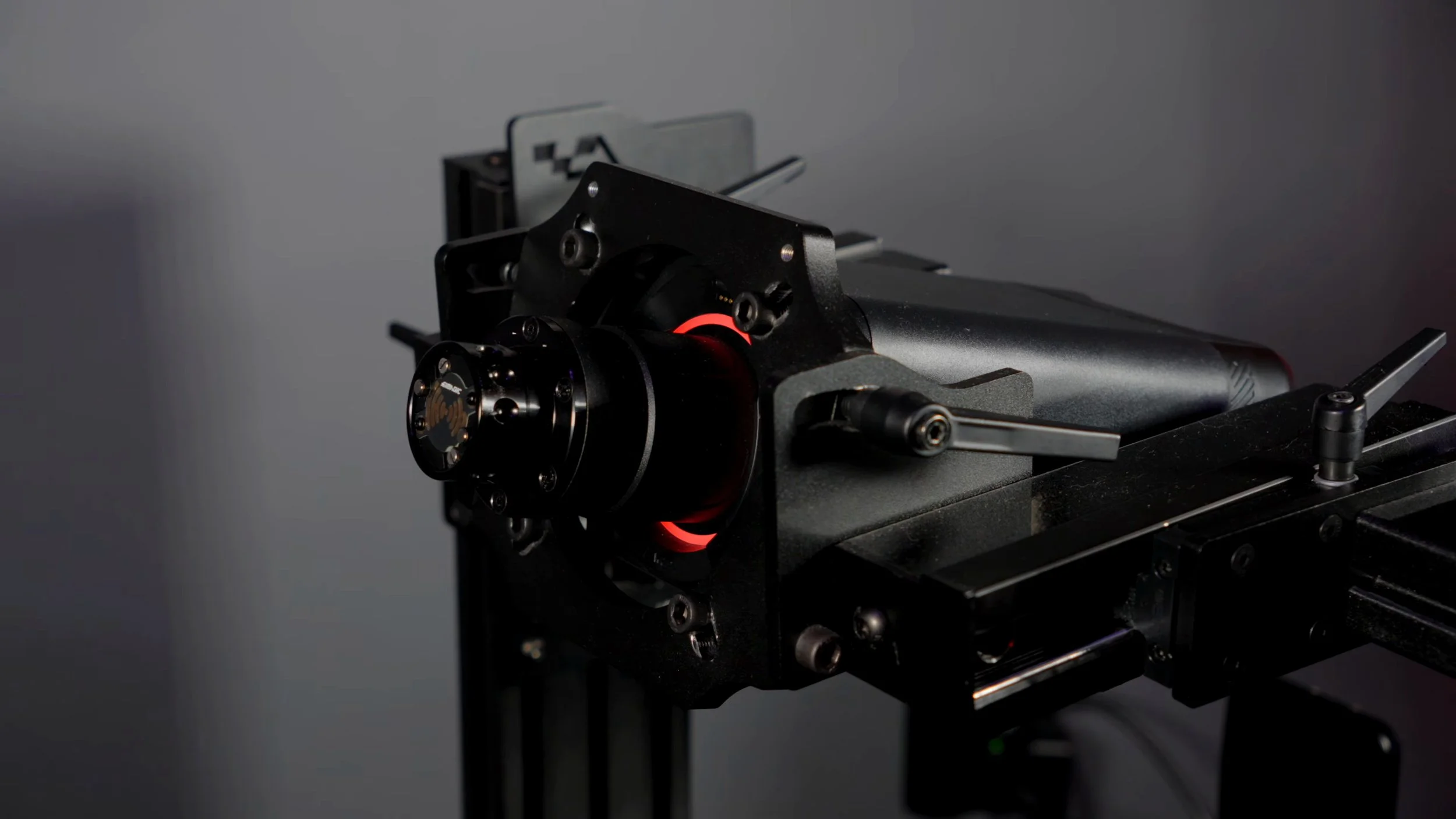
The illuminated ring around the shaft looks striking in photos and creates a bright glow in a darker room. Its usefulness depends on the wheel in front of it: in my setup, much of the ring could be obscured by the rim.
SimPro Manager lets the lighting respond to telemetry, stay on a chosen colour or turn off. I liked having that choice, but I did not find the ring particularly useful compared with the displays and haptics I already relied on. It felt more decorative than essential.
The rear connections provide room for Simagic accessories, and the magnetic dash provision on top is a tidy idea. During the original review, compatible magnetic displays were still something I was looking forward to. I would have preferred a cover over the exposed contacts when no display was fitted.
Those comments describe the hardware and accessory context of my 2025 test. Check the current accessory list and software support for anything you plan to connect.
Quick release and a third-party wheel
The quick release kept the familiar ball-bearing locking arrangement while adding Simagic’s revised connection system. With supported Simagic wheels, power and data can pass through the connection without a separate USB cable running from the wheel.
I also tested the optional QR-A USB adapter with an Ascher Racing Artura Pro, and that combination worked well. Being able to use a wheel from another manufacturer was a useful part of the EVO Pro’s appeal to me.
The QR-A is an extra accessory, and a 70 mm mounting pattern does not by itself guarantee every wheel will work. Check both the mounting arrangement and USB compatibility for the exact rim you want to use. My successful Artura Pro test is the specific combination I can speak to.
SimPro Manager and finding the right filter
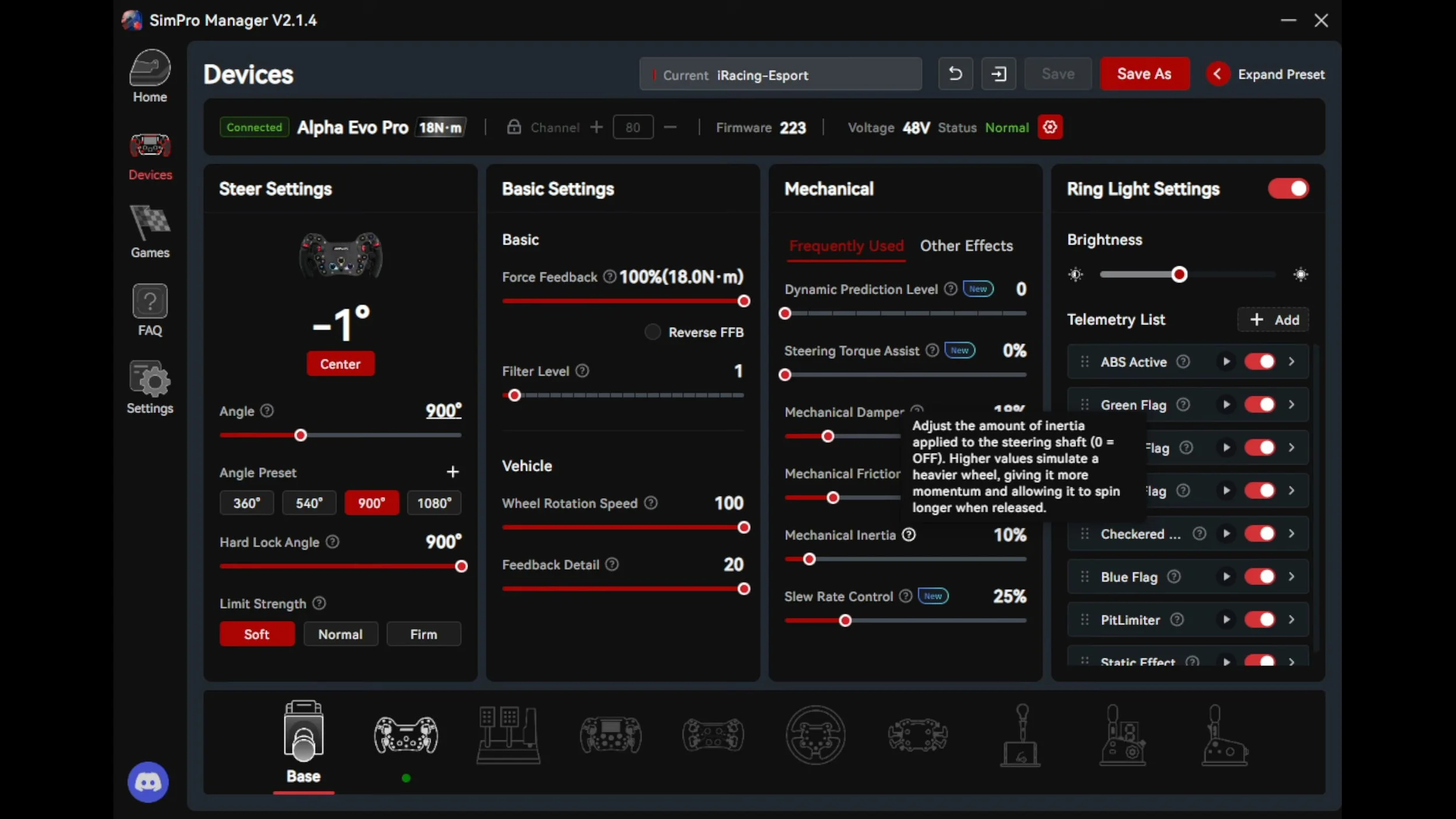
I found SimPro Manager clean and straightforward to navigate. Everyday controls such as force-feedback strength and steering angle were easy to reach, and the explanations beside more advanced settings made experimenting less intimidating.
Filtering was the adjustment that mattered most to me. Increasing it smoothed the steering, but too much also removed the sharper detail I wanted to feel. In the iRacing Esport profile I used, reducing the filter from the default 2 to 1 gave me my preferred balance.
That setting preserved the fluid quality I liked while bringing back more texture and edge. I would use it as context for my review, rather than a universal prescription: your wheel, car, preferences and software version all affect the result.
I liked the presets and ability to save and organise my own profiles. During my test, automatic profile switching worked by sim, but not by individual car, which was a limitation I noticed. Software has continued to develop, so check the current SimPro download and compatibility information when setting up your base.
The firmware change that affected my verdict
The EVO Pro felt excellent when I first received it. At one point during my months of testing, however, a firmware update changed the character of the feedback enough that I was no longer enjoying it in the same way.
To my hands, it felt as though additional smoothing had been introduced. The feedback was noticeably different, and I preferred how it had felt before. That was a real reservation during the review period, even though the hardware itself had not changed.
Simagic responded to feedback with another update, and the firmware I was using when I recorded the September 2025 review felt much better. I appreciated that response, but the sequence is still part of the ownership experience I wanted to report.
My final verdict refers to that improved state at the time of recording. It is not a fresh test of today’s firmware. When comparing driving impressions from different dates, the software and settings behind them matter.
What the EVO Pro felt like on track
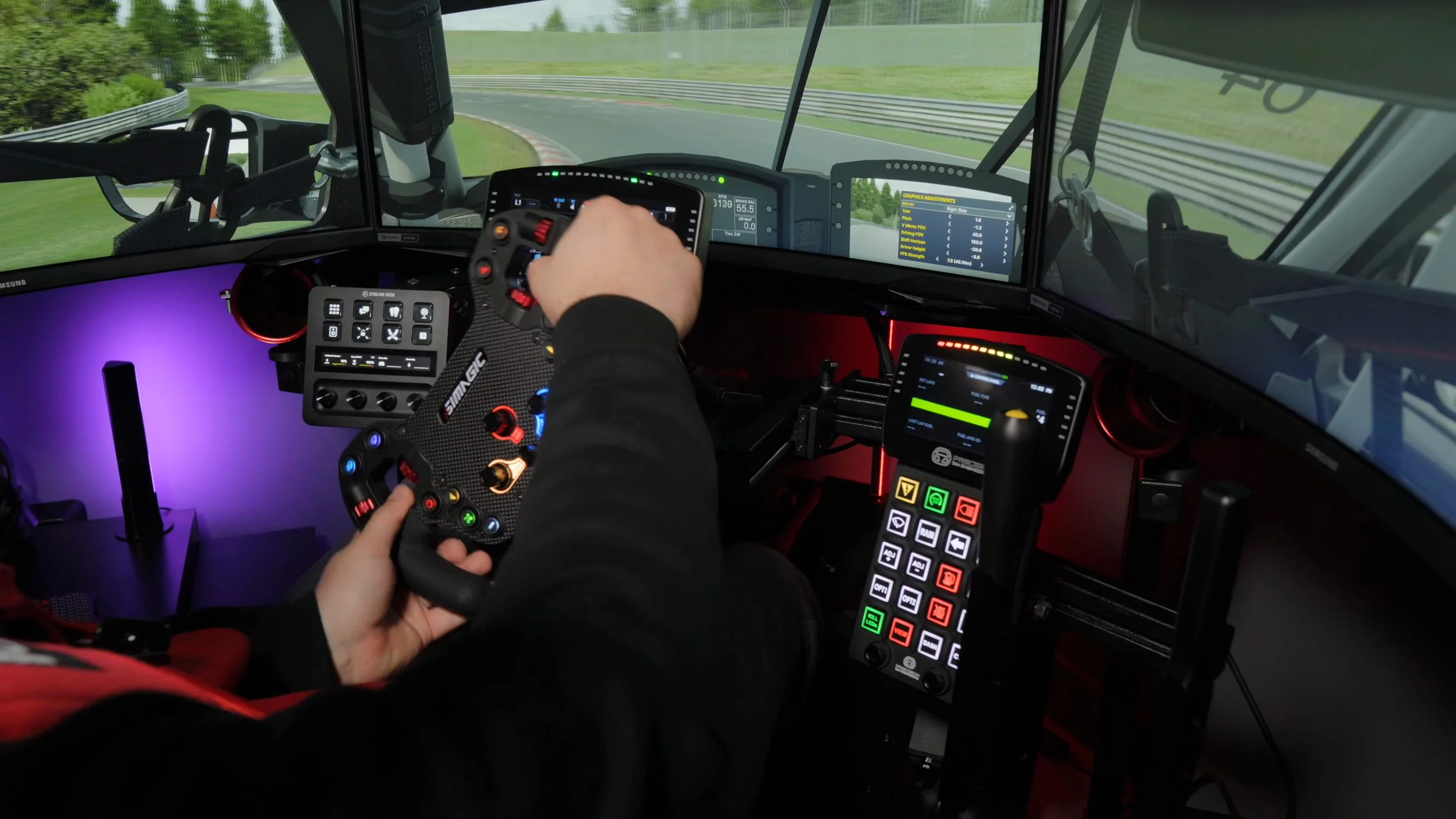
The standout quality was how fluid and progressive the steering felt, particularly through slower corners where I wanted to make precise adjustments. I could feel road texture and changes in load without the feedback becoming unnecessarily harsh.
Simagic markets its motor design around low inertia and “Zero-Cogging” technology. I did not measure motor cogging or latency independently. What I can say is that the base felt smooth and responsive while I was driving, especially after finding the filtering balance that suited me.
The official specification includes a 21-bit encoder and support for iRacing’s 360 Hz force feedback. Those features give context to the hardware, but my positive verdict came from using it, rather than assuming specification numbers guarantee a particular sensation.
During sessions lasting several hours, the enclosure became warm to the touch without feeling uncomfortably hot. That is my observation from those sessions, not a measured temperature test or a claim about every room and torque setting.
Most of all, the EVO Pro was natural and enjoyable to drive. I could come from my much more expensive Simucube 2 Ultimate and still have a very satisfying session. That does not make them identical, but it says a lot about how convincing I found the Simagic at its original price.
A quick review of the Simagic FX wheel
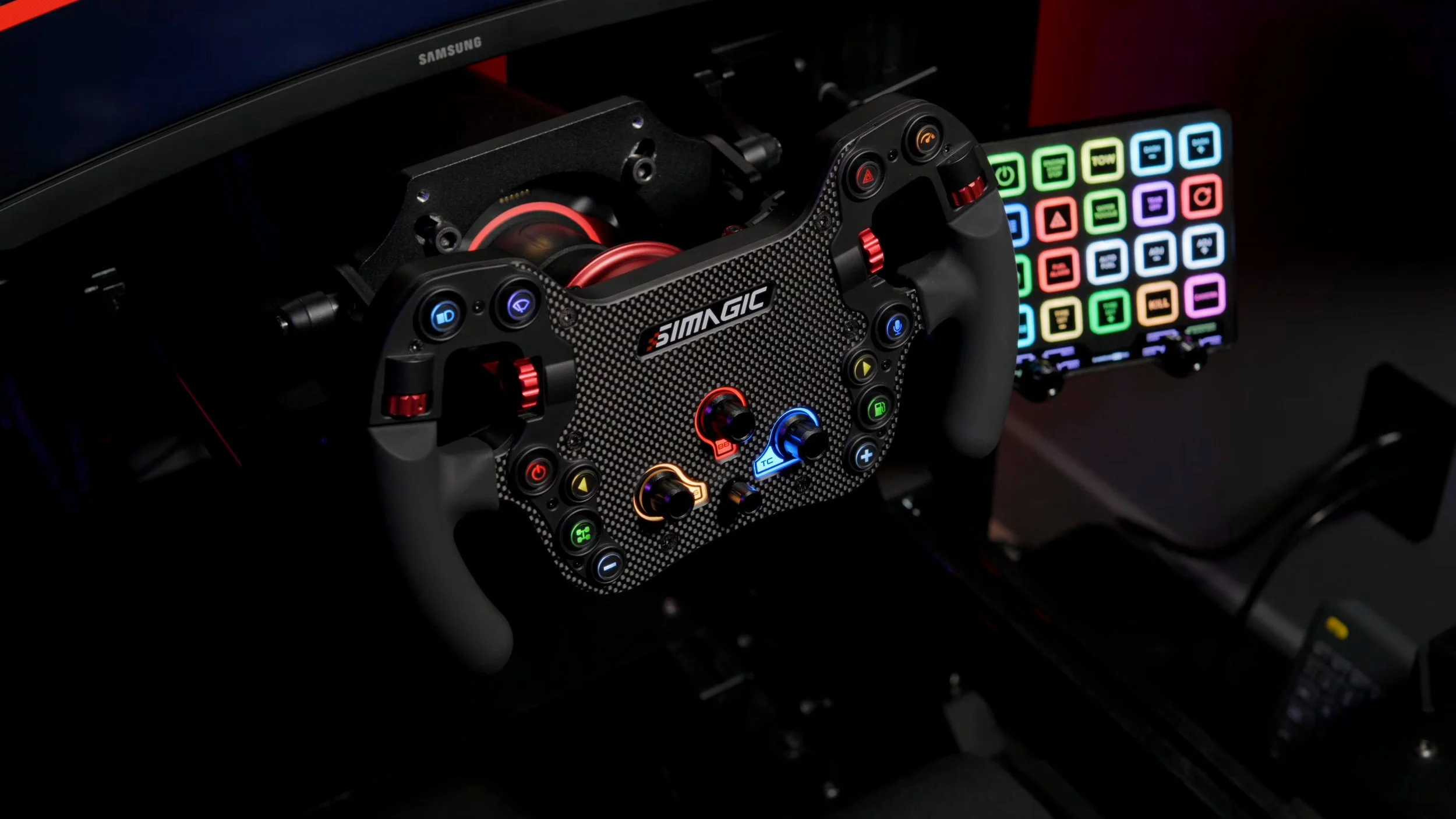
Simagic also sent the FX wheel for this test, and it became a highlight of the package. Its compact 290 mm shape, light feel and solid construction suited the type of driving I was doing. I particularly liked how it looked on the base.
The moulded silicone grips felt secure and comfortable during longer stints, including without gloves. The buttons had a reassuringly firm press, and the rotaries were easy to grip with clear, tactile steps. The thumb controls were useful for making adjustments without moving my hands far from the grips.
The paddles had a short, crisp action that I enjoyed. The adjustment was limited to width rather than depth, though, so reach deserves attention if you have smaller hands. That limitation sits alongside my otherwise positive view of the controls.
SimPro Manager provided the wheel’s lighting and configuration options. I did not miss having a display built into this particular wheel; the controls and ergonomics were its strengths for me. The FX is a separate product, so check what is included in any wheelbase bundle rather than assuming it matches my review setup.
Comparisons and my final verdict
Part of me preferred the steering feel of the VRS DFP15, but I also wanted a little more strength from it when using heavier wheels. That is why I would not describe the EVO Pro as an unconditional winner on feel alone. The balance of force, software, wheel choices and complete cost mattered to my decision.
I later compared the EVO Pro with the MOZA R21 Ultra and gave the Simagic a slight edge for its smoother, more fluid character. That is a separate, later test, covered in my MOZA R21 Ultra review, if you are considering both.
For the original September 2025 review, the EVO Pro’s appeal was clear: strong, detailed feedback, a practical enclosure and an ecosystem with plenty of room to grow. It delivered an experience I associated with more expensive hardware.
I would still want buyers to know about the firmware changes, the effect of filtering and the details I would improve in the casing and lighting. With the improved firmware I used at the end of the test, it was a wheelbase I thoroughly enjoyed—and a serious option for someone who wanted refined direct drive without paying for the most expensive tier.
Explore the 18 Nm Alpha EVO Pro.
Check the current price, available options and compatibility before ordering.
Check the EVO Pro at SimagicThis is a direct manufacturer link, not an affiliate link.
Explore the FX wheel tested in this review ↗
Confirm taxes, shipping and any required accessories at checkout.
About this article: Adapted from my original review script and video review. Driving impressions refer to the original review period. The official 18 Nm product listing and SimPro download information were checked on September 8, 2026. This is a written companion to the original review, not a new test of current firmware.
Back to top ↑