
Review disclosure: VRS supplied the DFP15 and R295 for review, and I retained the review equipment. These are my own impressions. The VRS product links below go directly to the manufacturer and are not affiliate links.
The DFP15 felt like a substantial rethink of VRS hardware: a compact metal enclosure, an integrated controller and a quick release with USB connectivity. What mattered most to me, though, was the connection it gave me to the car. The base delivered clear, lively feedback that I thoroughly enjoyed. My reaction to the accompanying R295 wheel was much more mixed, and I would separate those two buying decisions.
My verdict at a glance
Best suited to: Drivers who want an engaging 15 Nm base and are comfortable choosing components from different manufacturers.
What stood out: The direct, informative steering feel, tidy all-metal design and useful USB passthrough quick release.
What to consider: Sharp effects with responsive settings, the cost and power limits of third-party wheel connections, and whether the R295’s slim grips suit your hands.
A cleaner design than the original VRS base
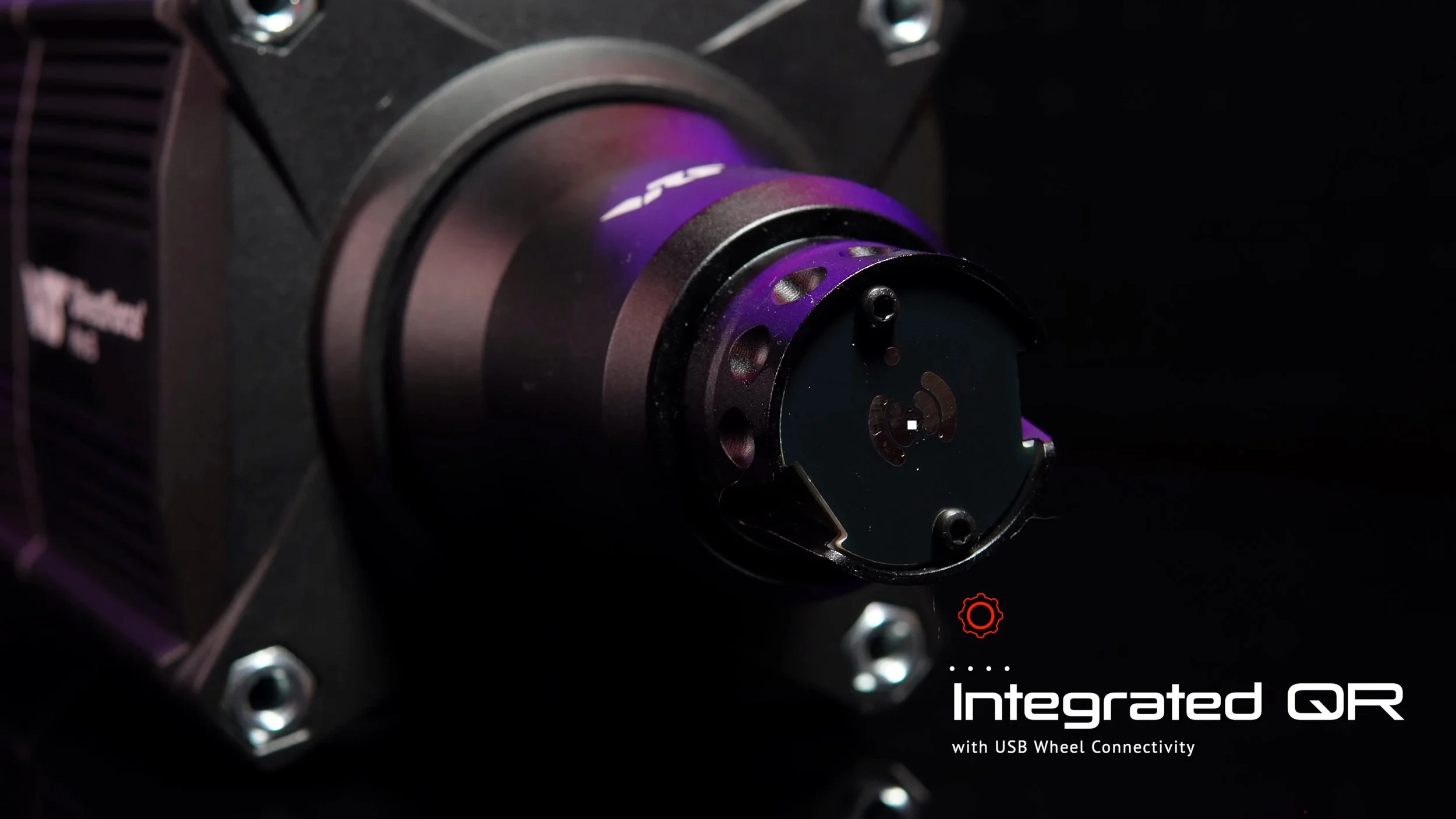
The biggest practical change was moving the controller into the wheelbase. There was no separate control box to find room for, and the enclosed aluminium construction felt solid when locking a wheel into place.
I liked the restrained, industrial appearance. The metal front and rear plates helped it feel more expensive than its original price suggested, and passive cooling meant there was no cooling fan to add noise.
Front and bottom mounting options gave useful flexibility. The underside channels accepted T-nuts, while the front pattern suited the type of brackets used with other direct-drive bases. Check the dimensions and mounting requirements for your particular cockpit; my positive view of the options is not a guarantee that every existing bracket fits.
Quick release and USB wheel connections
The quick release was one of my favourite parts of the DFP15. It felt secure, with alignment guides that helped make wheel changes straightforward. USB passthrough also made the base more interesting as the centre of a mixed-brand setup.
For a third-party USB wheel, the wheel-side connection is part of the budget. The base’s mechanical quick-release compatibility and its ability to pass USB data are related but separate considerations: you still need the correct adapter for the wheel you want to use.
There are power limits to consider. A wheel with a bright display and extensive RGB lighting can draw enough power that reducing brightness or connecting directly to the PC becomes necessary. I would check the exact wheel and adapter requirements rather than treating every USB rim as guaranteed plug-and-play.
My review describes the connection hardware available during the original test. VRS now lists newer quick-release and R295 variants, so confirm the version included in the package you are ordering.
The feedback that won me over
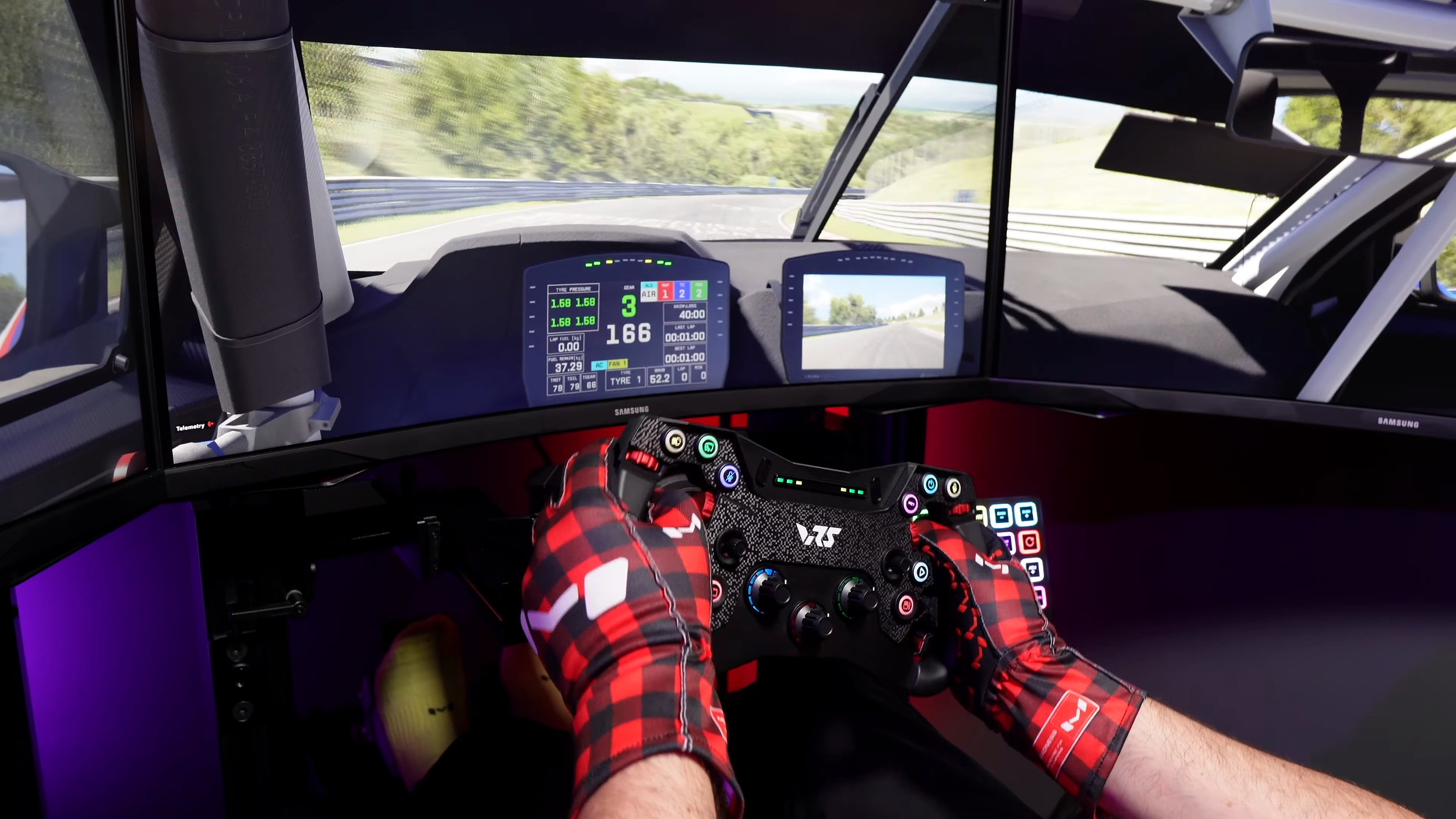
The DFP15 gave me an especially clear sense of tyre behaviour, suspension movement and changing car balance. The feedback felt quick and direct, making it easy to settle into the car and understand what was happening beneath me.
I enjoyed how naturally it communicated the approach to the grip limit. It felt intuitive when reacting to slides, although I did not run a controlled test measuring whether it improved my lap times or recovery rate.
That clarity could become sharpness with the most responsive settings. Kerbs, small impacts and other high-frequency effects sometimes came through more aggressively than I wanted. Damping and filtering helped, but I wanted to soften those moments without dulling the useful information.
Once I found the balance, the driving was very engaging. The base did not need a flashy enclosure or a huge torque number to make a convincing impression; the quality of the feedback was the reason I wanted to keep driving.
Config Tool and the settings I preferred
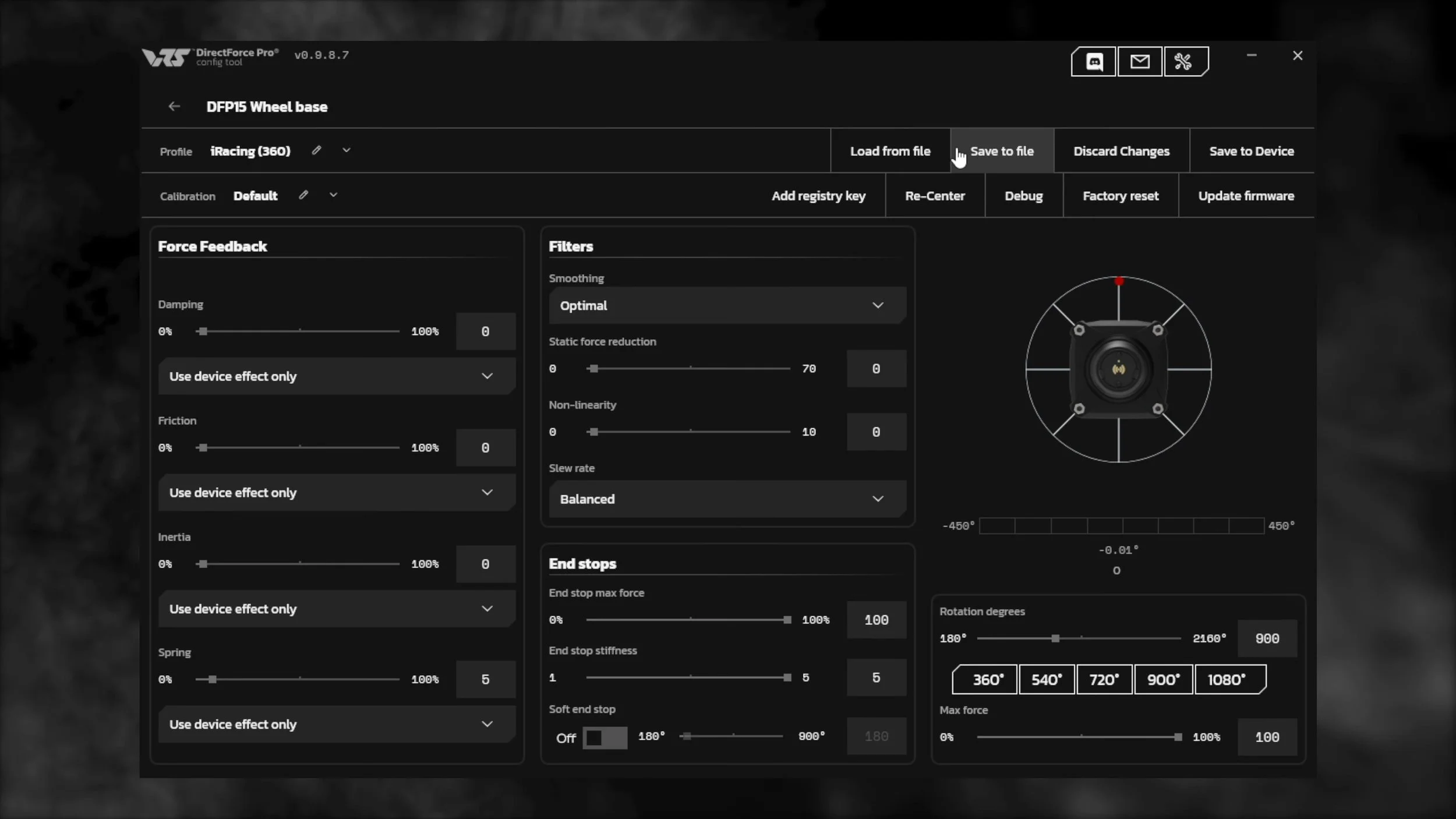
The VRS Config Tool gave me the controls I needed without making everyday setup particularly complicated. Strength, damping, friction, interpolation and filtering were available, along with profile slots for different setups.
I was happy with the Responsive 1 setting for iRacing. The software also offered Performance, Balanced and Quiet modes for adjusting the response. I would start with a sensible preset, then change the settings that address something you can actually feel on track.
I preferred iRacing’s 360 Hz option over the standard 60 Hz mode during testing. To my hands, it felt smoother and more responsive. That is a subjective comparison of the modes and settings I used, rather than a measured latency result.
The software was functional and approachable, but I still wanted more polish and deeper fine-tuning compared with some competing systems. Consistency between different sims also left room for improvement in my original assessment. These impressions refer to the August 2025 review period; current firmware and configuration tools may behave differently.
R295 build and controls
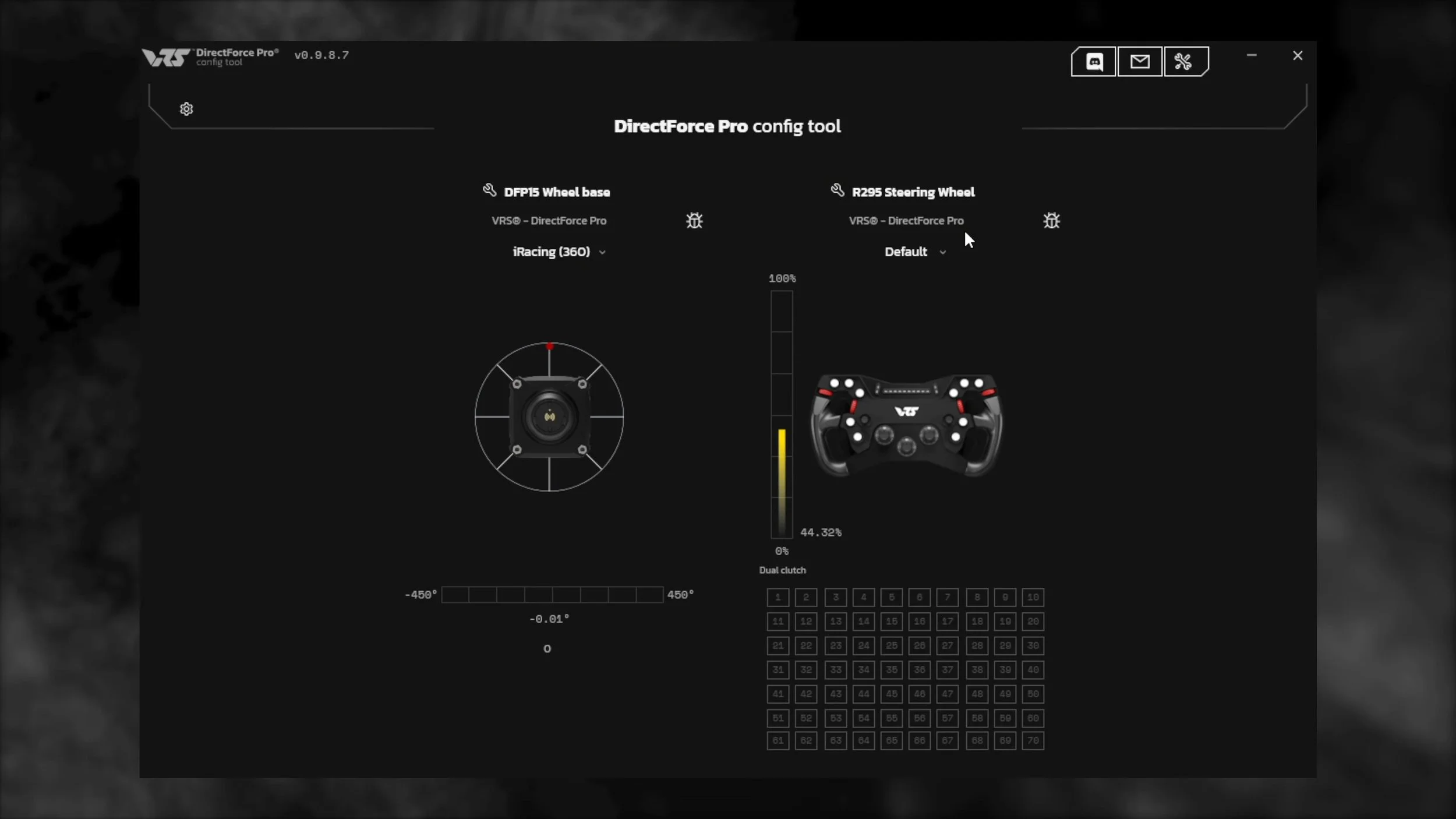
The R295 was solid where it needed to be. Its aluminium faceplate provided rigidity, and the controls did their job. I liked the useful layout and SimHub lighting support, which gave it plenty of practical functionality.
The plastic rear housing and surrounds felt less premium than the base. That did not create a performance problem in my testing, but the difference was noticeable after using wheels with more substantial materials.
The shifters were a bigger reservation. I did not particularly like their feel, and they were loud out of the box. VRS included damping stickers to soften the action and sound, which was useful, but the standard experience was not to my taste.
They still worked during driving. My criticism is about feel and enjoyment, not an invented claim that they missed shifts or failed.
Why the R295 grips did not work for me
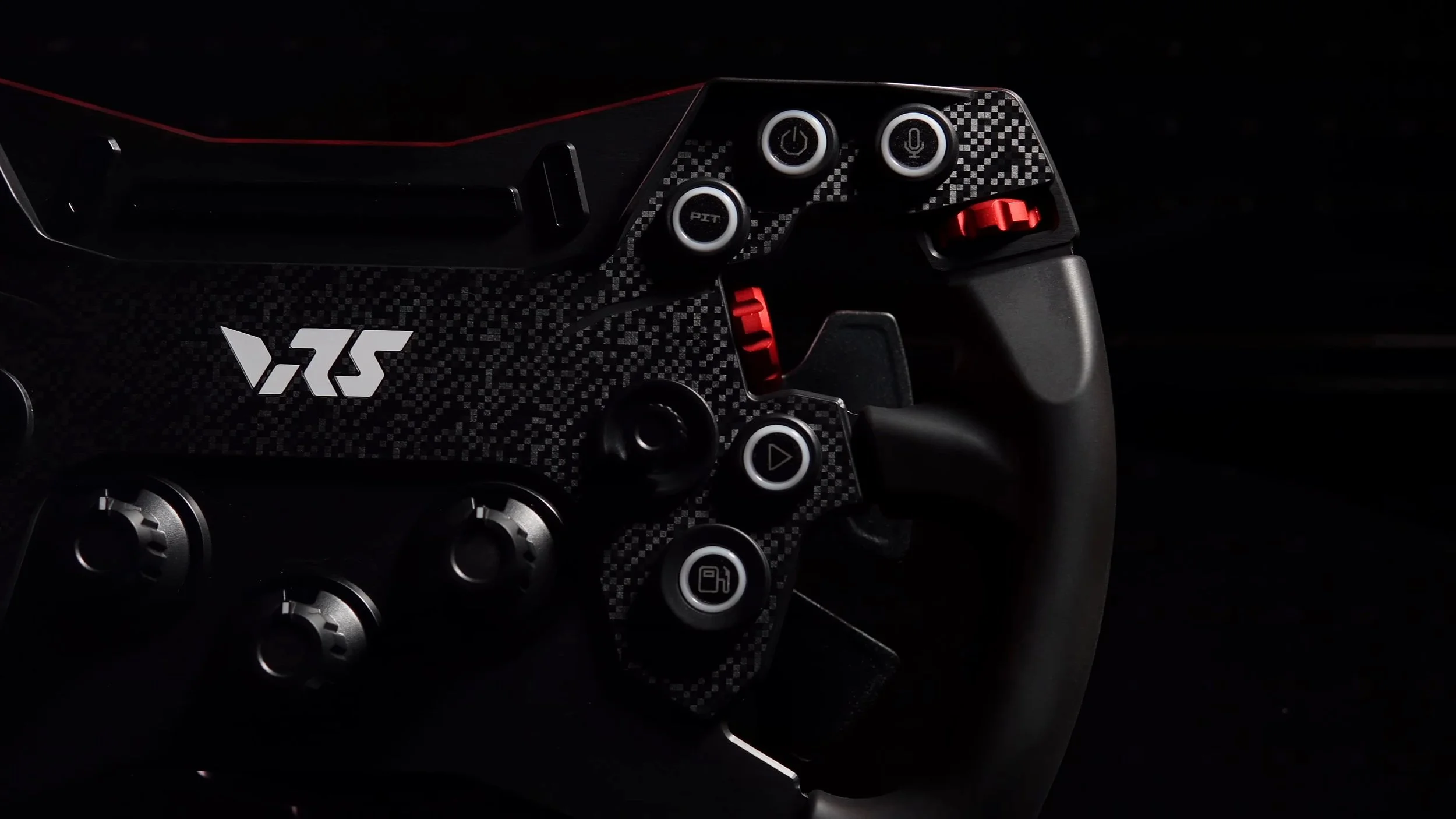
The grips were the main reason I struggled to enjoy the R295 for longer sessions. They felt thin and small for my hands, and my thumbs naturally pressed against the surrounding housing in an awkward way.
There was some contouring behind the grips for my fingers, but I never settled into a comfortable hold. For me, that outweighed the good functionality elsewhere on the wheel.
Grip comfort is personal. Someone who prefers a slimmer profile may have a different experience, but I would strongly encourage paying attention to the shape and reach before committing. A good list of controls cannot compensate for a wheel you do not enjoy holding.
This is a review of the original R295 I tested. VRS now also lists an R295 G2; I have not tested that newer model as part of this article, and these impressions should not be transferred to it automatically.
Value and the wider setup
My August 2025 review discussed US$649 for the DFP15 and US$349 for the R295, before the full regional costs of ordering. Those are historical figures, not a current quotation. Include any required quick-release adapter, mounts, shipping and taxes when comparing options.
At the time, VRS’s own Formula wheel was only US$50 more than the R295. I preferred its more refined feel and finish, while the R295 offered lighting and SimHub features the Formula wheel lacked. That small gap made the R295’s value less clear-cut to me.
The VRS accessory range was also smaller than the broader ecosystems from Simagic or MOZA during my review. That was not a problem if you liked mixing brands, but it meant additional software and connections for a complete rig.
The range has developed since then. Check what is available now, but choose based on the components you actually want rather than assuming that staying within one brand is always the best route.
My final verdict
The DFP15 was the product that impressed me most in this pairing. I enjoyed its direct communication, appreciated the clean hardware design and thought it made a strong case at the original review price.
I was much less enthusiastic about the R295. Its controls and lighting were useful, but the grips and shifter feel made me want to put a different wheel on the base. I would happily consider the DFP15 without treating the R295 as an automatic part of the purchase.
For someone choosing between direct-drive bases in this range, the DFP15 deserves a close look. If you prefer a smoother steering character or a broader single-brand ecosystem, my Simagic Alpha EVO Pro review covers another base I enjoyed.
My recommendation is to evaluate the base and wheel separately. The DFP15 gave me the connection to the car I wanted; the R295 reminded me how much the shape of the wheel in your hands can change the experience.
Take a closer look at the DFP15.
Compare the current base and quick-release options. The original R295 and newer G2 are separate versions; check which one a bundle includes.
Explore the DFP15 at VRSThis is a direct manufacturer link, not an affiliate link.
View the original R295 product information ↗
Confirm taxes, shipping and any required accessories at checkout.
About this article: Adapted from my original review script and video review. Driving impressions refer to the original review period. The official DFP15 page and original R295 page were checked on September 8, 2026. This article preserves my original impressions rather than presenting a new test of current firmware or the R295 G2.
Back to top ↑