
Review disclosure: Advanced Sim Racing and D-BOX supplied this system on loan for review. The impressions below come from months of use on my own rig. The Advanced Sim Racing shopping link is an affiliate link; I may earn a commission at no extra cost to you. The D-BOX link goes directly to the manufacturer.
Before this review, most of my motion experience came from brief demonstrations at events or sim centres. Living with the G3 on my own chassis was a different opportunity: I could get the seating position right, adjust the feedback and spend enough time with it to get past the first impression. What surprised me was how awkward motion initially felt, and how natural it became once I adapted.
My verdict at a glance
Best suited to: An established rig owner who prioritises physical feedback and immersion, with the budget and space for a premium motion installation.
What stood out: Detailed haptics, responsive movement and a strong sense of the car’s behaviour once I settled into the system.
What to consider: The high complete-system cost, installation work, vibration and noise, an adjustment period and an occasional startup connection quirk.
Motion took time to feel natural
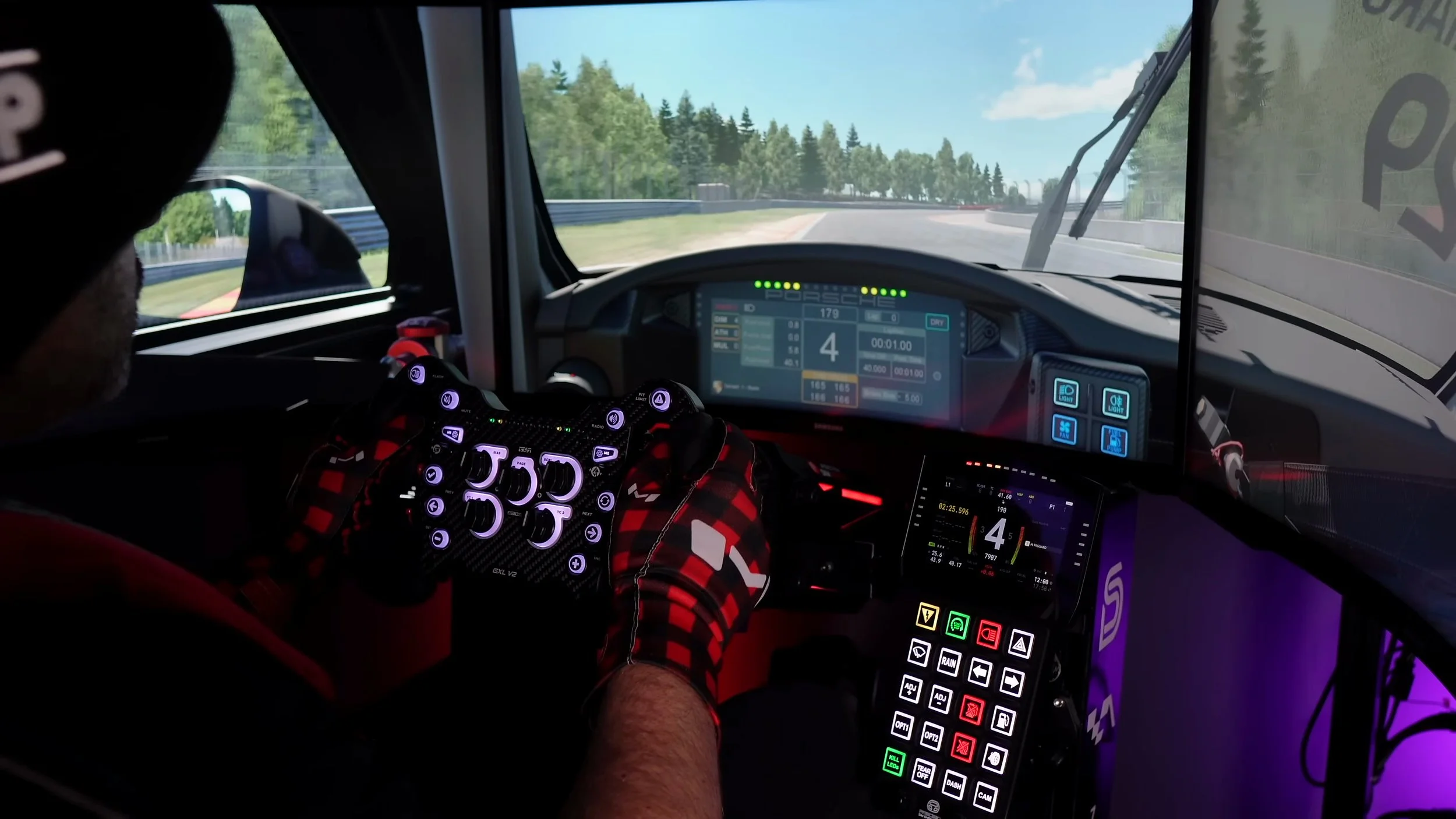
My first sessions were not an instant improvement in every respect. Coming from a static rig, I already had a rhythm built around steering feedback and what I could see. Having the cockpit move beneath me disrupted that familiarity.
I found myself paying attention to the physical sensations instead of simply driving. It was exciting, but sometimes disorienting, and I switched back to a static setup a few times to reset. That initial reaction is part of the review, not something I would leave out because the later verdict became positive.
With more laps and some tuning, the movement started to make sense. I began to expect the rig to react over kerbs and under braking. The motion became another source of information about the car rather than a separate effect demanding my attention.
I did not establish a measured lap-time improvement, and this was not a controlled comparison with every competing motion system. For me, the benefit was the connection and immersion. Someone concentrating purely on competitive consistency may put a different value on that.
What the G3 kit added
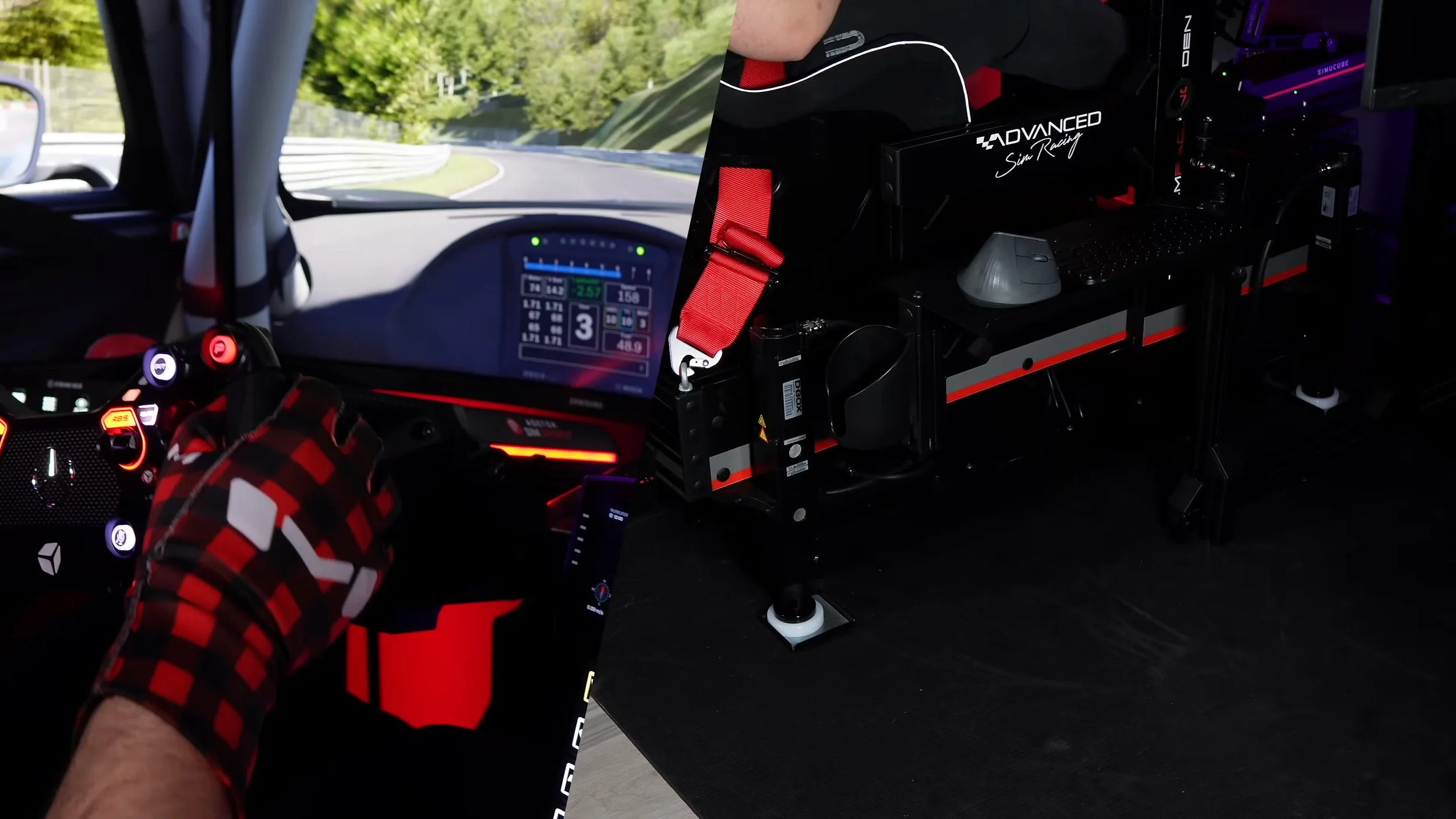
My setup used four G3 4400i actuators with three inches of travel. The combination of cockpit movement and finer vibration mattered more to me than the travel number alone. Relatively small movements could still create a convincing impression of suspension activity and weight transfer.
The banking at Daytona was a memorable example: feeling the rig move with the scene made the corner more engaging. Braking, kerb strikes, gear changes and engine vibration each added a different physical layer.
This review concerns the G3 configuration I used. It is not a test of the newer G5 hardware, and the current manufacturer page covers multiple D-BOX options. Match the generation and configuration when comparing a quote with my experience.
Installation and living with the hardware
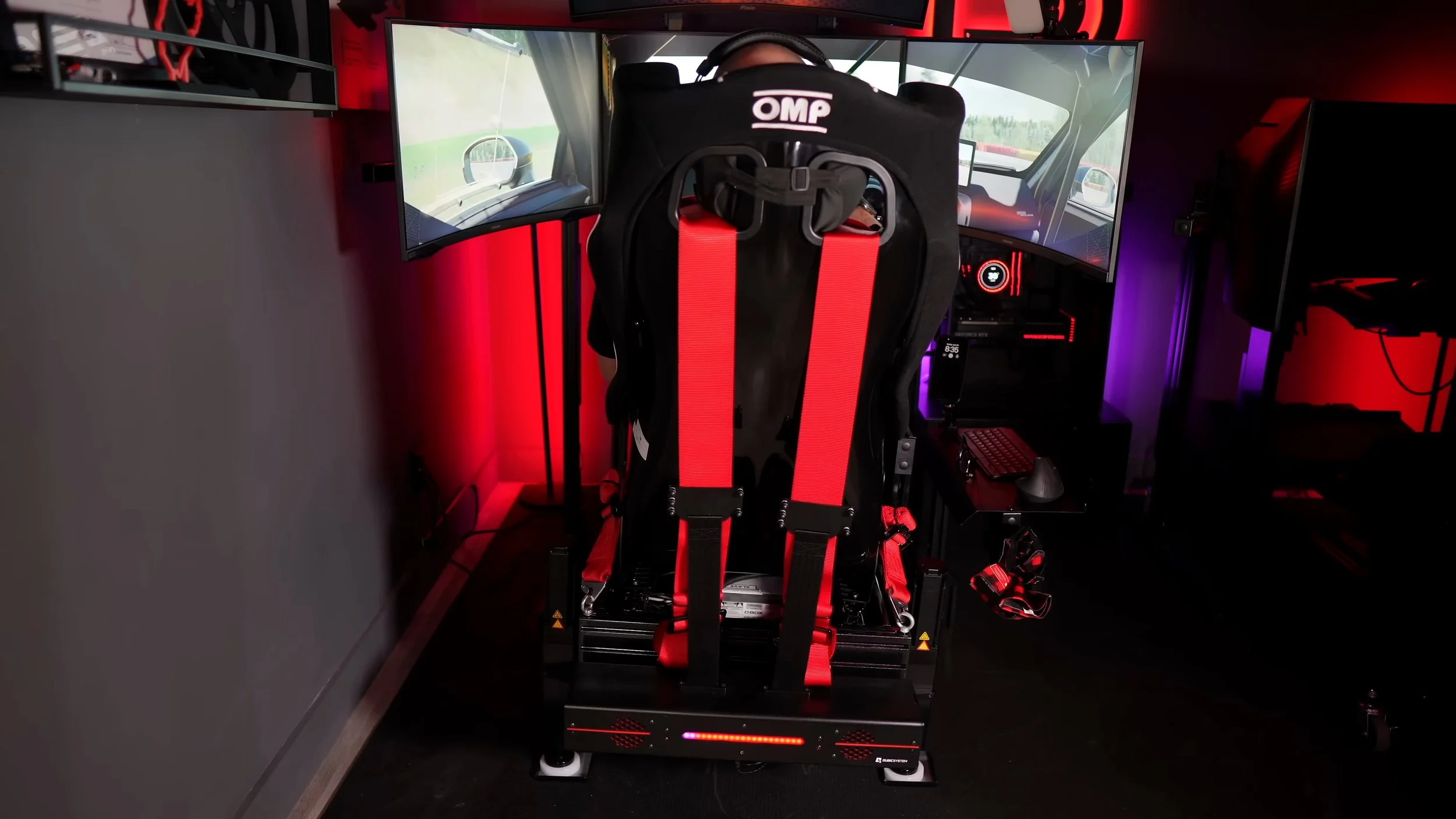
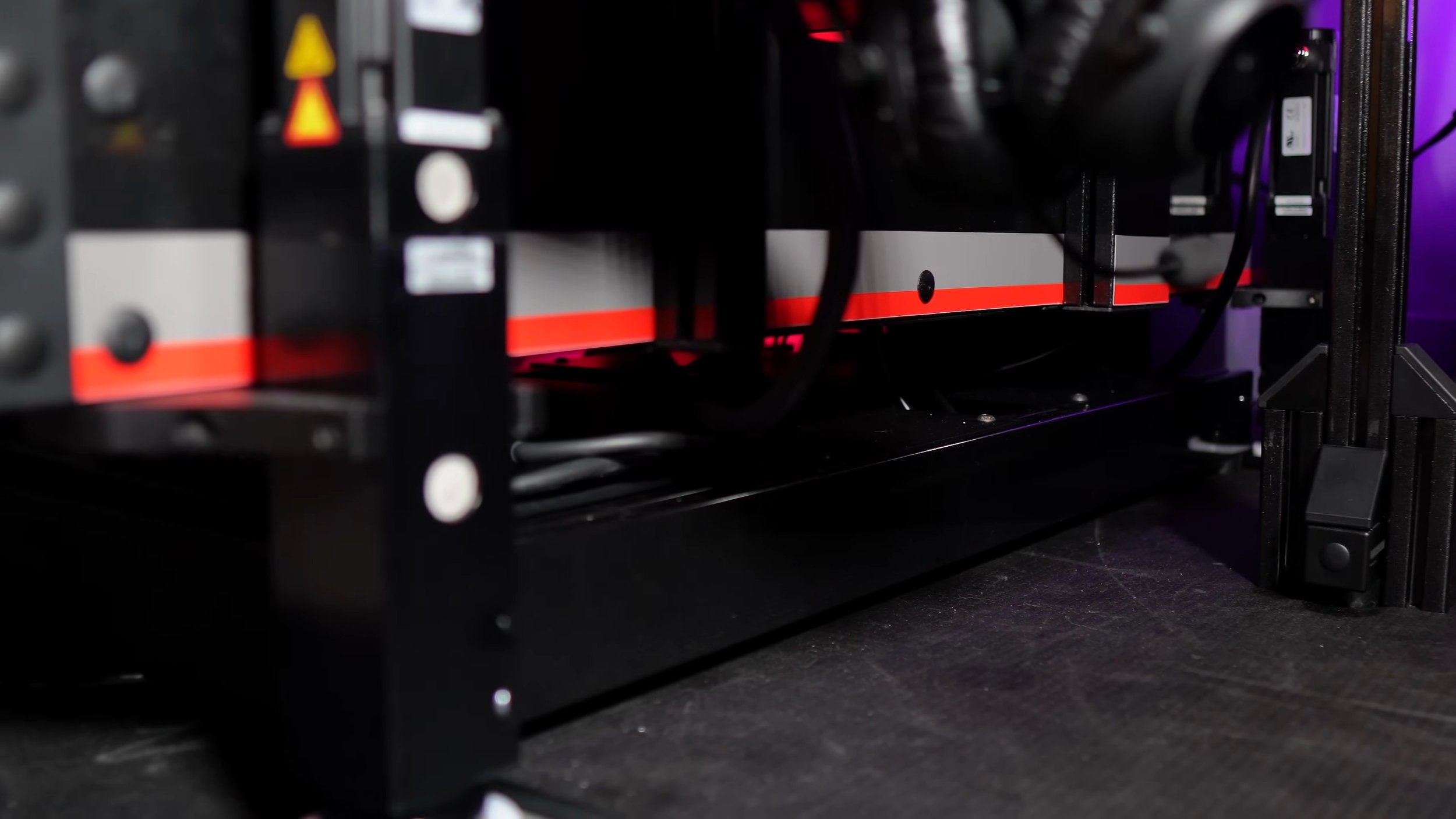
The G3 kit uses external control boxes and a USB connection, so there was more to organise than the actuators themselves. I mounted the controllers below the rig using ASR’s plates and spent time hiding the power supplies and cabling.
The industrial appearance was functional rather than sleek. I preferred the lower-profile look of the G5, but the G3 still suited a serious cockpit. Once I had everything arranged, the installation looked much tidier than the initial collection of boxes and cables suggested.
Adding actuators to an already assembled, heavy rig makes the physical installation more involved. I would plan the mounting, cable routing, clearance and help with handling the chassis before starting, following the supplier’s installation guidance for the exact setup.
The hardware felt solid through months of use. I did not see unusual wear or hear new mechanical problems developing during that period. That experience is encouraging, but it is a review-period observation rather than a lifetime durability guarantee.
HaptiSync and the settings I used
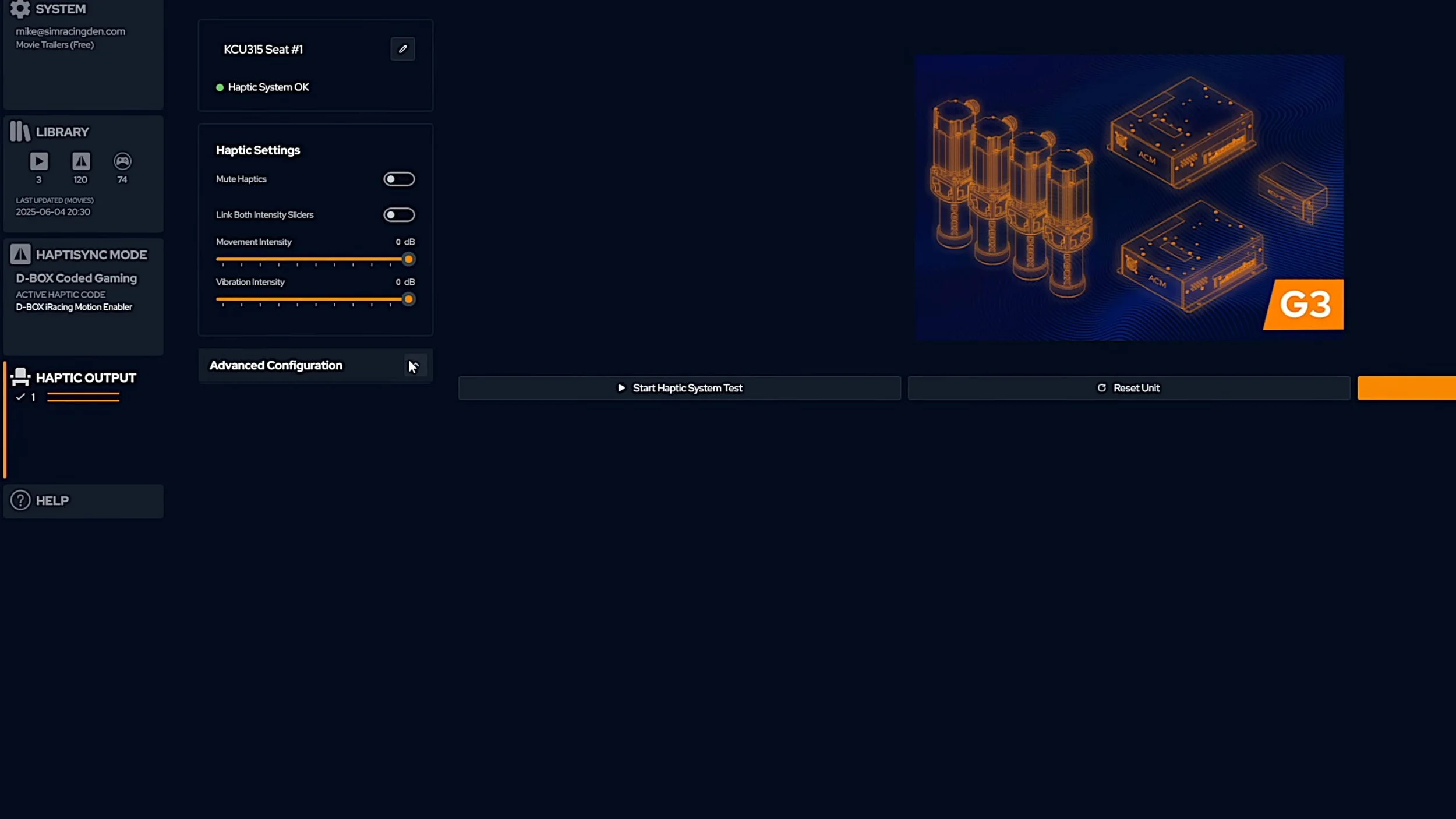
D-BOX’s HaptiSync Center was central to the setup. I selected the supported sims and installed their haptic profiles, then adjusted the feedback to suit my preferences. The software was easier to live with than I had expected for a system this elaborate.
I particularly liked the starting point in iRacing. My main adjustment was to reduce the engine vibration because the default strength was too much for my taste. I did not need an extensive tuning session to enjoy the basic experience.
The system runs through a homing sequence and settles into an idle position. The software also gave me room to reduce the movement and adjust individual effects. I preferred using that flexibility to find a convincing balance instead of assuming stronger settings would always feel better.
These are the settings and workflow from my July 2025 review. Check D-BOX’s current supported-game list and software guidance for the titles you use; the experience can differ between sims.
Responsive motion and detailed haptics
I spent most of my time in iRacing, with additional use in Assetto Corsa and Le Mans Ultimate. The feedback varied a little by title, but I found the overall motion sharp and responsive. I did not notice a distracting delay in the games I tested; that is a personal impression, not an instrumented latency measurement.
The haptics were a large part of the appeal. Engine vibration came through the seat, shifts had a distinct kick, and bumps and kerbs made the cockpit feel more alive. When the effects worked together, the result felt coherent rather than like unrelated vibration added to the rig.
After getting used to that feedback, returning to a static rig felt as if something was missing. I also found the combination with VR especially immersive. Those reactions explain my enthusiasm, without claiming that motion recreates every force of a real car.
I did encounter an occasional connection issue when starting the PC. A power cycle resolved it in my setup. I could not establish whether the PC or the motion system was responsible, and it was infrequent, but it belongs in the account of daily use.
Noise, vibration and your room
The movement and haptics generated sound through the chassis. Ordinary driving was manageable in my room, while heavy kerb strikes, slides and impacts could be quite loud. The intensity of the settings and the rest of the rig affect what you hear.
I normally race with headphones, which made the operating sound much less noticeable to me. That does not mean it disappears for someone elsewhere in the house. My dedicated basement room, with a door I could close, was an advantage.
I used a thick exercise-equipment rubber mat beneath the rig to help with isolation and protect the floor. It helped in my installation, but I would not assume a mat can solve noise transmission in every room or building. A shared space deserves a more careful assessment before investing in motion.
A major purchase, even for an established rig
My July 2025 review discussed roughly US$15,000 to US$18,000 for a complete four-actuator configuration. That was the historical price context of the video, not a current quote. Rig-specific mounting parts, installation and the rest of the setup also needed consideration.
I acknowledged that less expensive motion options existed. I had not extensively tested them all, so I could not justify a claim that D-BOX offered the best value against every alternative. What I could describe was how this particular kit performed in my home setup.
For a first rig, I would prioritise the chassis, pedals and wheelbase before spending this much on motion. Once those foundations are right, the decision depends on how highly you value immersion and how comfortably the full cost fits your budget.
Advanced Sim Racing helped with the configuration I used. If you are planning a complete installation, discussing your chassis, available space and preferred hardware with a supplier is more useful than choosing from the actuator price alone.
My final verdict
The G3 changed how I experienced sim racing during this review. The detailed haptics and movement became a part of the feedback I looked for, and the initial awkwardness faded as I learned to use them.
The practical trade-offs remained real: installation took patience, the hardware needed space, the rig made noise and the price was substantial. The rare startup connection quirk also meant the experience was not entirely without friction.
For my priorities and dedicated room, the result was deeply enjoyable. I would approach it as an immersion purchase after the essentials of the rig are in place, with a realistic plan for the cost and installation.
For another chapter in my later motion experience, you can also read my Qubic System QS-210 review. It was published after this D-BOX video and should be read as a separate review, rather than folded into what I had tested in July 2025.
Explore a D-BOX motion setup.
My review covers the G3 4400i four-actuator kit with three inches of travel. Confirm the generation, configuration, mounting requirements and current quote before ordering.
View D-BOX sim racing systemsThis is a direct manufacturer link, not an affiliate link.
Confirm taxes, shipping and any required accessories at checkout.
Plan a setup with Advanced Sim Racing ↗The Advanced Sim Racing link is an affiliate link. I may earn a commission at no extra cost to you.
The ASR chassis and accessories offer mentioned in my video is separate from D-BOX hardware. Do not assume a D-BOX kit qualifies; ask ASR for the current package details.
About this article: Adapted from my original review script and video review. Driving impressions refer to the original review period. The official D-BOX sim racing page and Advanced Sim Racing destination were checked on September 8, 2026. This is a written adaptation of the original G3 test, not a new G5 test or a current price comparison.
Back to top ↑