
Review disclosure: VPG supplied the V-PGT as a review unit, which I retained. The original October 2024 video includes a separate Pit Lane Sim Racing sponsored segment. The link below goes directly to VPG and is not an affiliate link.
The V-PGT immediately appealed to the Porsche enthusiast in me. Its shape drew inspiration from the Porsche 911 GT3 R, while the full carbon body promised the light, rigid feel I had enjoyed in other premium wheels. On my rig, that combination made it an especially enjoyable choice for GT racing. There were still details I would have changed, particularly for bare-handed driving.
My verdict at a glance
Best suited to: A GT and Porsche enthusiast who likes a light wheel and normally drives with gloves.
What stood out: A rigid carbon body, responsive steering feel and convincing GT-car character.
What to consider: Thin, slightly slippery grips without gloves, button play, label preferences and the premium positioning.
Porsche inspiration, with an important distinction
The V-PGT was inspired by the wheel in the 992-generation Porsche 911 GT3 R. My original review described it as an inspired design, not an officially licensed replica.
I liked the resemblance and the sense of connection it brought when driving virtual Porsches. It also worked well with other GT-style cars; that visual connection was a preference rather than a compatibility requirement.
The cutout in the centre accepted the supplied VPG badge. The rest of the design put the carbon and controls at the forefront, which suited the character of the wheel.
Carbon construction and the feel in my hands
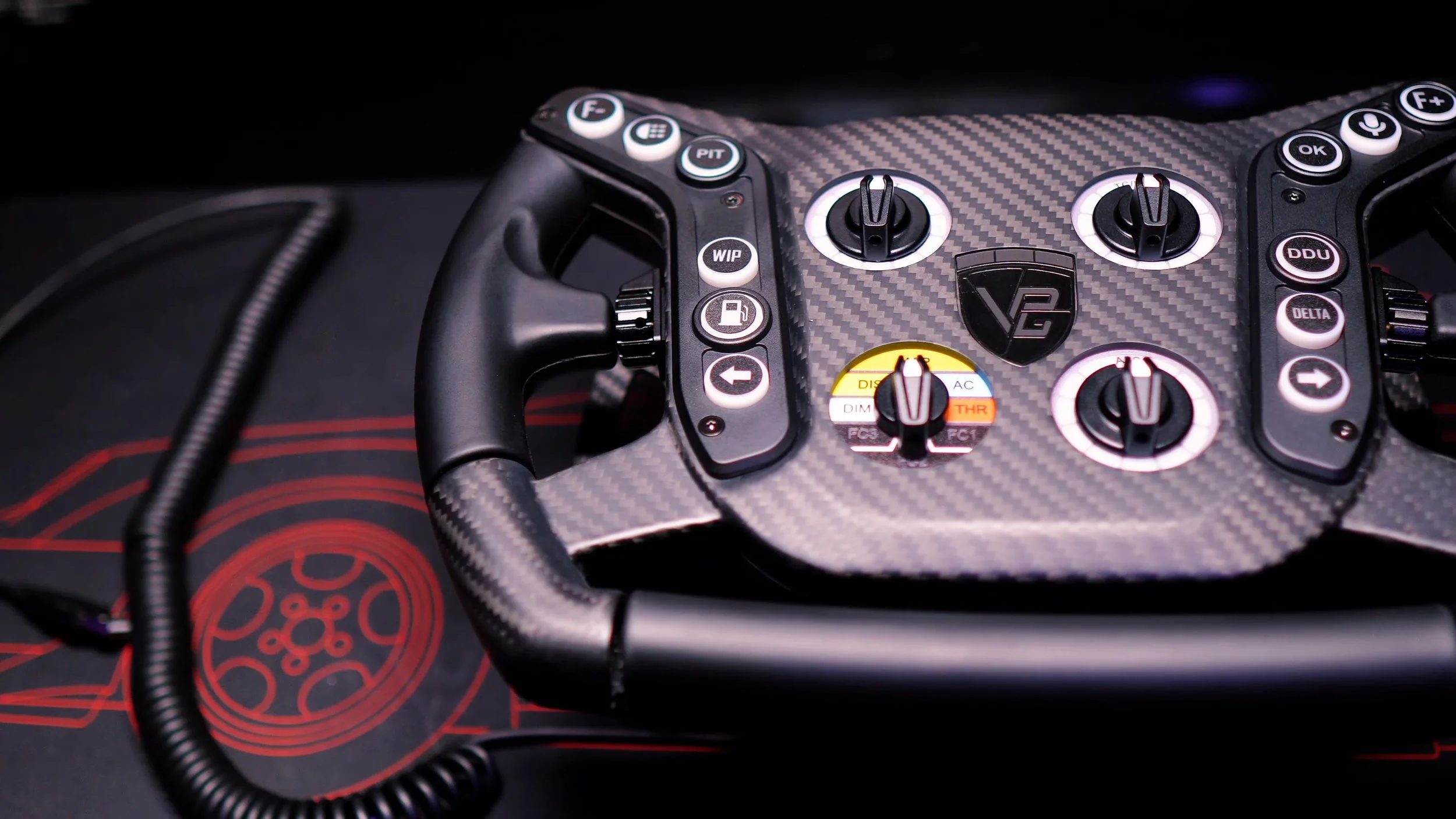
The full carbon chassis was the standout feature. It felt light and extremely rigid, and that combination made the feedback through the wheel especially immediate to me.
The 300 mm size suited GT driving. My original specifications quoted around 1.5 kg including the hub, so the installed mounting arrangement belongs in any weight comparison.
The shifters, knobs and guards complemented the carbon construction, and the wheel arrived in a substantial combination-lock case. I rarely dwell on packaging, but this was useful storage as well as an enjoyable unboxing detail.
I liked the overall finish. Still, premium materials do not make every control perfect, and there were some smaller choices I would have made differently.
Buttons, encoders and the labels I changed
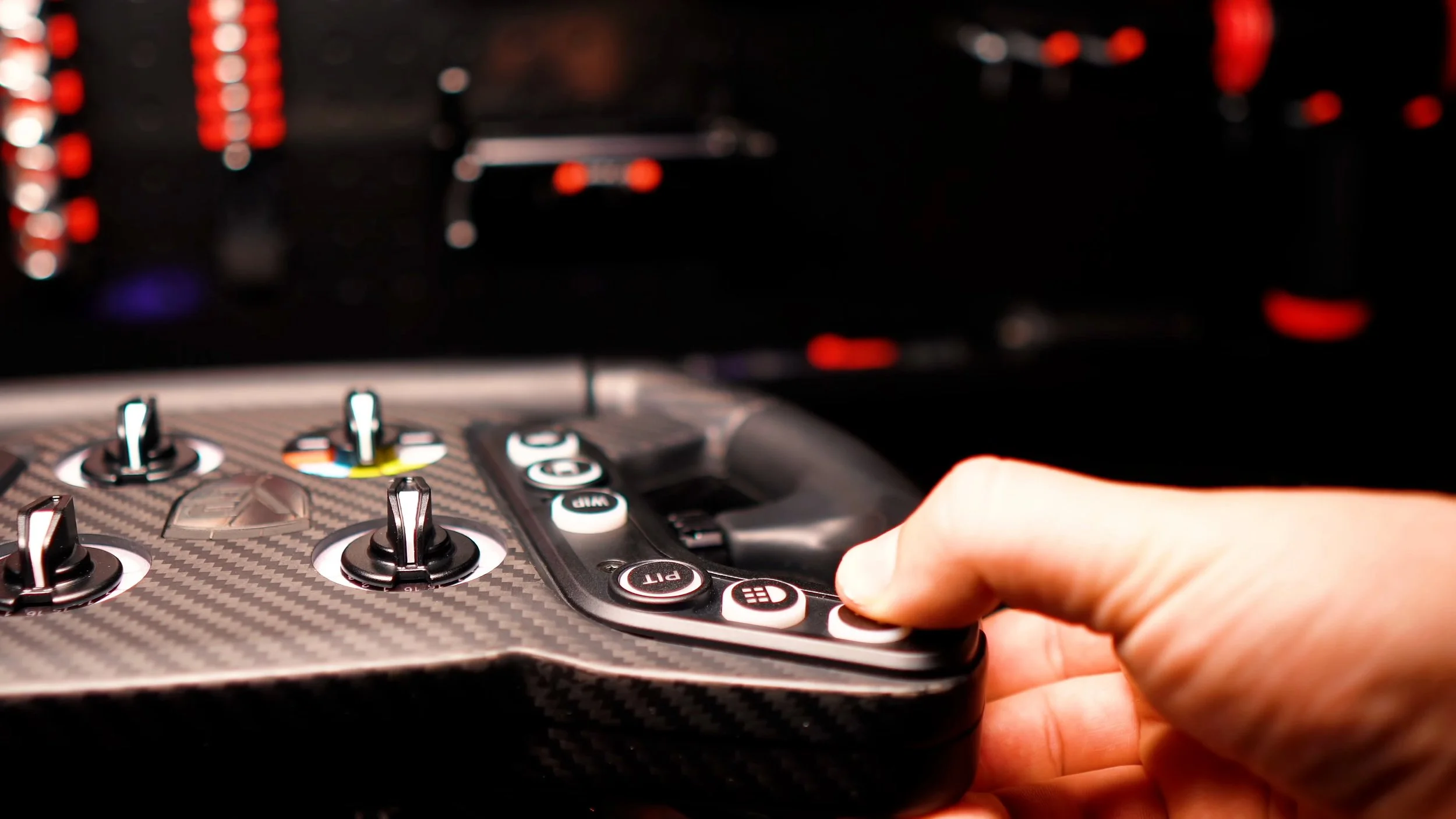
The front buttons had a satisfying tactile action and stood proud enough to be easy to operate with gloves. I could feel some play, and would personally have preferred them slightly more recessed.
The rear Otto P9 buttons gave me useful extra inputs. The thumb encoders were handy for changes on track, while the central rotary switches made the front feel purposeful.
One selector could change the assignment of the left thumb encoder, giving me access to several functions without adding more physical controls.
I was not fond of either supplied label set. I ended up using spare labels from my GRID wheels because I preferred how they looked with the lighting. That was an aesthetic choice, but one I noticed on a wheel in this price bracket.
Grips and paddles
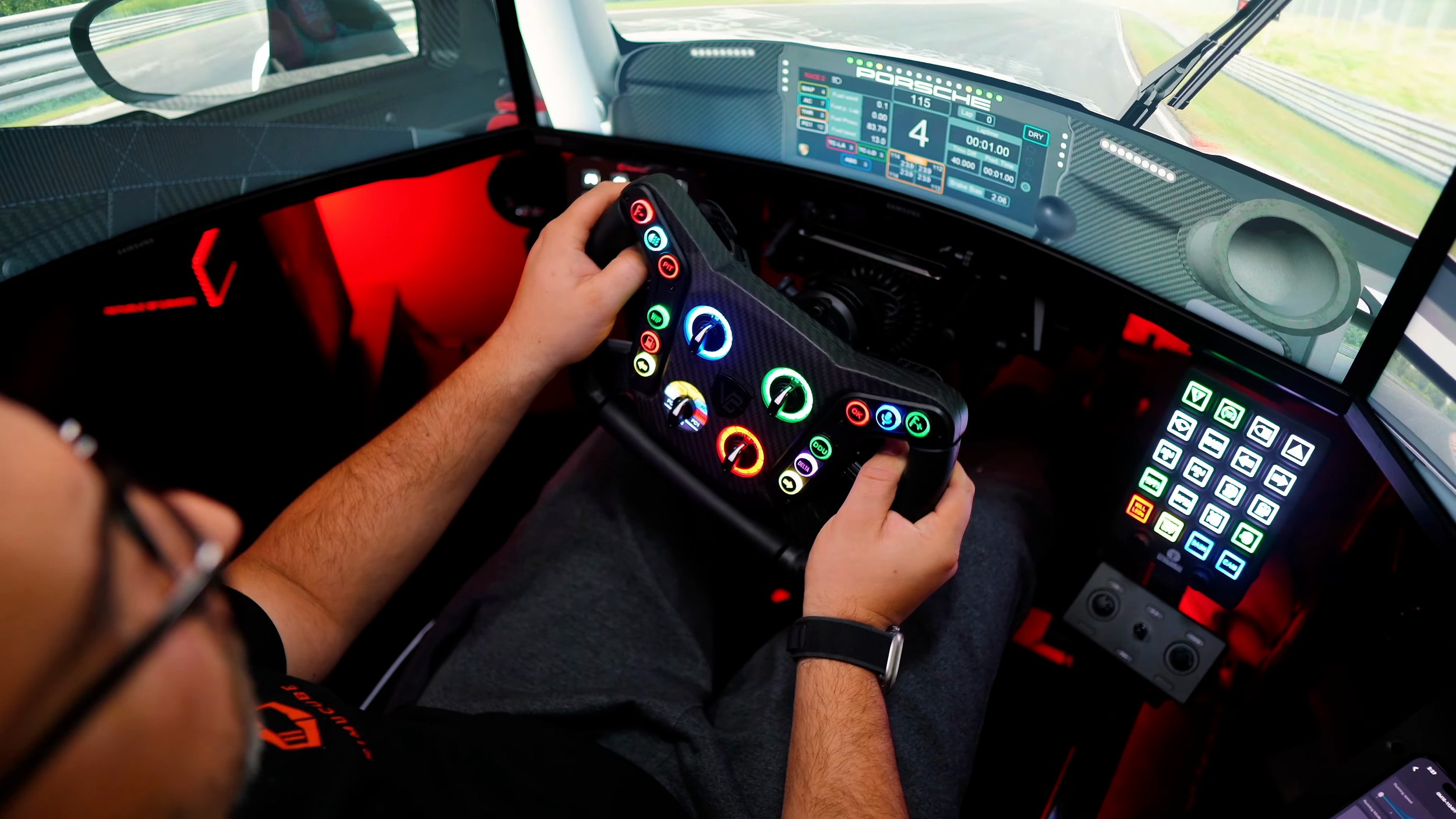
The rubber grips felt firm and a little thin for my taste. Without gloves, they also felt somewhat slippery, so I would have welcomed a slightly thicker, more secure bare-handed feel.
I normally race with gloves, and found the wheel much more comfortable that way. The grip shape was therefore less of a problem in my usual sessions than it might be for someone who always drives bare-handed.
The magnetic shifters felt good, and their GT-size paddles were easy for me to operate. The additional upper paddles were useful, although they were not essential to how I used the wheel.
My comments apply to the paddle configuration in the original test. Check the actual configuration of any unit you are considering rather than assuming every option is included.
Mounting and SimHub setup
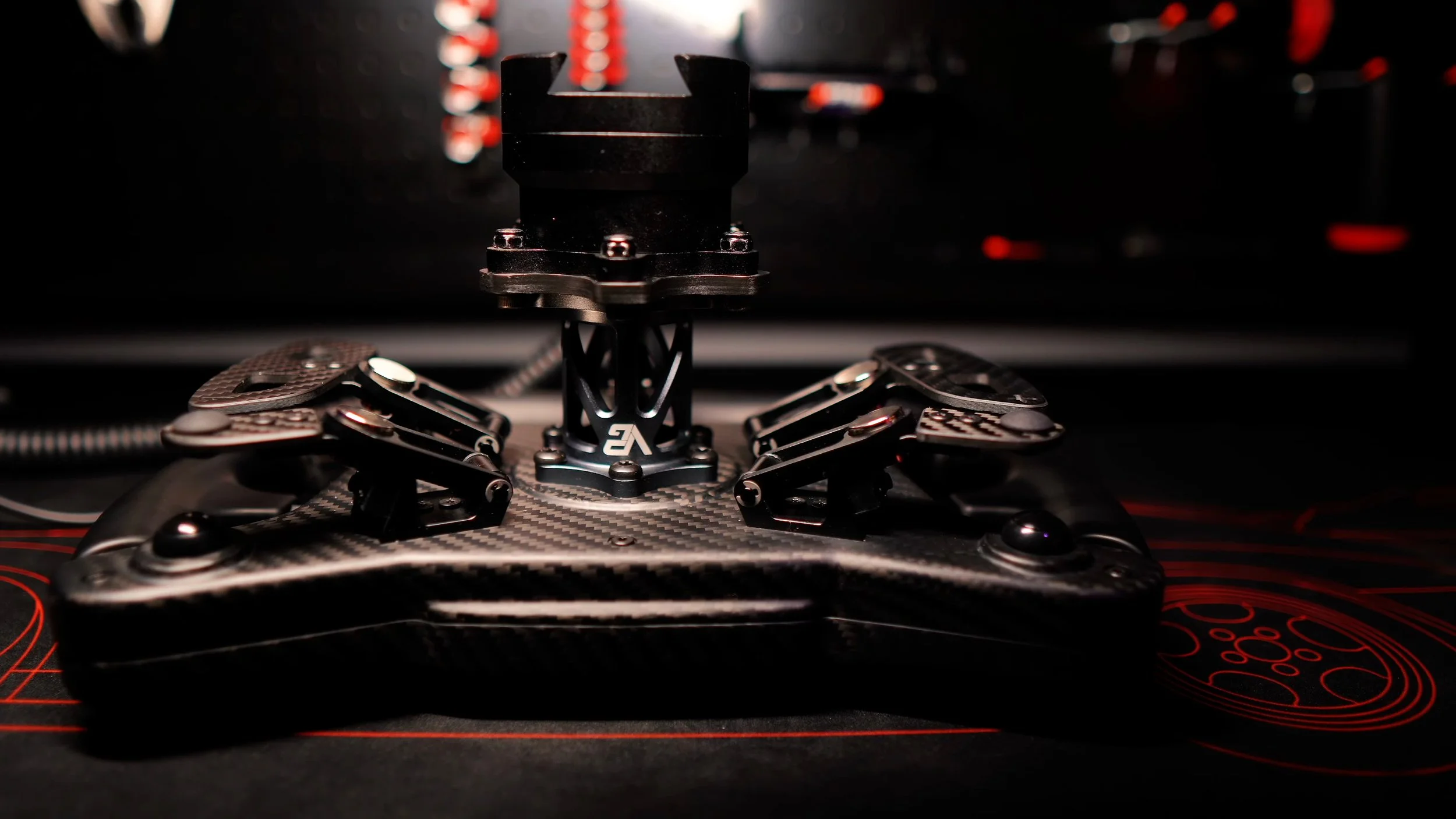
My setup used the wheel’s hub and a standard Simucube wheel-side release mounted through the 70 mm pattern. I generally wanted around 50 mm of hub spacing to keep the position consistent across my collection.
The wheel connected to my PC or USB hub using the supplied cable. I preferred a powered hub when I was not connecting directly to the PC.
That does not establish universal wheelbase compatibility. Other bases could require different hubs, adapters or quick releases; the electrical connection and mechanical mounting both need to work.
I used SimHub for the lighting. VPG profiles and community-created alternatives provided starting points, and I liked being able to manage the wheel alongside other devices in the same software.
I did not consider the lack of a separate VPG lighting app a major drawback. For the way I configured my rig, SimHub support was a strength.
Why I enjoyed it on track
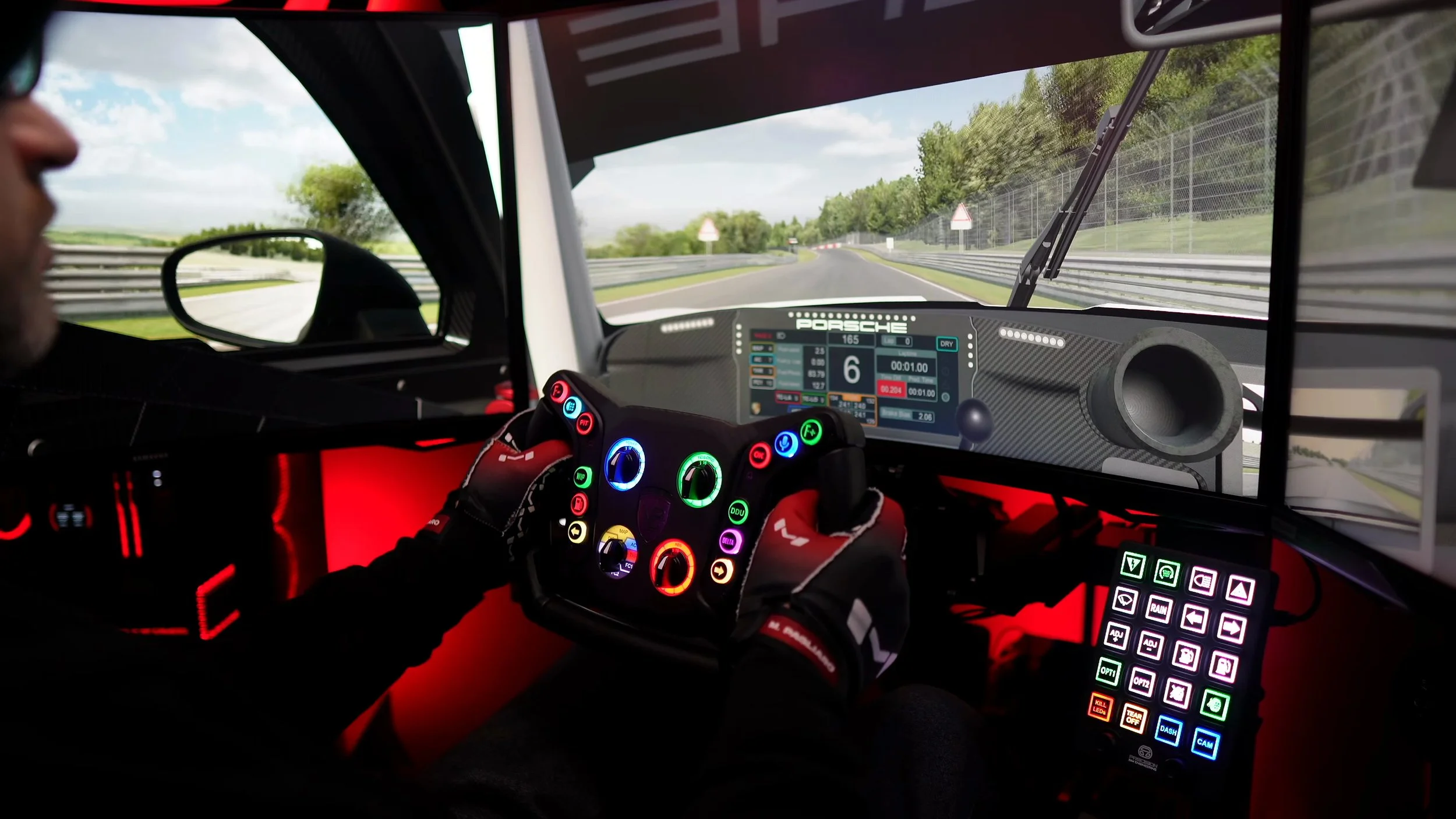
The light carbon frame and rigidity made the steering feel detailed and direct. I found subtle feedback easier to appreciate, and the wheel encouraged me to revisit my force-feedback settings rather than simply use the same settings as with a heavier rim.
That is a description of how it felt to me. I did not measure a lap-time gain or run an instrumented comparison of rotational inertia.
I particularly enjoyed it in Porsche Cup and GT3-style cars. The design, controls and feedback worked together to make those sessions feel convincing.
It was less likely to be my only wheel if I also spent a lot of time in formula or prototype cars. I saw its appeal as a dedicated GT wheel, especially for someone with more than one rim.
My verdict and availability today
The V-PGT sat firmly in the premium category in my original review. I would weigh its appeal against how much time you spend in GT cars and how much the design matters to you.
The construction and driving feel were the reasons I enjoyed it so much. The thin grips, bare-handed slipperiness, button play and labels were the details I would still want a buyer to know.
For my gloved GT sessions, the strengths outweighed those reservations. It was a pleasure to drive with and became a natural choice when I loaded a Porsche.
When preparing this written version, the original product URL no longer displayed a V-PGT listing, and it was absent from the current catalog I checked. I have linked to VPG’s official range instead of implying that the reviewed wheel is available to order.
Explore VPG’s current wheel range.
The original V-PGT product page is no longer showing a product, and I could not confirm current availability. This button opens VPG’s current wheel catalog; it does not promise the reviewed model is still for sale.
Visit VPG’s official websiteThis is a direct manufacturer link, not an affiliate link.
Confirm taxes, shipping and any required accessories at checkout.
About this article: Adapted from my original review script and video review. Driving impressions refer to the original review period. This article preserves my October 2024 experience. Current availability of the V-PGT was not confirmed; the manufacturer link opens its current catalog.
Back to top ↑