
Review disclosure: VNM Simulation and Advanced Sim Racing supplied this shifter for review. The opinions here are my own. The VNM product link below is not an affiliate link.
After trying VNM’s combined H-pattern/sequential shifter and its Lite pedals, I wanted to see what its dedicated SEQ V2 offered. It immediately felt substantial, and the shifting action was enjoyable. The harder question was value: I generally use wheel-mounted paddles, so a better-built sequential still had to justify its place on my rig.
My verdict at a glance
What I preferred: The solid metal construction, minimal arm movement and satisfying shift action.
What to consider: Original handle-height limits, audible shifting and fewer auxiliary controls than the cheaper MOZA.
Who it suits: Someone who uses a sequential regularly and values feel and construction enough to pay more.
Check product details and current availability →
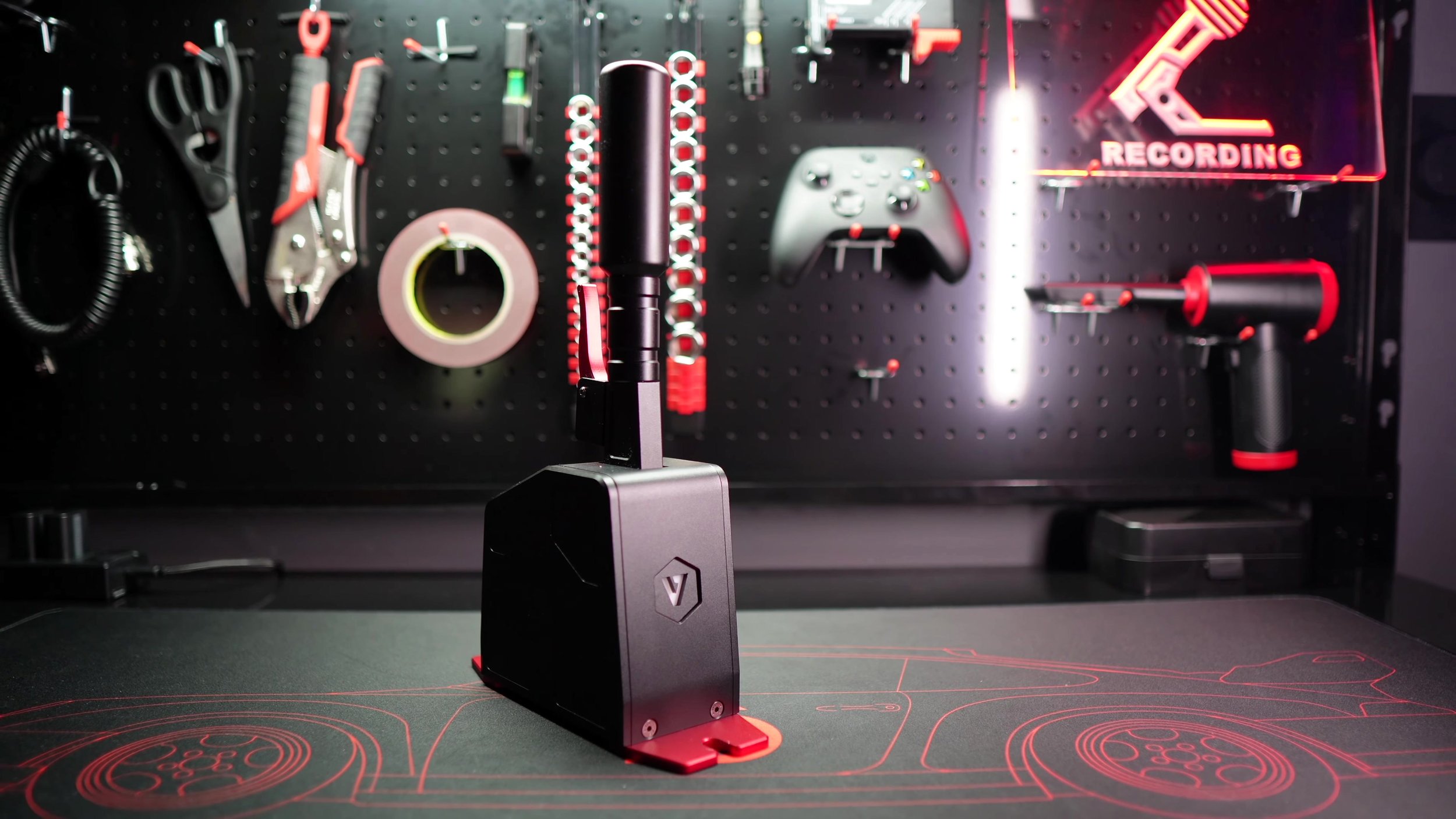
Substantial construction and very little play
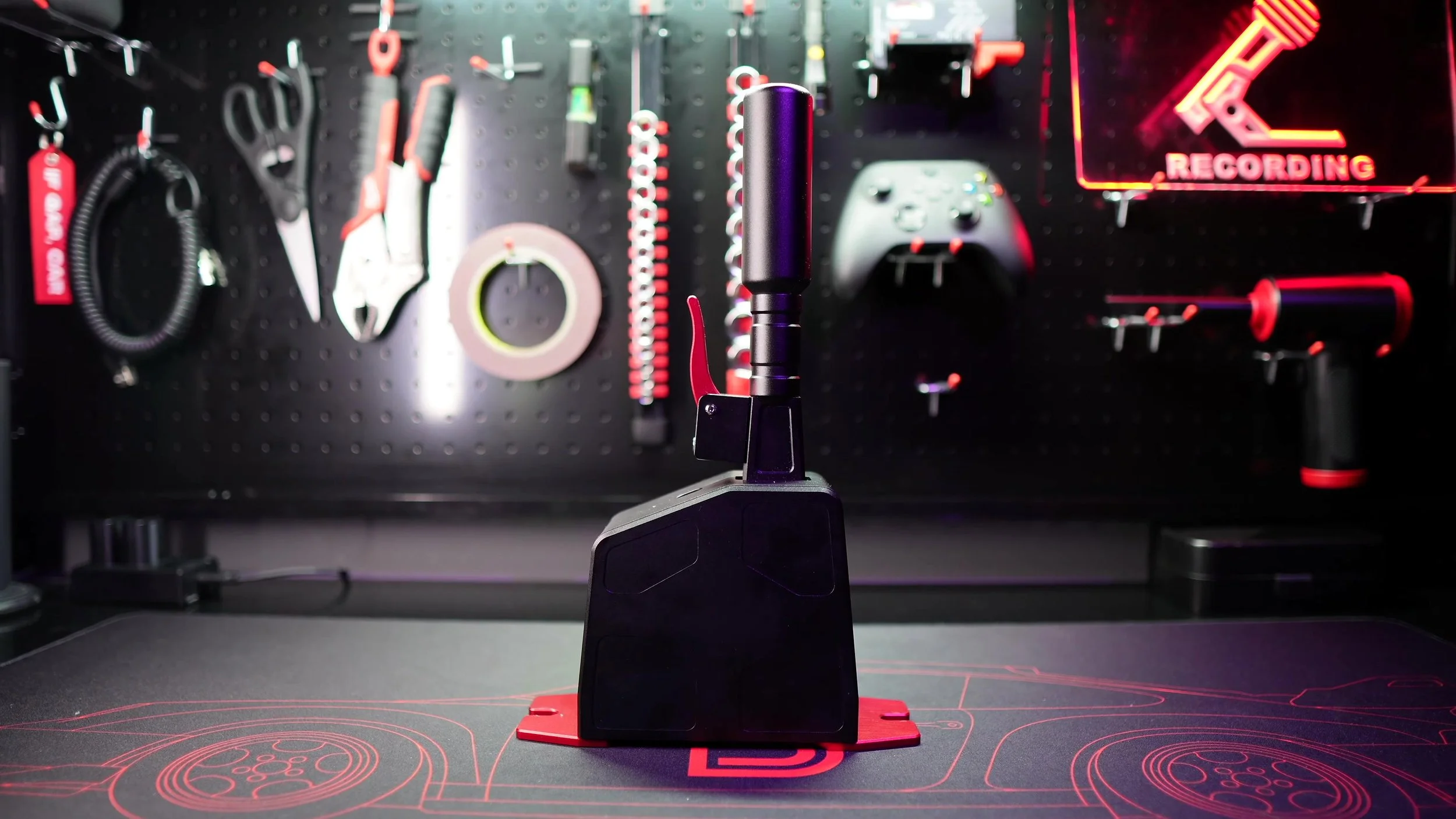
The all-metal housing had a reassuring weight out of the box. Black anodised surfaces and the red auxiliary lever gave it a simple, functional appearance that I liked.
The arm felt sturdy, with only a little movement. Compared with the play I had noticed in the MOZA shifter, the VNM felt tighter and more substantial.
The removable metal knob was a comfortable size in my hand. It could be replaced if a different shape suited the setup better.
The illuminated VNM logo could be customised in the software. It looked nice, but I would have preferred useful backlit buttons on the housing instead of lighting devoted only to the logo.
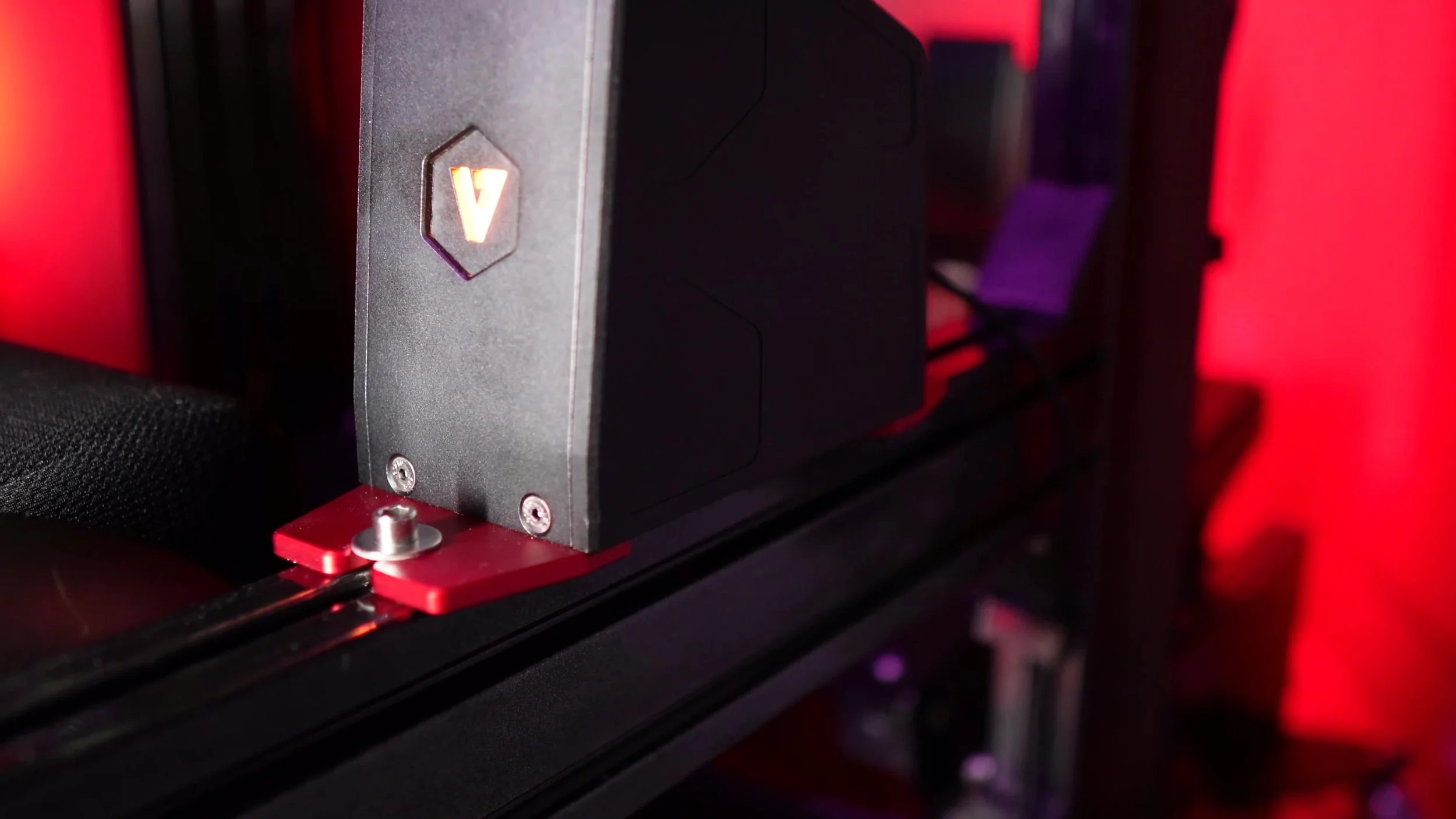
Mounting and handle height
The supplied red mounts let me attach the shifter directly to aluminium profile, and the included hardware made installation straightforward.
There were also mounting holes underneath for a suitable plate. I fitted it beside my seat on the right-hand side of the rig.
On my original unit, removing the middle portion of the handle made it shorter. I could not make it taller than its standard configuration with the supplied parts.
That worked at seat level, but I would have preferred to bring it nearer wheel height for a rally-style position. The MOZA gave me more height options in the configuration I compared.
The current VNM listing describes an extended handle option. My height criticism concerns the original reviewed setup, rather than every configuration available now.
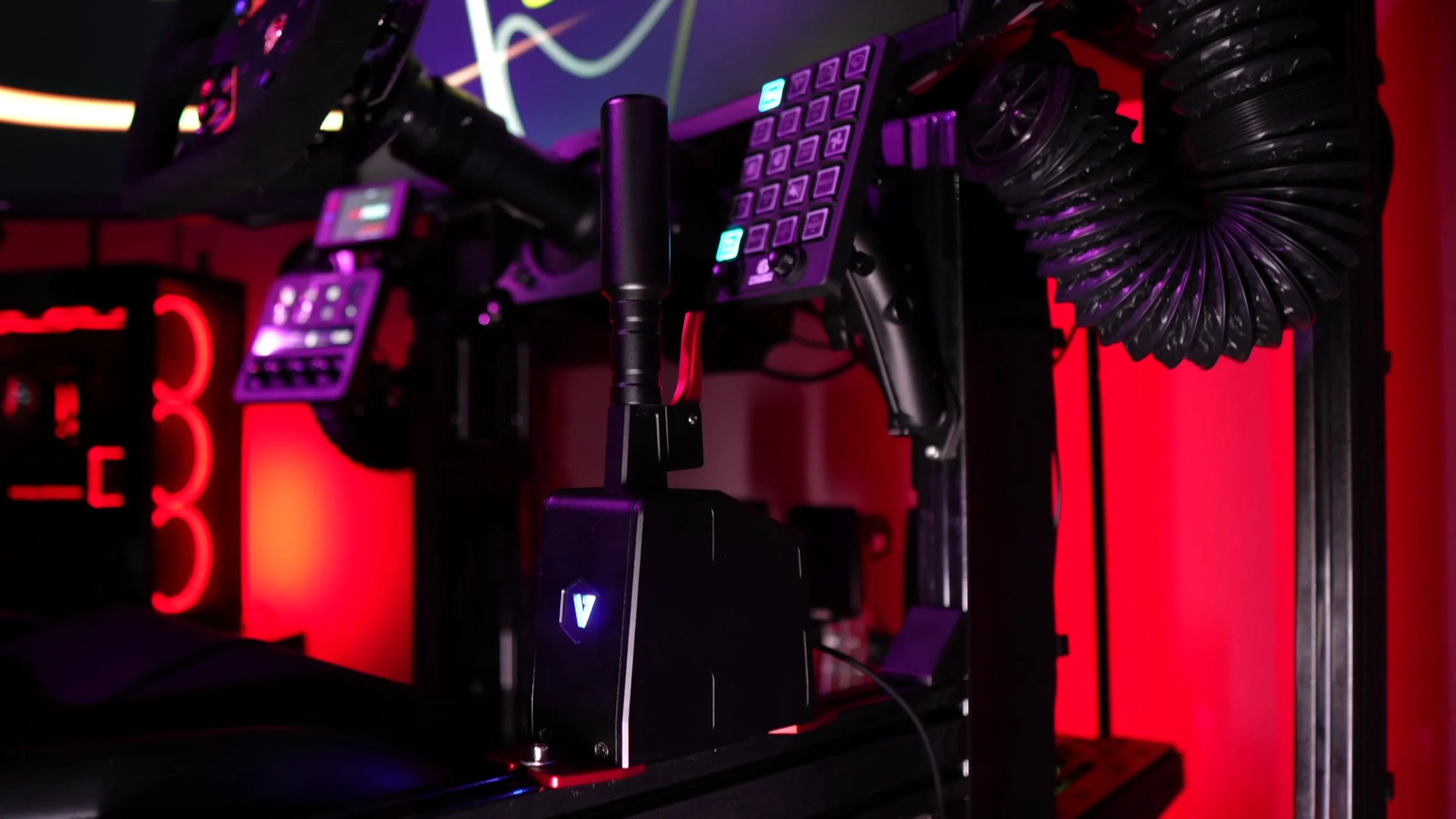
A useful digital lever
The red lever had good resistance and felt solid, with no wobble that bothered me.
It could be assigned to an in-game function. I mapped it to reverse gear during the test.
It was a digital input, not an analogue clutch axis. That distinction matters if you have a specific extra function in mind.
The lever’s resistance could also be adjusted, separately from how I wanted the main shift action to feel.
A simple PC setup
The SEQ V2 connected to the PC with the supplied USB cable. It was not a console shifter.
There were two USB-C ports on the rear of the reviewed unit: the normal device connection and a separate port for DFU firmware-update mode.
For ordinary use, I mapped the upshift, downshift and lever inputs in the game. I did not need a calibration process to start shifting.
VNM’s configuration software handled the logo lighting. Beyond that, there was little setup work required for my use.
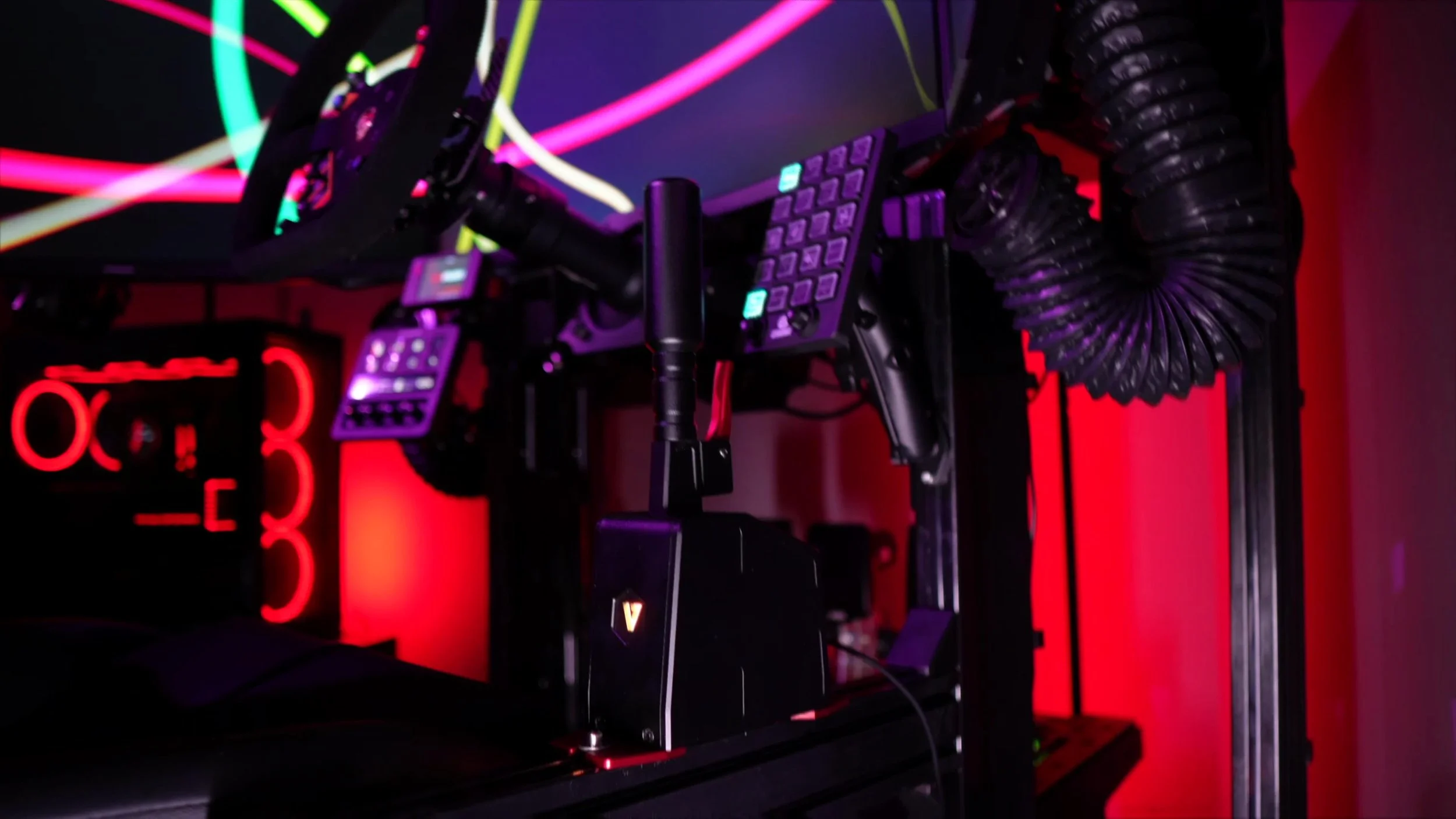
The shifting feel was the main attraction
I enjoyed the out-of-the-box resistance. Each shift felt positive and satisfying, with a solid thunk.
The resistance could be adjusted at the top of the unit with an Allen key. This let me tune the effort rather than accepting only one fixed feel.
It was fairly loud on my rig. I suspected some of that sound came from vibration through the aluminium profile, but I did not isolate or measure the sources.
The sound added to the experience for me. It could be less welcome to someone sharing the room, and the mounting surface will affect what you hear.
I preferred the VNM’s solid feel to the MOZA shifter I had tried. The difference was tactile and subjective, rather than a measured performance advantage.
My Oktane Designs shifter still appealed to me for its shorter available throw. I had only briefly tried Simagic’s sequential elsewhere, so I was not ready to make a definitive comparison with that one.
Is the premium worthwhile?
The original review discussed the VNM at around $300 and the MOZA at $129. Those were review-period figures; compare current regional prices before deciding.
The MOZA offered more auxiliary buttons and useful adjustment at a lower price. For occasional sequential use, it remained a sensible way to get that experience without spending as much.
The VNM earned its appeal through construction and feel. I preferred the way it shifted and how solid it felt in my hand.
I am not a diehard sequential user and usually prefer wheel paddles. That made the extra spend harder to justify purely on how often I would reach for it.
For someone who shifts this way regularly, values the metal construction and likes its action, the VNM makes a stronger case.
My recommendation is to decide how much those differences matter in your own driving. It was the shifter I preferred to use, with a premium that would not be necessary for everyone.
Explore the VNM SEQ V2.
Check current pricing, delivery and handle options. This review covers the original unit I tested in 2024; the current listing also describes an extended handle option.
View the SEQ V2 at VNMThis is a direct manufacturer link, not an affiliate link.
Confirm taxes, shipping and any required accessories at checkout.
About this article: Adapted from my original review script and video review. Driving impressions refer to the original review period. The official VNM SEQ Shifter V2 listing was checked as the current destination. It describes an extended handle option that was not part of my original test.
Back to top ↑