
Review disclosure: Simucube supplied the Valo GT-23 free of charge for review, and I retained it. The original video includes a separate Sim Sport Gadget sponsor segment. The Simucube product link below is not an affiliate link.
The Valo GT-23 appealed to me as a straightforward, versatile wheel for the Simucube setup I already owned. Its dark finish and familiar GT shape were understated, and the driving experience was very good. But a wheel in this price bracket also has to make its daily functions convenient. Missing labels and some limitations around software and mounting stopped it from being an easy recommendation for everyone.
My verdict at a glance
Best suited to: A Simucube owner who wants a versatile D-shaped wheel with wireless operation, rev lights and very quiet shifters.
What stood out: Comfortable grips, good paddle feel, a practical control layout and high-quality construction.
What to consider: The complete price with Link Hub, missing labels on the reviewed wheel, spacer clearance and personal material preference.
The wheel I reviewed
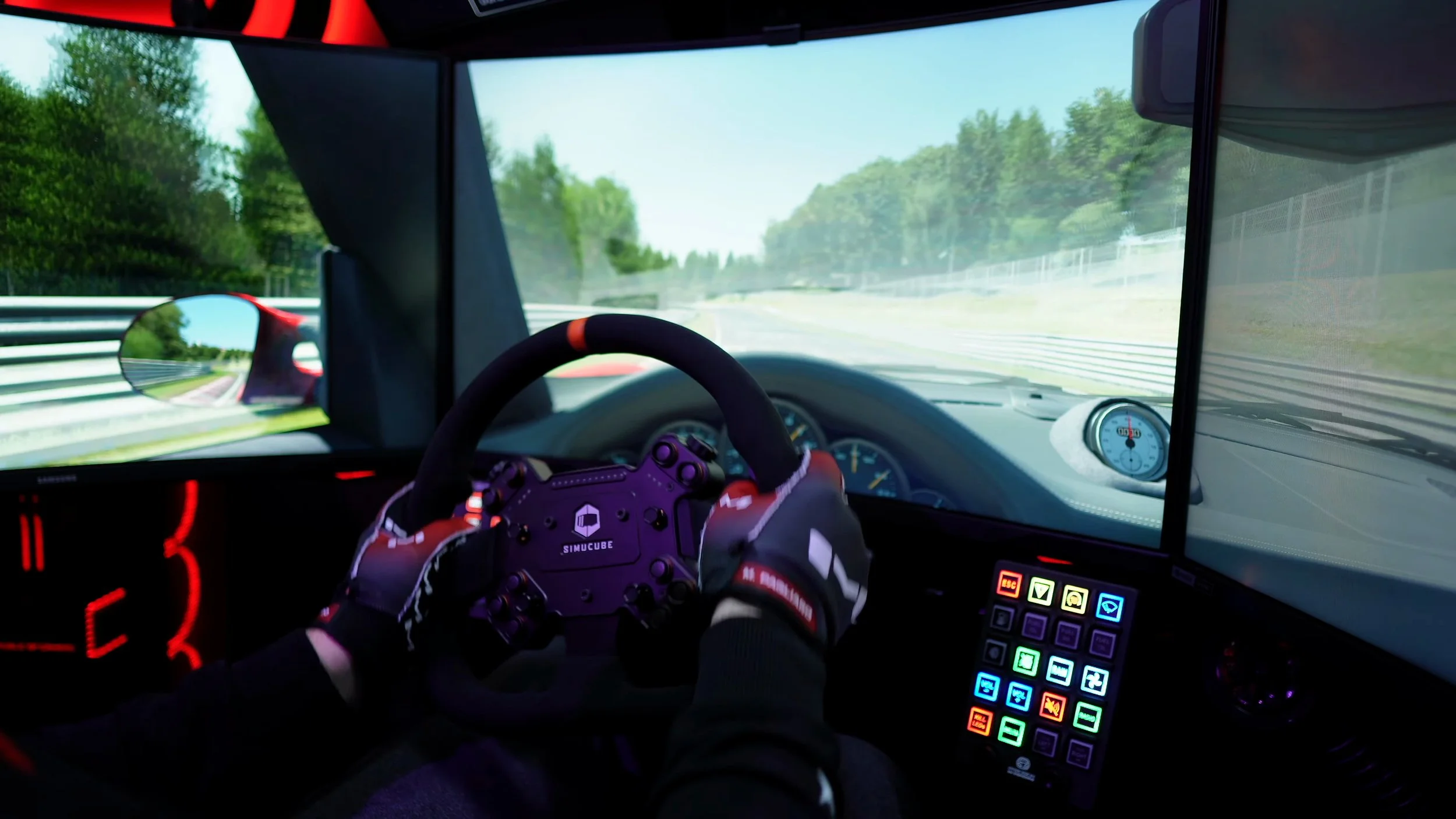
My review unit had a 320 mm D-shaped Alcantara rim and the Simucube 2 quick release. With its hub and quick release fitted, the package weighed about 2.1 kg.
The button plate used black anodised aluminium, and the overall finish had the restrained appearance I associated with Simucube.
I liked the mostly black design and the small orange centre marker. Someone who prefers more colour or visible decoration may see it differently.
The current product page offers Simucube 2 and Simucube 3 quick-release configurations. This article describes my original 2024 setup, not a test with the later Simucube 3 hardware.
Comfort and the Alcantara rim
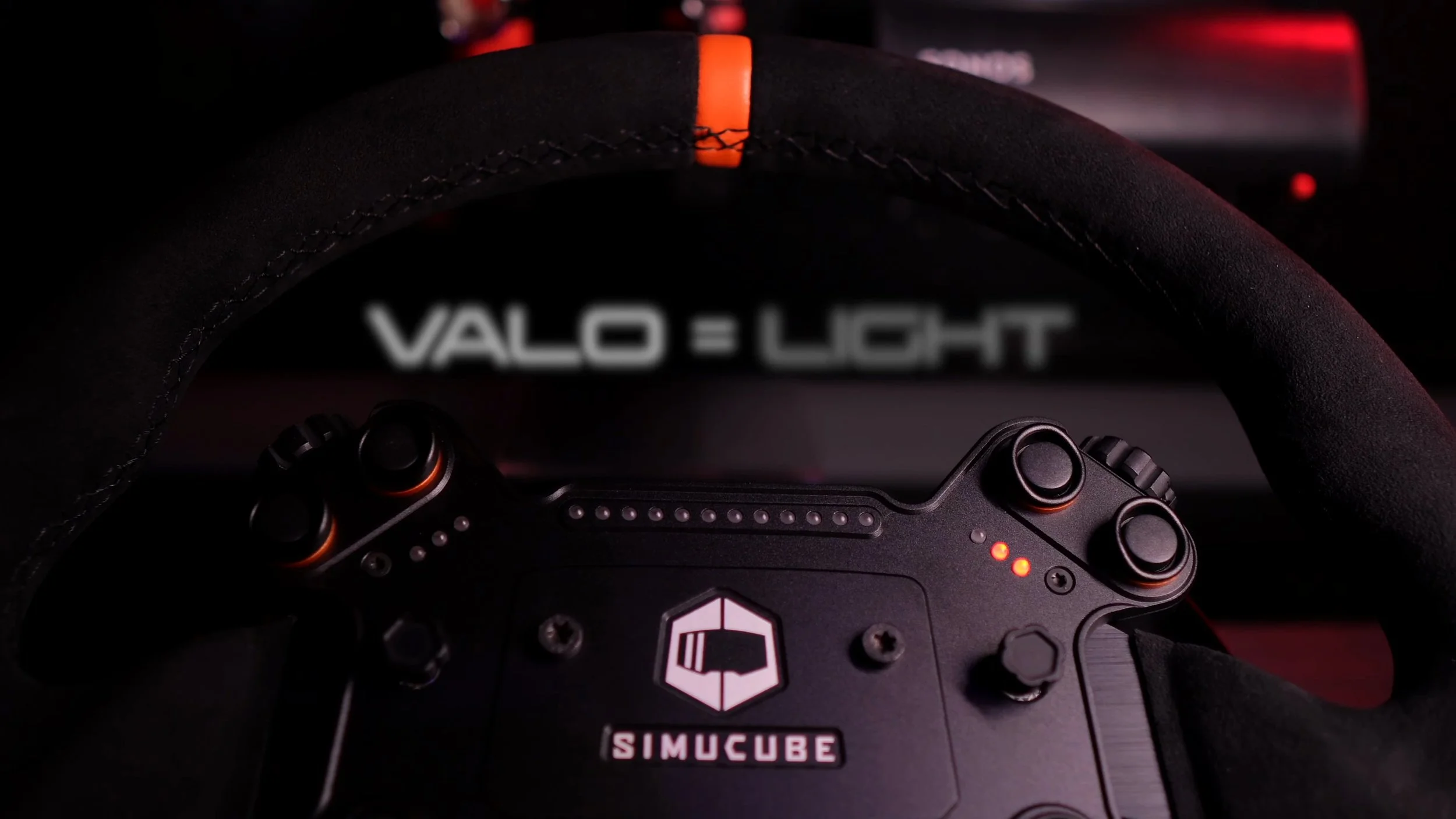
The rim felt familiar and comfortable, with enough grip for me to use it with or without gloves. I generally wore gloves with the Alcantara covering.
I personally preferred leather or rubber for ease of care, so I was pleased that a leather Valo variant had been announced around the review period. That would have been my choice when buying for myself.
My hands-on impressions here come from the Alcantara unit. I did not test both materials or conduct a long-term wear comparison.
The shape suited a variety of driving styles. It was a useful option when I wanted something closer to a conventional wheel rather than a compact formula shape.
Good inputs, but no labels
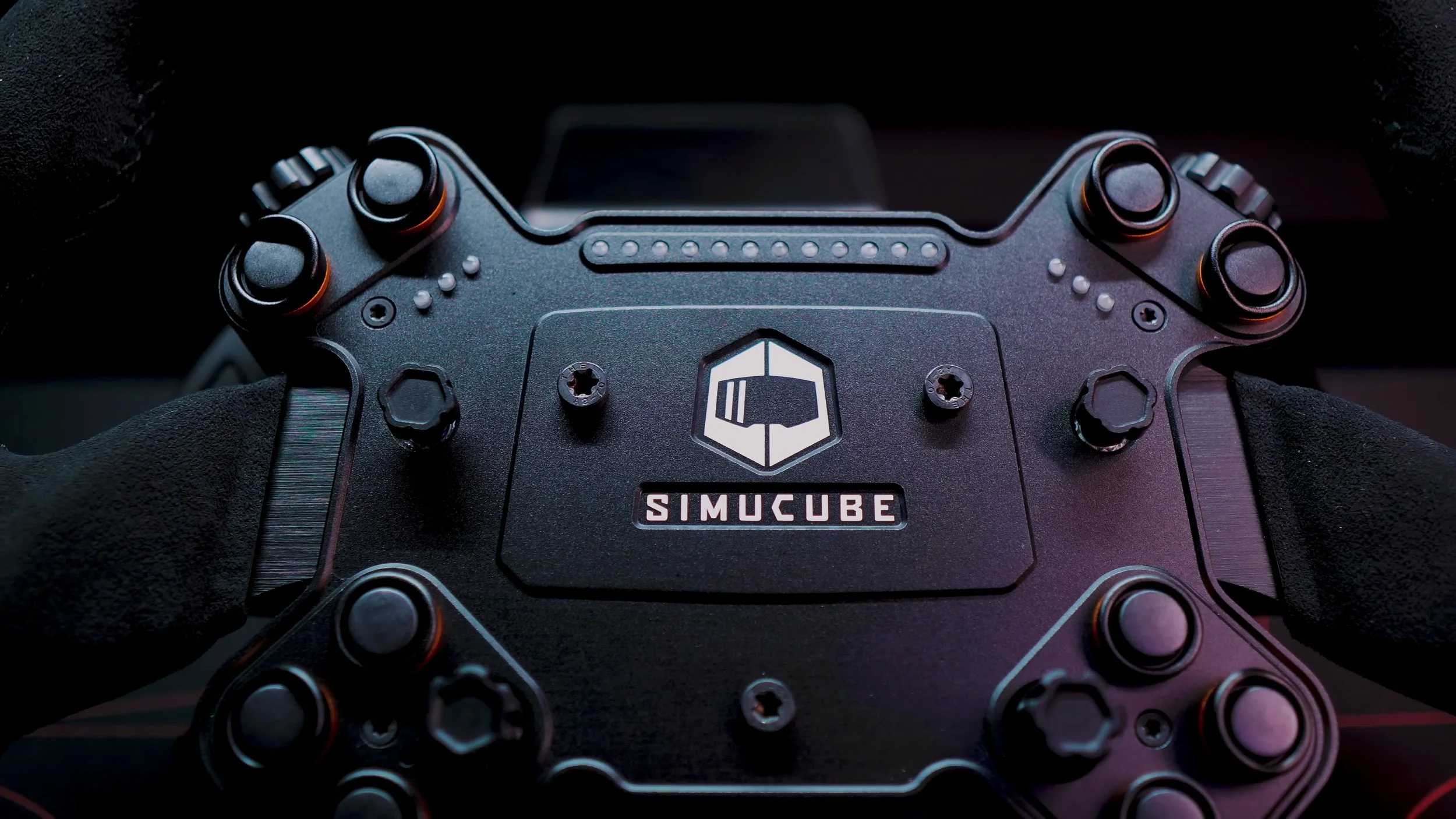
The ten push buttons had a distinct tactile press without feeling overly sensitive. Their placement worked well while driving.
The two front rotaries, two thumb encoders and two seven-way switches gave me useful controls for car adjustments and navigating menus.
I particularly appreciated having a seven-way switch on each side. Everything was broadly where I expected it to be, so I did not have to fight the layout.
The missing button labels were harder to understand. I could remember my assignments with practice, but switching between several wheels made that less convenient.
I also would have liked illuminated buttons. I understood that extra lighting could affect cost and battery life, but including ordinary labels seemed like a reasonable expectation at this price.
The clean appearance was attractive. It should not have required me to source basic labels separately if I wanted to identify the controls.
Very quiet paddles that still felt good
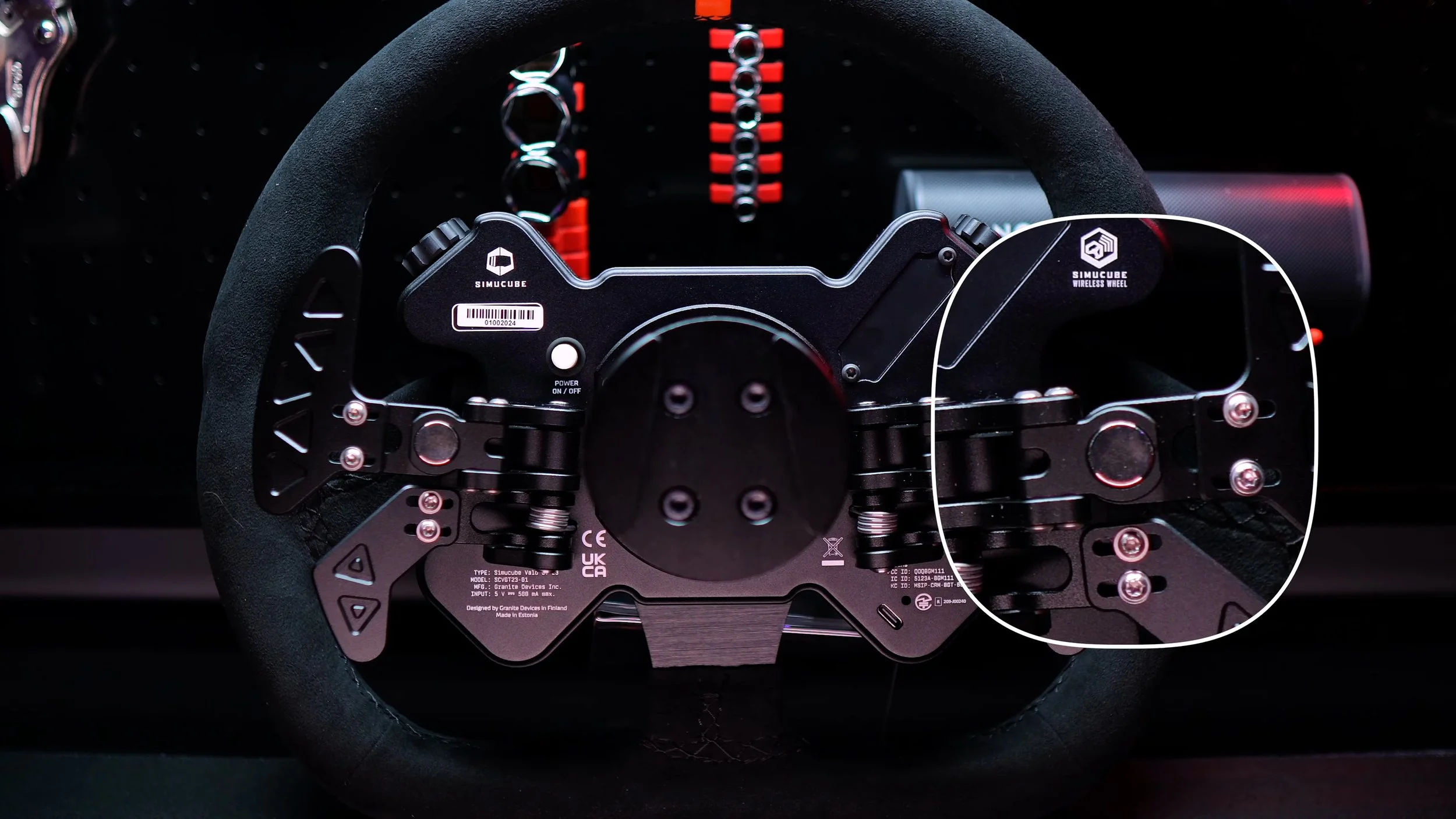
The shifters were among the quietest I had used, yet their activation felt satisfying. I normally enjoy some shift noise, but I still liked these paddles.
They were a good size and easy to reach. Through headphones, the subdued sound was unlikely to matter much to me anyway.
The clutch paddles also felt good, with useful travel and resistance. Their rear shape was comfortable against my fingers.
Slots allowed adjustment of paddle reach. I could not move them vertically in the reviewed configuration, although their height worked for my hands.
The quiet operation was a strength for someone who dislikes loud paddle clicks. It was a tactile preference, not a measured noise comparison.
Wireless operation and the Link Hub
I used the Valo through Simucube Link and Tuner. A Link Hub was part of the setup for wireless communication and the rev and indicator lights.
If you already had a suitable Link Hub from another Simucube product, you might not need to purchase a second one. If not, it needed to be included when comparing the complete price.
I connected the hub to my PC through USB and did not have connection problems during my testing. The USB-C port on the wheel itself was for charging in the reviewed setup.
The separate wireless connection also allowed possibilities beyond a Simucube base, but mechanical mounting and quick-release clearance still needed to be addressed. I did not test the wheel on every other brand of base.
For my needs, the most straightforward use remained within the Simucube setup I already had.
Lighting and the original Tuner experience
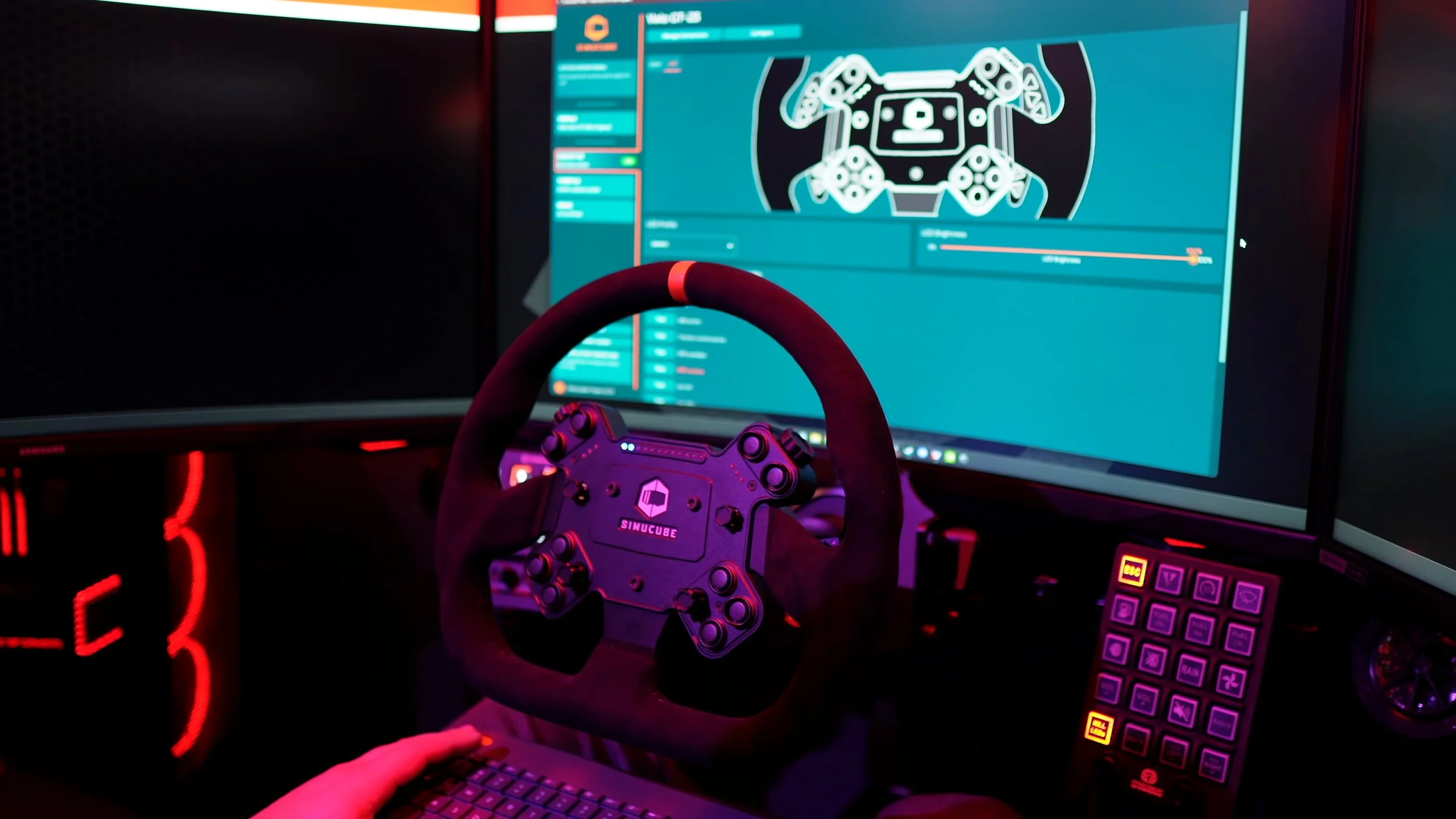
Tuner made the rev lights and other indicators easy to configure. I could adjust the RPM display and use effects for functions such as flags, pit limiter, ABS and traction control where supported by the sim.
Car-specific RPM settings could change when the game supplied the necessary telemetry. I liked having that capability without having to rebuild the settings for every session.
My main wish was SimHub integration. I already used it for other wheels and would have preferred one consistent place for my lighting profiles.
The Tuner version I reviewed covered the basic functions clearly. My criticism was about fitting it into my existing workflow and creating more elaborate profiles, rather than it being difficult to use.
Software has developed since this review. Simucube’s later Tuner 2.5 announcement describes expanded wireless-wheel mapping and LED profile tools. My original software observations should be read in that context; they are not a fresh test of today’s capabilities.
Spacer clearance and wheel position
The shifter housings required clearance behind the wheel, which complicated the use of some alternative spacers or quick releases.
The fitted Simucube quick release worked, but I could not assume the same extensions I used on other wheels would fit without checking.
On my ASR Pro, I moved the adjustable wheel deck to restore a comfortable reach. The Valo sat differently from the other wheels I had fitted with matching-length spacers.
That is easy to overlook when looking only at the wheel’s front. If you swap wheels regularly, compare the complete distance from the base to the grips.
The weight also added some inertia compared with lighter wheels in my collection. I still found it well balanced and enjoyable, especially with the strong wheelbase in my setup.
A strong wheel with a narrower value case
The original review quoted roughly €975 for the wheel and €1,079 with the Link box. Those figures describe the options at the time; check current regional pricing and your required quick release today.
The Valo delivered on build quality, comfort and driving feel. I liked the quiet paddles, useful inputs and uncluttered appearance.
The difficulty was recommending it over every alternative at that price. Other wheels offered features I wanted, including labelled or backlit buttons, different rim options and integration with my existing software.
For an owner already invested in Simucube who wanted a conventional GT-style wheel with rev lights and wireless operation, it remained a solid choice.
I was less inclined to recommend it as a way into another wheelbase ecosystem, where its mounting requirements and Link Hub cost needed more consideration.
It was a wheel I enjoyed using, with a few omissions that mattered more because of the price. Those belong in the verdict alongside its excellent feel.
Explore the Valo GT-23.
My review used the Alcantara wheel with the Simucube 2 quick release. The current listing offers different quick-release and Link Hub configurations. Choose the parts for your wheelbase and include a Link Hub if your setup needs one.
View the Valo GT-23 at SimucubeThis link takes you to the manufacturer. It is tracked for website clicks and is not an affiliate link.
Confirm taxes, shipping and any required accessories at checkout.
About this article: Adapted from my original review script and video review. Driving impressions refer to the original review period. The official Valo GT-23 listing was checked for the current product destination and quick-release options. The later Tuner announcement provides software context; it does not change the date of my original test.
Back to top ↑