
Review disclosure: Simucube supplied the ActivePedal Pro at no cost for this review, and I retained the unit. These impressions come from my original November 2024 testing. The embedded video also contains a separate Pit Lane Sim Racing sponsored segment. The product link below is a direct manufacturer link.
The ActivePedal Ultimate had become one of my favourite additions to the rig. I loved being able to change the pedal’s feel in software and use active feedback while driving. With the Pro, I wanted to find out how much of that experience survived the lower price. After weeks of testing alongside my Ultimate, the changes did little to diminish what mattered most to me.
My verdict at a glance
Best suited to: A sim racer who specifically wants software-controlled pedal feel and active feedback, and has the budget for it.
What stood out: An experience I found effectively indistinguishable from my Ultimate at the settings I used.
What to consider: The total setup price, physical size, fewer arm adjustments and separate power supply for each Pro.
What made the ActivePedal different in my rig
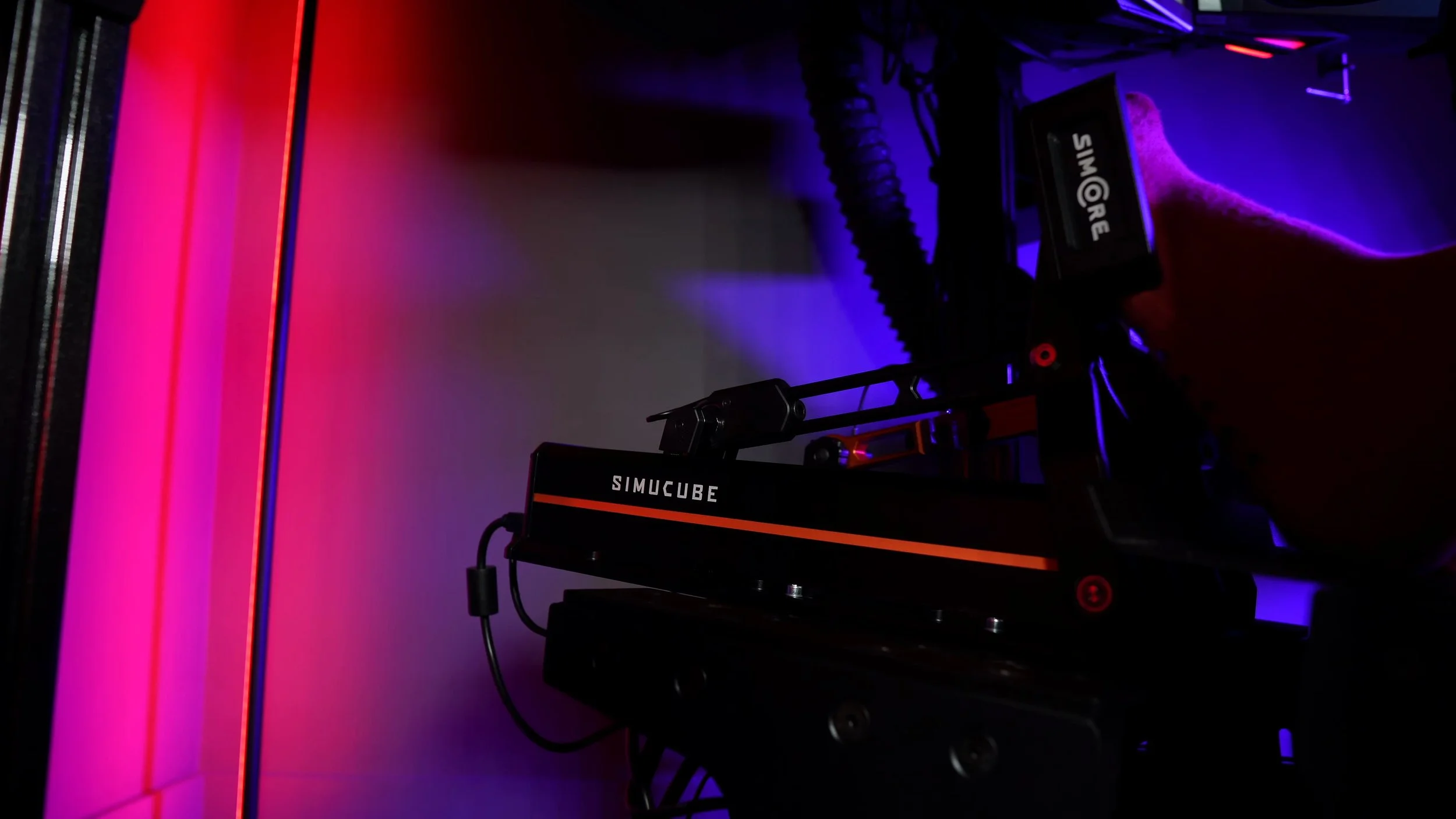
An internal motor actively creates resistance and movement. It can change the force curve and travel as well as generate effects such as ABS feedback, rather than relying solely on a fixed spring or elastomer stack.
The bigger advantage for me was the ease of changing the feel. I could choose a short, firm brake for one car and a longer, softer response for another without getting under the rig with tools.
That flexibility made me use different profiles regularly. Presets offered useful starting points, while the software let me refine the response to suit my preferences.
I found the effects useful and immersive. I did not run a controlled lap-time study, so my enthusiasm should not be read as a promise of faster laps.
How the Pro compared with my Ultimate
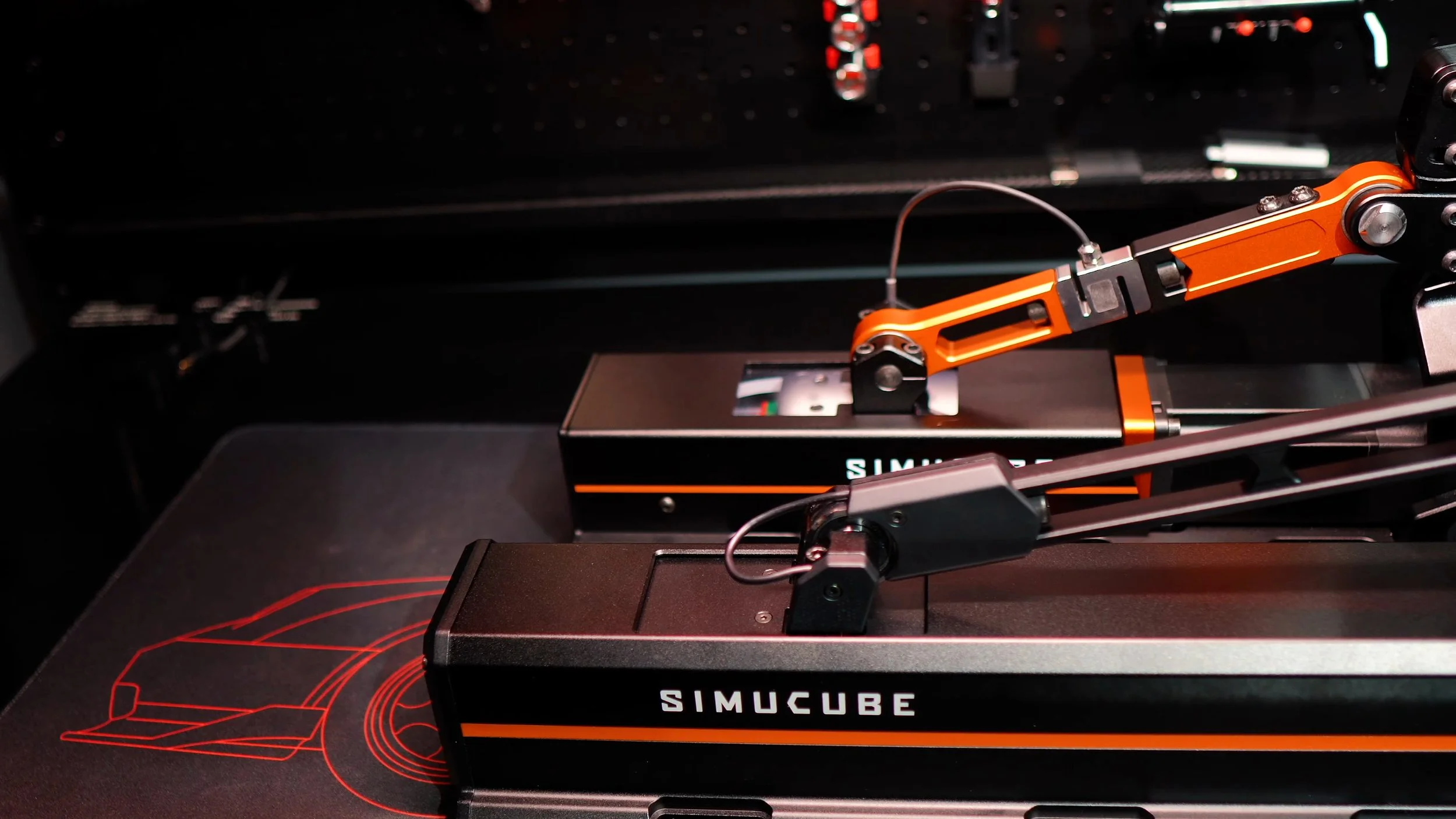
The two pedals shared the solid construction and active-feedback character I liked. I actually preferred the Pro’s reduced orange accents and black pedal arm.
The maximum force was lower: 110 kg on the Pro against 170 kg on the Ultimate. I rarely went beyond 70 kg myself, so that difference did not restrict the way I used the pedals.
The Pro also gave up some of the Ultimate’s physical arm adjustments. If you need the additional geometry options or maximum force, those remain reasons to look at the Ultimate. They were not requirements for my own installation.
Side by side, I found their driving experience effectively indistinguishable with the settings I used. That is my comparison within my setup, rather than a claim that every specification or possible configuration is identical.
The warranty terms discussed in the review were three years for the Pro and five for the Ultimate. Simucube’s current comparison still lists those terms; check the details for your region and purchase.
Size, mounting and the pedal face
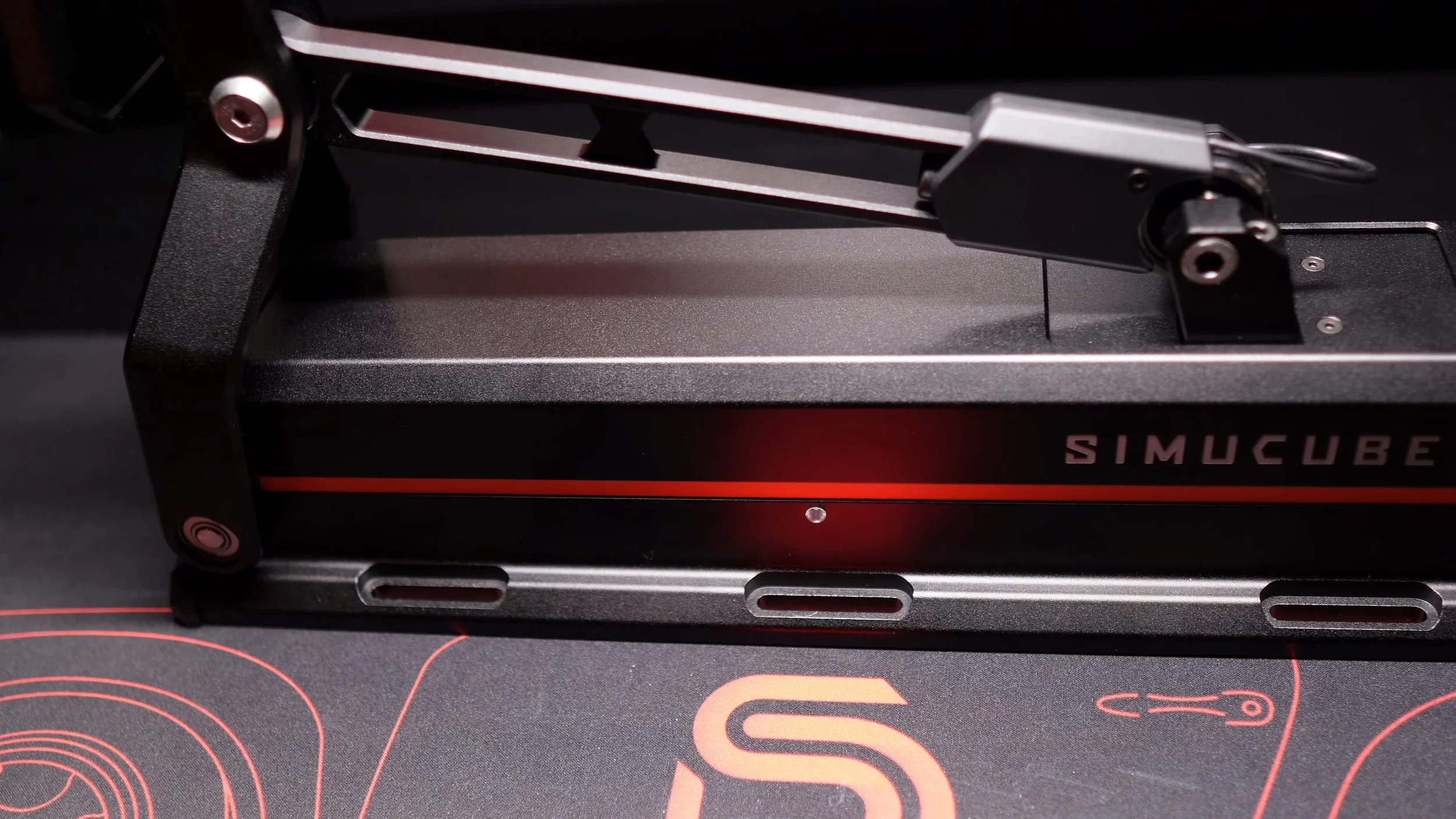
The Pro was slightly longer than the Ultimate, so the lower price did not also mean a smaller pedal. If space was already tight, I would check the dimensions carefully.
I mounted mine directly to my ASR Pro chassis and used a separate heel rest. The mounting slots allowed me to position the pedal without needing Simucube’s baseplate for my particular rig.
The face angle and height remained adjustable, and the face could be replaced. I preferred the Ultimate’s original dimpled face to the Pro’s new octagonal design, but fitted a Simcore replacement that I liked even more.
That replacement was my personal choice. The included face, mounting parts and any separate baseplate should all be considered when comparing the configuration in the video with what you intend to buy.
Power and connections
Each Pro required its own power supply. The Ultimate could power multiple pedals from one supply, so a multi-Pro arrangement added more power bricks and cables to organise.
In my mixed Pro-and-Ultimate setup, I used two supplies and mounted them to the rig with a Sim Sport Gadget holder. It was manageable, but it was part of the installation rather than something to ignore.
The Pro used the Simucube Link connection and provided connections for compatible passive pedals. For a current purchase, the official listing says one Link Hub is required; additional ActivePedal Pro units do not each require another Hub.
Simucube also identifies an Ethernet switch requirement when adding a Pro as a throttle beside an Ultimate. Confirm the complete connection kit for your chosen arrangement, especially if buying a pedal without a Hub.
Adjusting the feel in Tuner
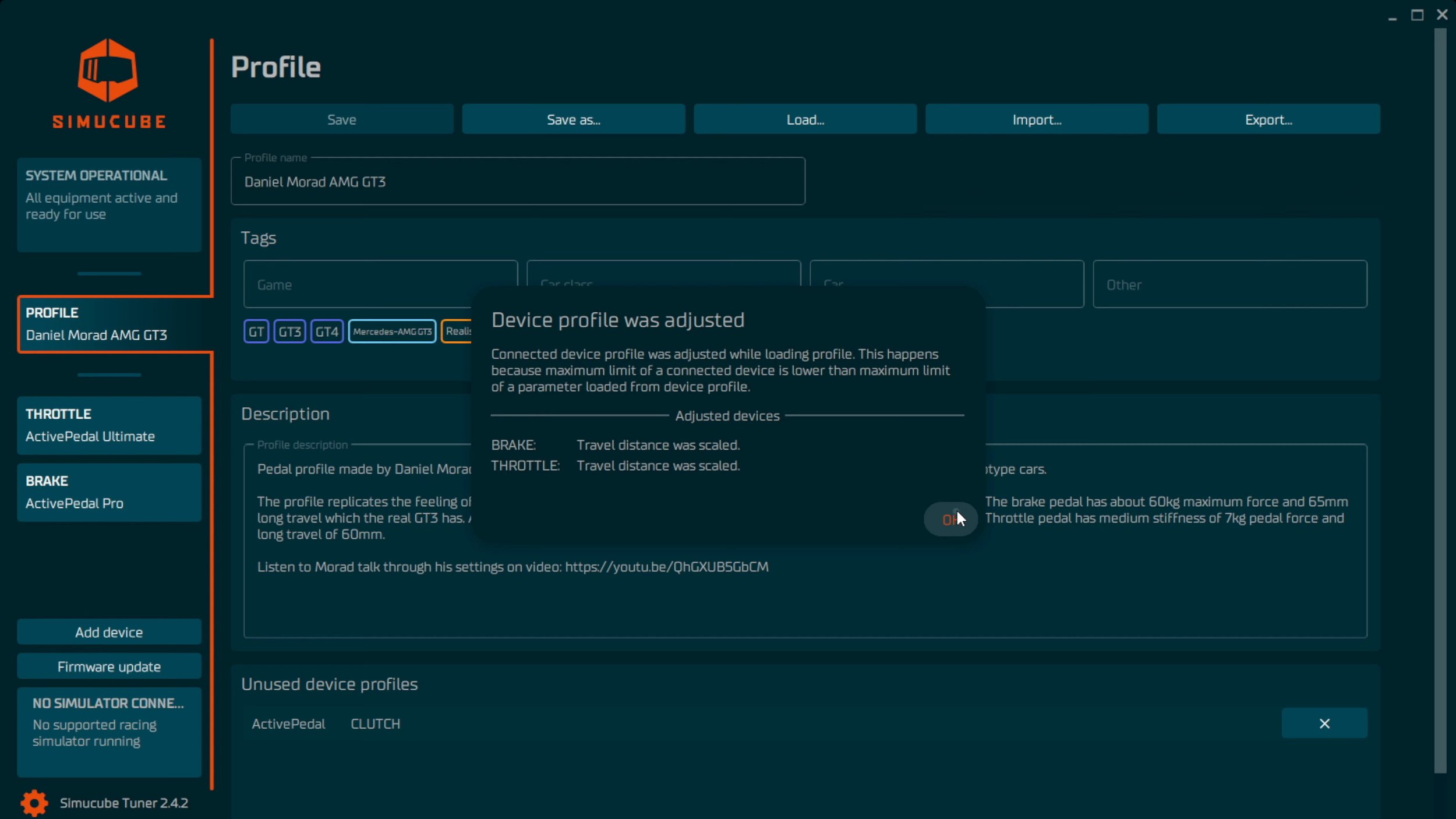
I used Simucube Tuner to update firmware, assign the pedal’s role and set its rest position. The physical response to software changes made it easy to understand what I was adjusting.
Pedal travel, preload, maximum force and the force curve covered the core feel. Damping, friction and bump-stop settings offered further control without swapping mechanical parts.
For braking, ABS was a highlight. It could physically modulate the pedal, with an effect I could tune to my preference, instead of being limited to a simple vibration.
Traction-control, engine-vibration and other effects added options for immersion. The available effects depended on the pedal role and supported game data, so I would start with the functions that help in the car you actually drive.
My review describes the software I used in 2024. The product has continued to receive updates, so current menus and features may differ from the embedded video.
Why I used two active pedals, and why most people need not
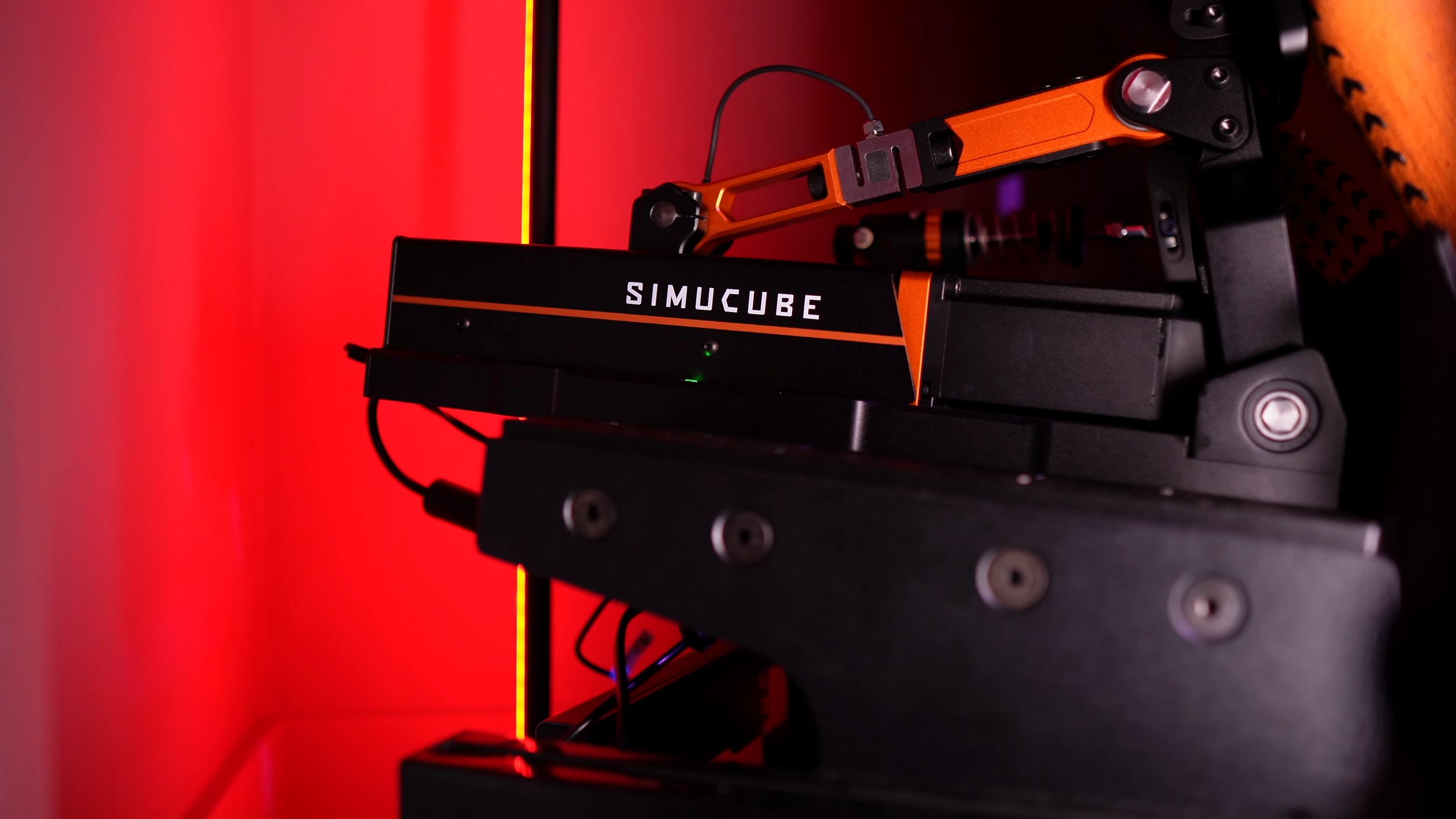
I ended up using the Pro as my throttle and keeping the Ultimate as my brake, mainly because I already had both. I also tested the Pro in the brake role for this comparison.
The active throttle’s feedback and software adjustments were enjoyable. Even so, I would not rush to buy a second ActivePedal purely to replace a working passive throttle.
For me, the brake was the role where the active technology offered the strongest benefit. A Pro brake paired with a suitable passive throttle was a much more sensible starting point than copying my luxury two-active-pedal configuration.
The passive Simucube throttle mentioned in the original review was the product I used at that time. Current bundles and companion pedals should be checked separately rather than assumed to match that older setup.
Original price and my verdict
My November 2024 review quoted just over US$1,700 for a single Pro. A setup with the then-current passive throttle and baseplate came to roughly US$2,407, compared with close to US$3,000 for the Ultimate-based option I discussed. These are historical figures, not today’s pricing.
The Pro made the experience less expensive, but it did not make it inexpensive. The full configuration, including the connection hardware and mounting you need, matters more than the single-pedal headline price.
For my needs, I would have chosen the Pro over the Ultimate unless I specifically needed the extra force or physical arm adjustments. It retained the active feedback and easy profile changes that made me enjoy the original so much.
I was very enthusiastic about the pedal, but I did not think it justified stretching beyond a comfortable budget. If it fits your budget and those features are what you want, my original test found the compromises easy to live with.
Explore the ActivePedal Pro.
Check the current price, available options and compatibility before ordering.
View the official product pageThis is a direct manufacturer link, not an affiliate link.
Confirm taxes, shipping and any required accessories at checkout.
About this article: Adapted from my original review script and video review. Driving impressions refer to the original review period. The official product page was checked for current connection requirements and comparison details. This is an adaptation of my original test, not a new hands-on assessment.
Back to top ↑