
Review disclosure: MOZA supplied the CRP2 pedals as a review unit, which I retained. This article reflects my original September 2024 testing. The video includes a separate sponsored segment. The product link below is an affiliate link, which may earn me a commission at no extra cost to you.
The CRP2 felt like a more polished version of MOZA’s original CRP concept. I liked the new design immediately, and the baseplate made installation on my test rig straightforward. The most useful part of the review was experimenting with the brake configurations: there was plenty of flexibility, but changing a stiff setup was not always as easy as the tool-free description implied.
My verdict at a glance
Best suited to: Someone moving up from entry-level pedals who wants a tidy package with lots of adjustment.
What stood out: The baseplate and cable routing, smooth quiet throttle and defined clutch feel.
What to consider: Changing stiff brake stacks, a slightly spongy brake sensation and slippery pedal faces in normal socks.
The design and installation
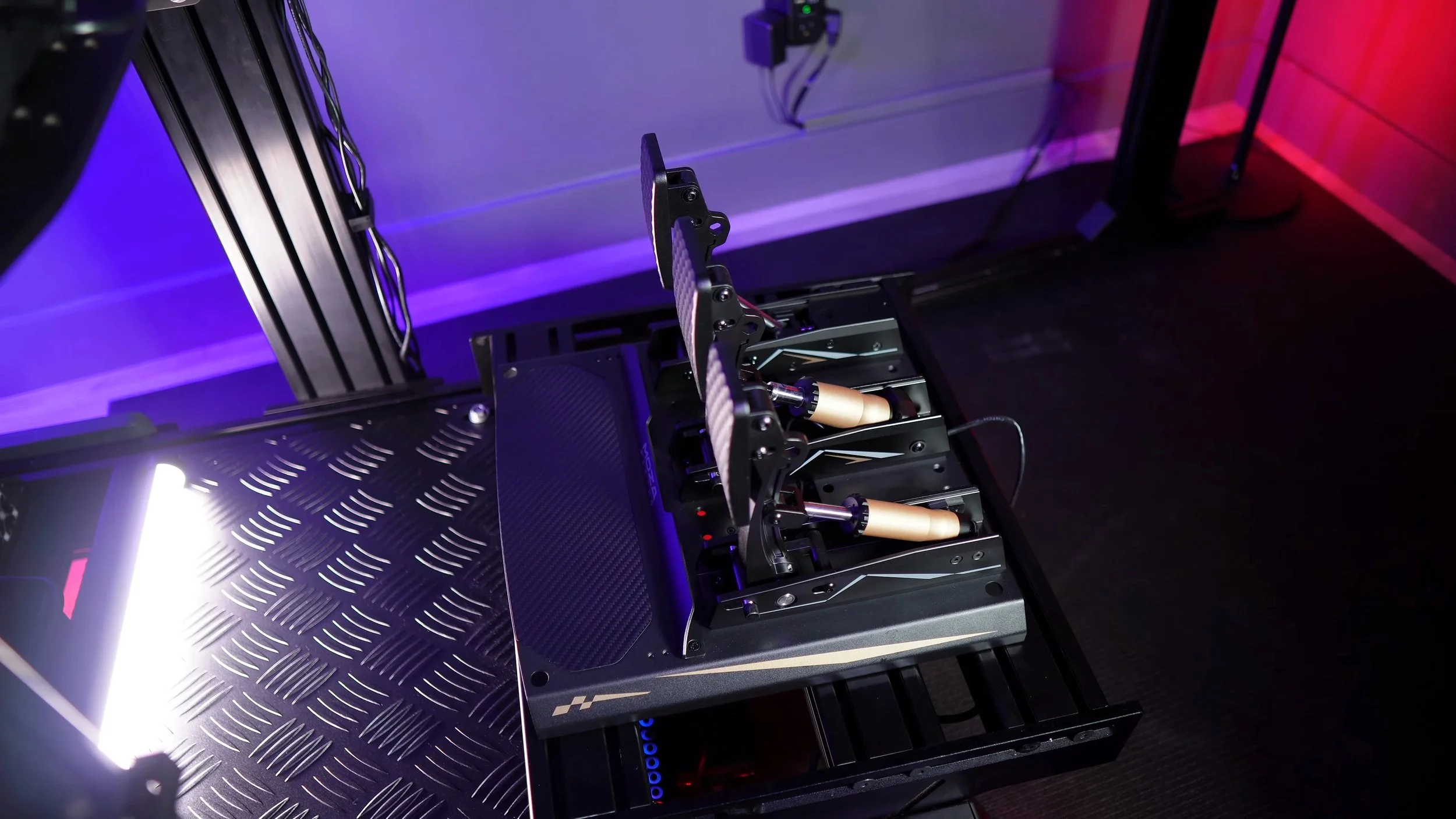
I preferred the CRP2’s cleaner black-and-gold design to the original CRP. I could have lived without the side graphics, but the overall appearance felt more refined.
The main structure felt solid, with much of the wiring and hardware neatly concealed. I did not experience flex or discomfort while driving.
The included steel base and carbon heel plate were particularly well thought out. Threaded mounting positions let me set the pedal spacing, and the integrated control box helped keep the wiring tidy.
I mounted the assembly on my 6Sigma test rig. The cable-routing cutout and adjustable heel stopper made it easier to arrange the pedals around my seating position.
Choosing a brake feel
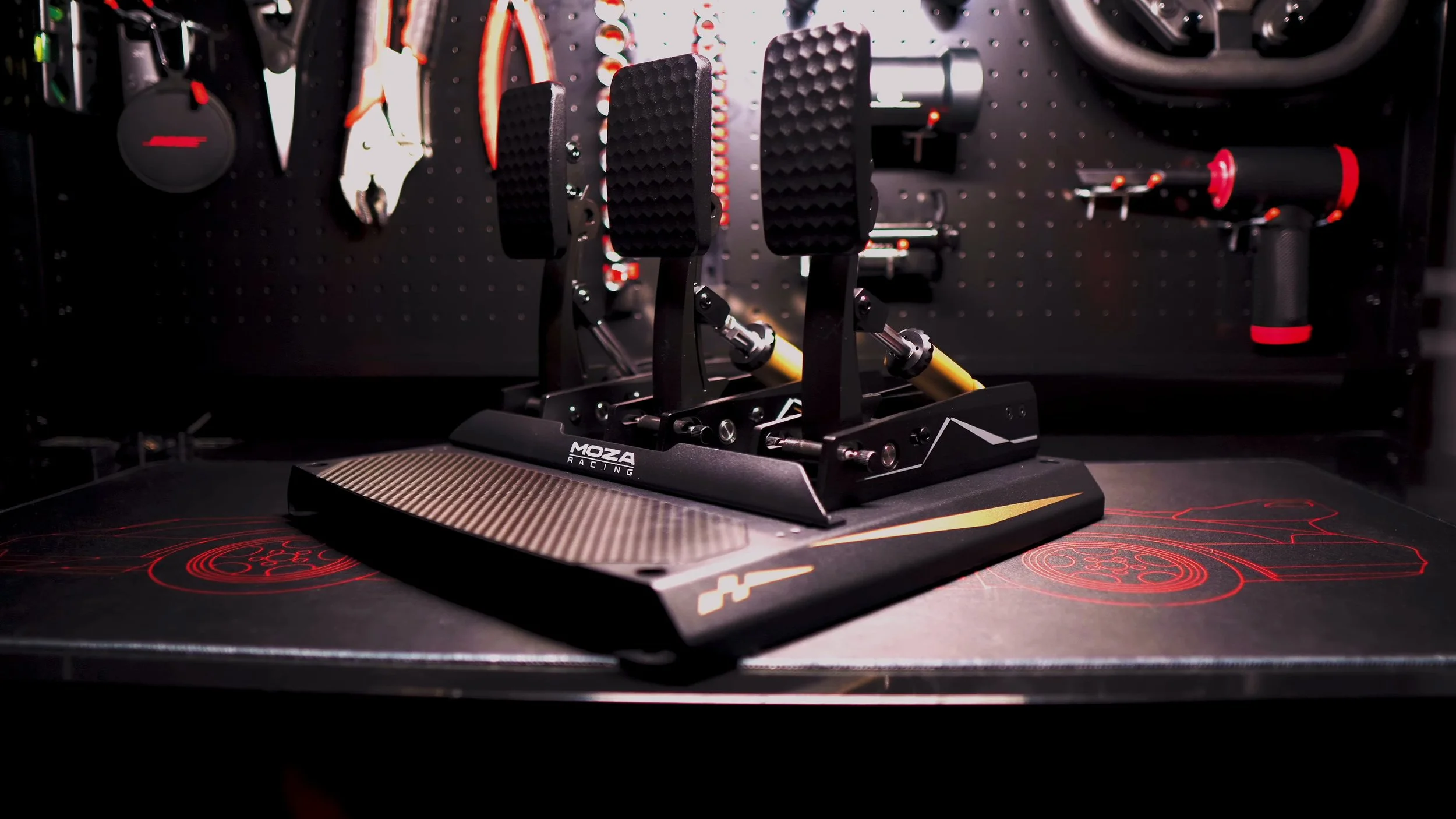
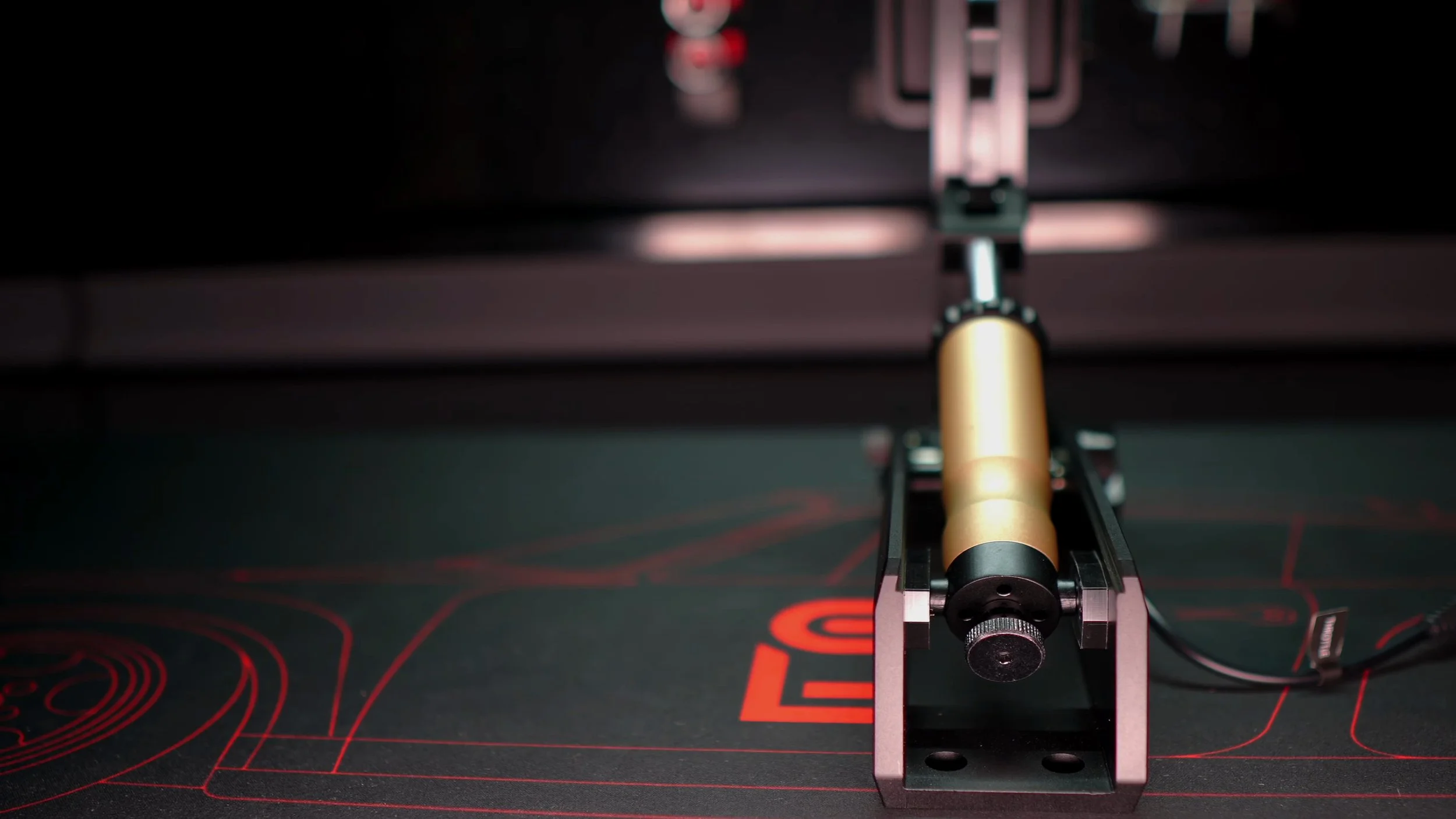
MOZA combined a load-cell sensor with an angle sensor in the brake. The advertised 200 kg figure is the load-cell sensor range; it should not be read as the pressure I applied with my foot during testing.
The supplied springs and damping blocks gave me several ways to change resistance and travel. I did not try every possible combination, and the number of theoretical settings was less useful to me than finding one I enjoyed.
I settled on the suggested GT3-style arrangement, with a firmer feel and shorter travel than the soft default setup. That suited most of my racing.
The brake gave me confidence, although I sometimes found the sensation a little spongy and less mechanical than some other pedals I had used. For the price discussed in the original review, I still thought it performed well.
Why the adjustments were not always quick
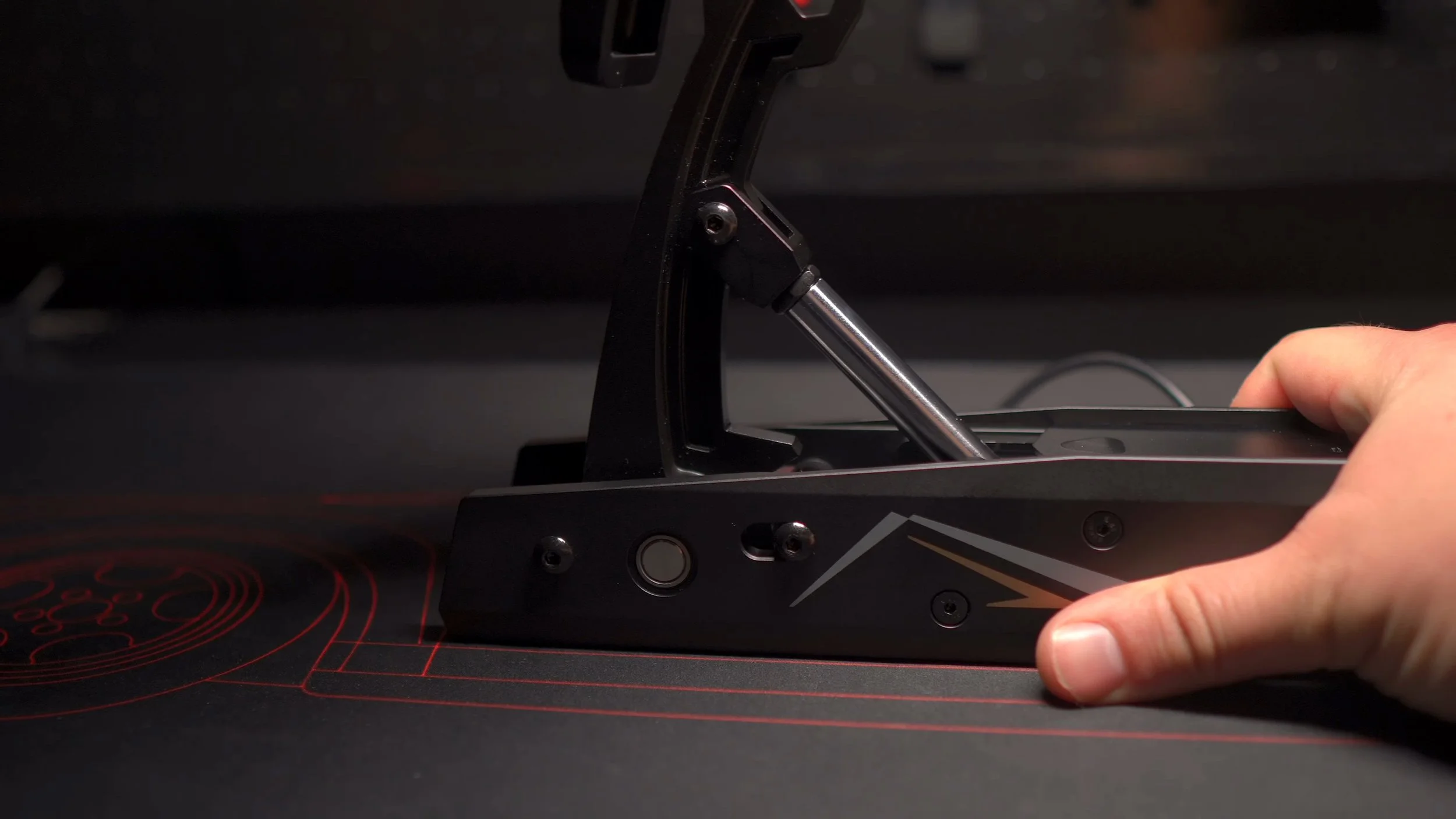
Changing the softer default brake stack was relatively straightforward. The difficulty came when I wanted to change away from a stiffer arrangement.
I needed enough movement in the pedal arm to release the rod and deal with the stopper beneath the pedal. With a firm stack installed, holding everything in position was awkward for me.
The adjustment process could involve the supplied wrench and an extra pair of hands. My wife found part of it easier than I did, which reinforced how much access, strength and flexibility could affect the experience.
I would not describe every change as a simple tool-free swap. If you plan to change the brake feel frequently, the working space around your rig and the manufacturer’s instructions deserve attention.
Throttle and clutch feel
The throttle was extremely smooth and quiet, with damping at its stops reducing noise when I released it quickly. I was happy with its default setup and did not feel a need to alter it.
There were spring options for changing the resistance, but I preferred to leave a good starting point alone rather than adjust for the sake of it.
The optional clutch had a strong, defined bite-point sensation in its standard configuration. I liked the staged action and had no particular complaints about it during the test.
The current base listing is for throttle and brake. The clutch and other accessories change the complete cost, so make sure the package you compare includes the pedals you actually want.
Pedal position and footwear
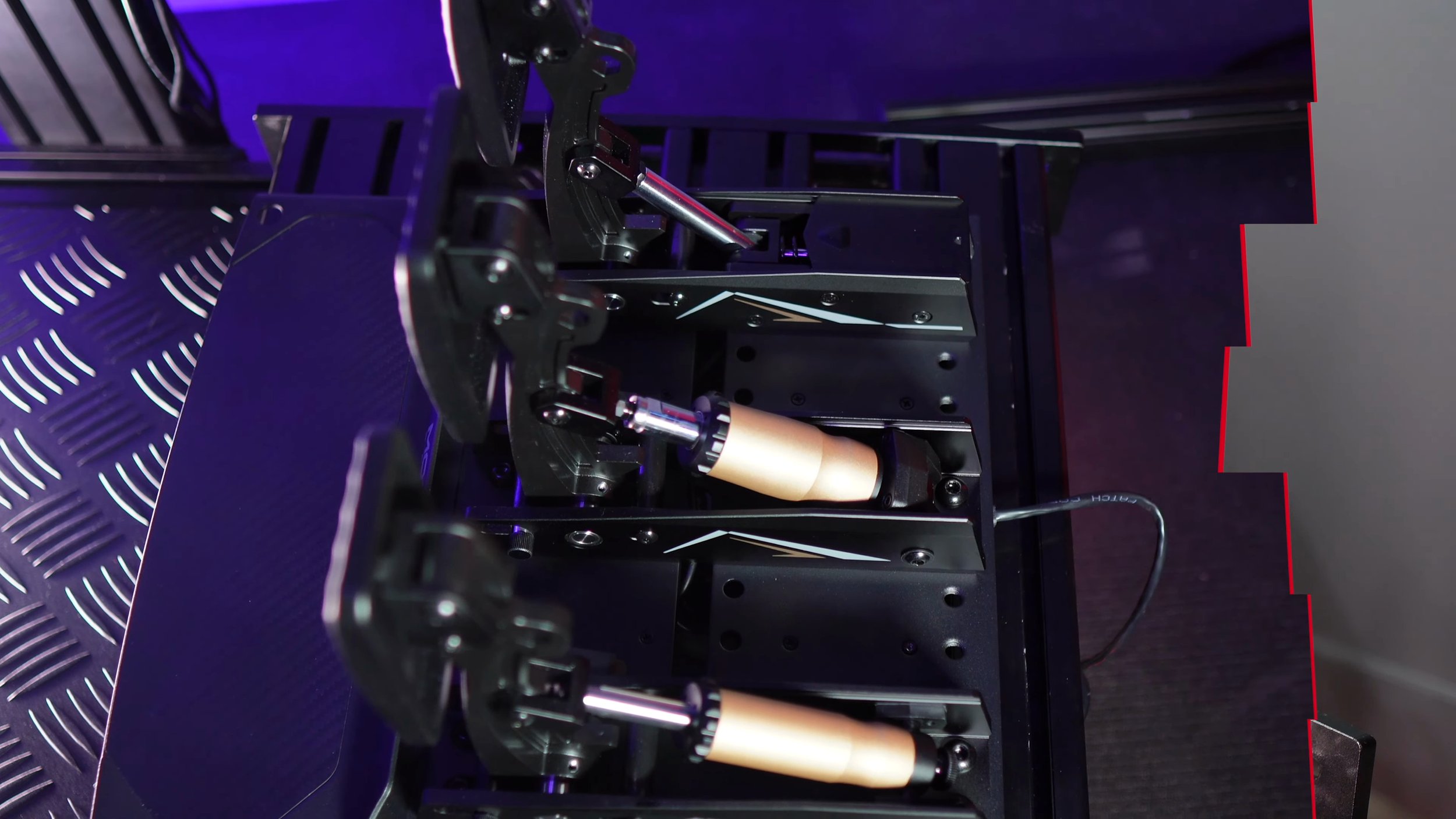
The pedal faces could be moved vertically, and the available spacing, travel and angle adjustments gave me useful control over the fit.
I liked the range of adjustment, but would not promise that every possible cockpit or driver can achieve a perfect position. Measure your available mounting space and consider your seating angle.
The textured faces could still be slippery with ordinary socks. Grippier racing socks or shoes suited them better in my experience.
That is an easy detail to overlook when looking at photographs, but it affected how secure my feet felt on the pedals.
Accessories and Pit House
The optional brake Performance Kit added more springs and blocks for finer control of resistance and travel. I did not test every advertised combination, and I would begin with the parts in the standard set before deciding I needed more.
MOZA also offered a longer throttle face and an inversion kit. I was comfortable with the standard throttle plate; I did not base my verdict on hands-on testing of every accessory.
Pit House was approachable for checking pedal inputs, calibration and response curves. The live output display helped me understand how settings affected the signal.
My configuration and software comments refer to the original PC test. Verify the current connection requirements for your wheelbase or platform rather than assuming that a broad compatibility claim covers every arrangement.
Original price and my verdict
My September 2024 review quoted US$399 for throttle and brake, with the clutch adding US$99 and the inversion kit priced separately at US$179. Those were the original figures, not a current quote.
I appreciated that a clutch was optional. It meant someone who only needed two pedals did not have to buy a three-pedal set.
For an owner of the original CRP pedals, I was less convinced that the refinements justified replacing a functioning set. For someone moving from more basic pedals, including MOZA SR-P, the CRP2 made a stronger case.
The new design, tidy installation and quiet throttle were highlights. The brake offered useful tuning, but the awkwardness of changing firmer stacks and the slightly spongy feel remained part of my verdict.
It was an appealing evolution rather than a reason for every existing CRP owner to upgrade. I would choose based on your current pedals, your preferred brake feel and the complete package you need.
Explore the MOZA CRP2 pedals.
Check the current price, available options and compatibility before ordering.
Shop CRP2 via my affiliate linkAffiliate link: I may earn a commission if you buy through this link, at no extra cost to you.
Confirm taxes, shipping and any required accessories at checkout.
About this article: Adapted from my original review script and video review. Driving impressions refer to the original review period. The official CRP2 listing was checked for the current product destination and two-pedal configuration.
Back to top ↑