
Review disclosure: Immersim supplied the AMV-30 for review, and I retained the review unit. The company did not restrict my opinions. My original video included a partner link and 5% discount code; their current status could not be verified for this article.
Immersim was new to me when the company offered an AMV-30 to review. Its Aston Martin GT3-inspired design immediately gave it a clear audience: drivers who enjoy having a wheel that resembles the one in the car they are racing. After a few months of moderate use, I liked the structure and overall shape more than some of the controls.
My verdict at a glance
What stood out: Sturdy construction, an appealing GT shape and satisfying magnetic shifters.
What I would change: Softer, grippier grips, better button feel, interchangeable labels and firmer front encoders.
My recommendation: More convincing as a themed addition to a collection than as a first or only wheel.
Check product details and current availability →
The original AMV-30 and its appeal
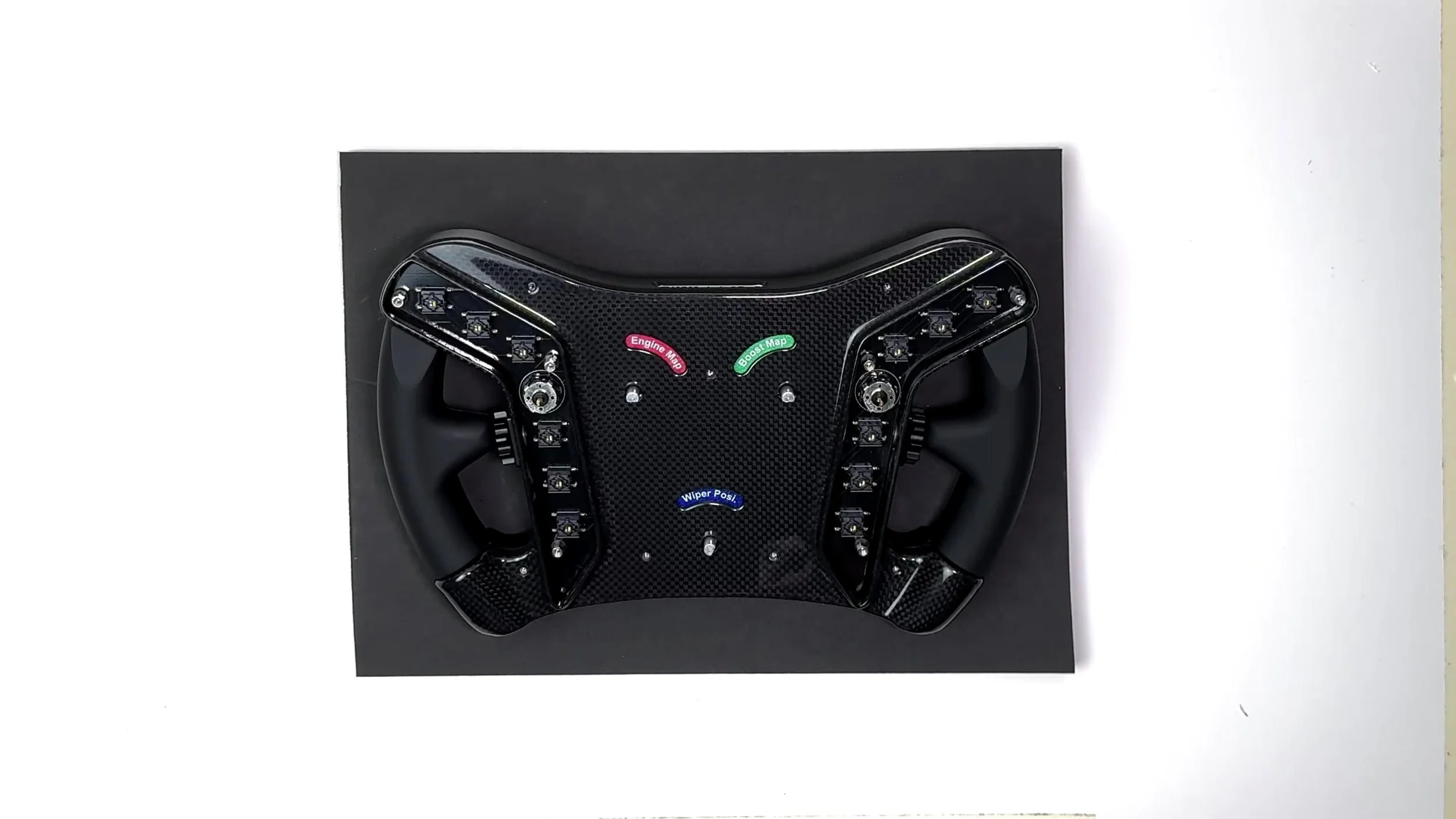
The wheel I reviewed was a 300 mm design inspired by the Aston Martin GT3 race-car wheel. That resemblance was part of its appeal, but I am not describing it as an officially licensed Aston Martin product.
I liked the overall shape and the way it sat in my hands. As a Porsche fan, I also found its general layout reminiscent of the Cup-car style I enjoy.
This article concerns the original AMV-30 tested in January 2024. It does not transfer my experience to a later V2 or assume later controls and materials are identical.
Strong construction, firm grips
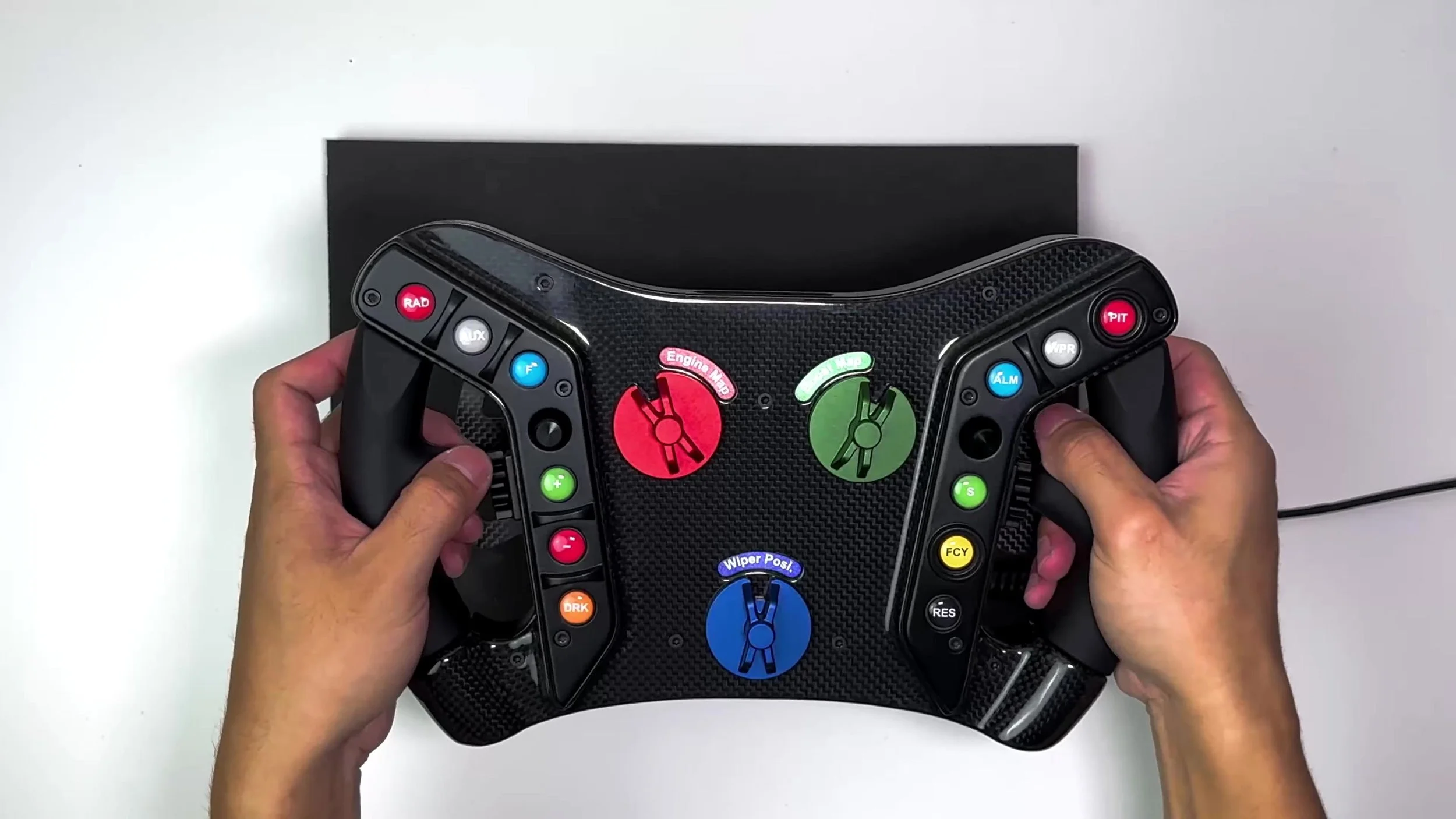
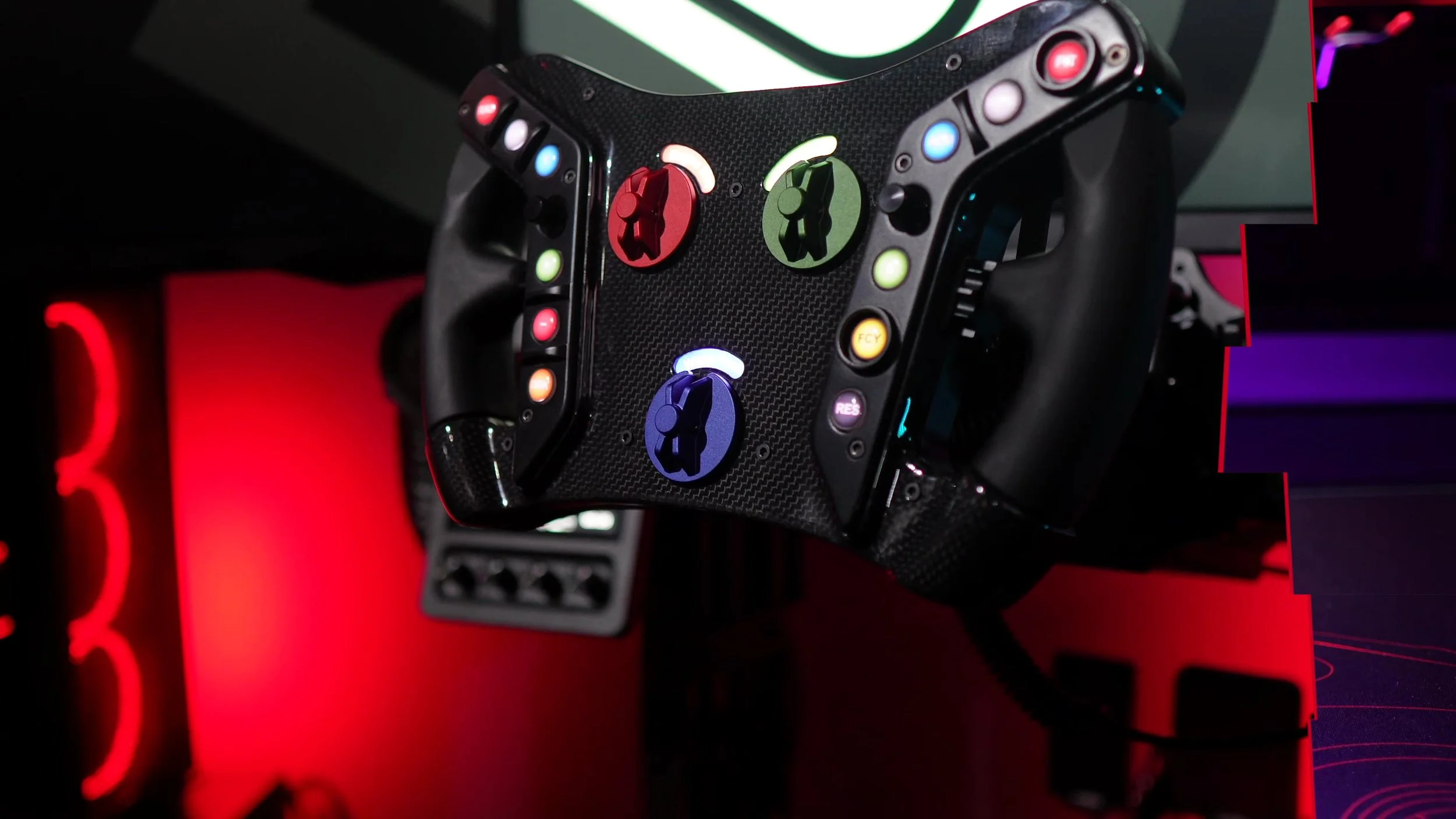
The moulded carbon-fibre front had a glossy finish, paired with a machined aluminium rear. The wheel felt solid, without creaking or cracking noises in use.
The glossy carbon looked attractive but readily picked up fingerprints. That is mostly a matter of taste and how much cleaning bothers you.
The moulded rubber grips had a pleasant surface feel, but they were firmer than I wanted for longer bare-handed sessions. Gloves improved the experience.
I also found the surface a little slippery and would have preferred more grip. The shape itself was comfortable; the rubber hardness and surface were the reservations.
After a few months of moderate use they appeared durable, but that is not a long-term wear assessment.
Controls that did not match the structure
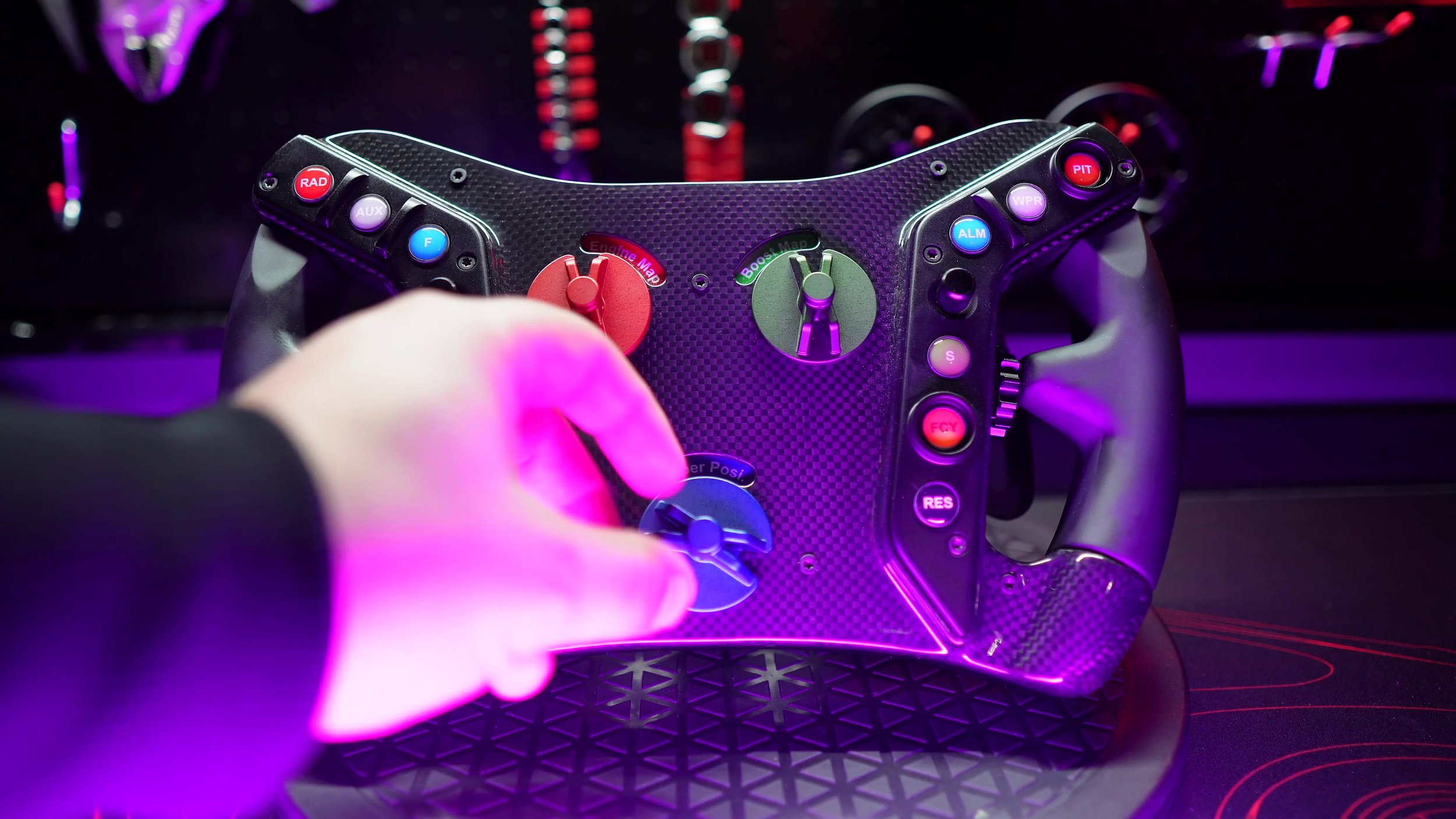
The layout provided plenty of inputs: illuminated front buttons, thumb encoders, three front rotaries, two seven-way switches and rear push buttons.
The front buttons had more play than I liked, and the press did not feel especially satisfying. On a wheel at this price, that was disappointing.
The labels sat beneath the domed buttons and were not interchangeable on my unit. The fixed labels suited the replica look, but I wanted more freedom to match them to my own sim assignments.
The thumb encoders were better. Their resistance struck a useful balance between easy adjustment and avoiding accidental movements.
The front encoders were too light for my taste. I found it easy to turn them farther than intended and wanted more distinct resistance. The seven-way switches worked as expected.
Magnetic shifters and simple setup
The adjustable carbon-fibre shift paddles were a highlight. The magnetic action felt solid and satisfying, with some sound but nothing I found excessively intrusive.
There were no clutch paddles on the wheel I tested. If analogue clutch control is part of your driving routine, that is an important omission to consider.
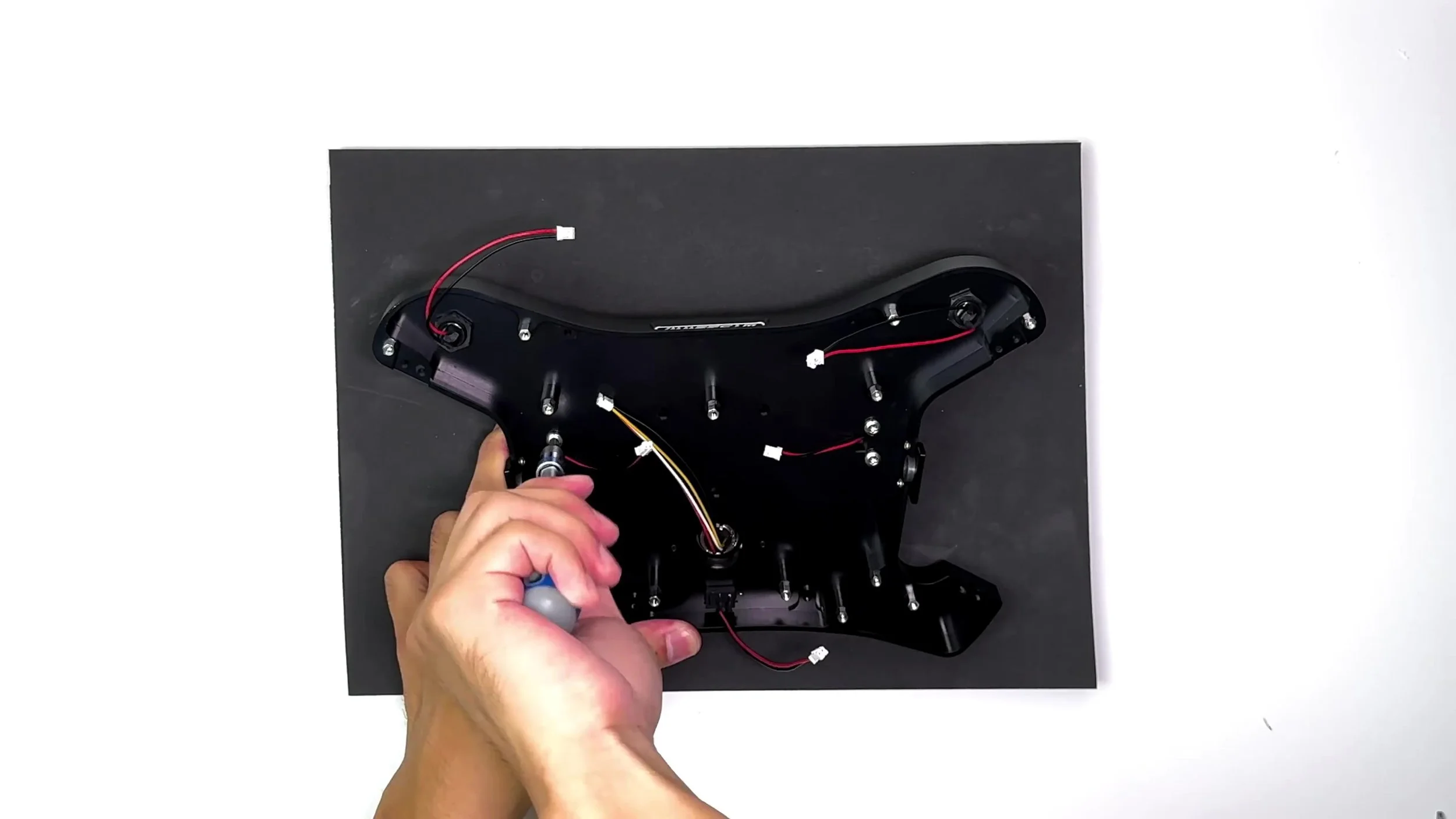
The wheel connected to the PC through the supplied coiled USB cable and a secure rear connector. The rear mounting hub used a six-bolt, 70 mm pattern.
I would check both the mechanical mounting and the USB connection for a chosen wheelbase. A matching bolt pattern alone is not proof that a complete setup will work.
I did not need dedicated Immersim configuration software for the original setup. I connected the wheel and mapped its inputs in the sim. My unit used white backlighting with a rear on/off switch; I am not claiming configurable RGB lighting.
For switching between several wheels, SimHub Control Mapper was a useful option in my workflow. That is separate from a requirement to run proprietary Immersim software.
Driving impressions
I drove with the wheel across different simulations, vehicles and tracks. The shape and sturdy construction made the overall experience enjoyable, and matching the style to a GT car added to the immersion.
The shifters continued to feel good during driving. They were one of the parts that supported the wheel’s premium impression.
The grips remained a little too hard for my preference, while the front buttons and encoders were less satisfying than the rest of the construction. Those concerns did not disappear once I started racing.
Comfort is personal, and a driver who likes firmer grips may respond differently. My criticism is about how they felt in my hands, not a claim that nobody could find them comfortable.
Would I buy it as my only wheel?
The original review quoted US$999 before shipping and possible customs charges. That is the price context for my verdict, not a current offer.
If this were my first or only sim-racing wheel, I would not have been entirely satisfied. I felt there were more compelling all-round choices at similar or lower prices.
For someone building a collection of wheels that match favourite cars, the calculation was different. The Aston Martin-inspired appearance and solid materials could make the AMV-30 an enjoyable specialist addition.
My verdict was therefore mixed: convincing structure and good shifters, but controls and grip feel that I wanted improved. The appeal depended heavily on wanting this particular design.
Check the exact AMV-30 version.
This review covers the original AMV-30. A later AMV-30 V2 appears in the manufacturer’s catalog, but I have not tested that version.
I could not verify the manufacturer’s product page while preparing this article, so current availability and purchasing terms remain unconfirmed.
The original video offered 5% off with SIMRACINGDEN. That offer has not been confirmed as current and is not presented here as an active discount.
About this article: Adapted from my original review script and video review. Driving impressions refer to the original review period. The original manufacturer and partner destinations are documented in the video description. Current purchasing access could not be verified; no working checkout or active discount is claimed.
Back to top ↑